
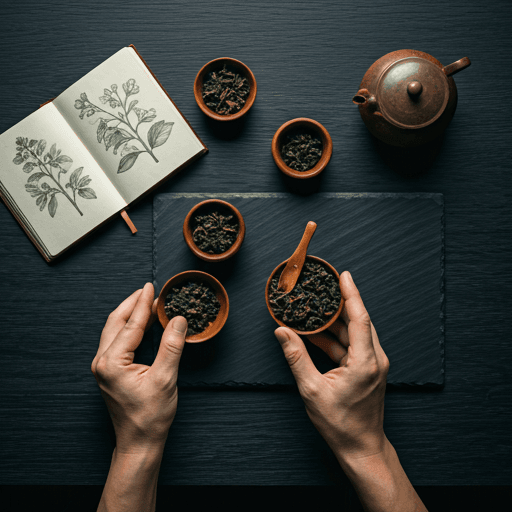
Guayusa (say it "gwy-YOO-sa") is a naturally caffeinated herbal tea made from the dried leaves of Ilex guayusa, an Amazonian holly tree native to the rainforests of Ecuador. It is a close botanical cousin of yerba mate and of common holly, and it has been brewed by Indigenous Amazonian communities for centuries, often before dawn, for a smooth, clean energy lift. Technically it is a tisane rather than a true tea, yet unlike most herbal drinks it genuinely contains caffeine.
This guide answers what guayusa is, where it comes from, how much caffeine it carries, how it tastes, how to brew it, and how it differs from its better-known cousin. Along the way it keeps any wellness talk general rather than prescriptive.
What is guayusa?
So, what is guayusa in plain terms? It is the dried leaf of Ilex guayusa, a species of holly that grows as a tall tree in the Amazon basin. The leaves are harvested, wilted and air-dried, then brewed in hot water like any leaf infusion. Because the plant is a holly and not the tea plant Camellia sinensis, guayusa is classed as a herbal infusion, or tisane, rather than a "true" tea. If you want the bigger picture of that category, see our guide to what herbal tea is.
The crucial thing that sets guayusa apart from most herbals is caffeine. Chamomile, rooibos, peppermint and the like are naturally caffeine-free, but guayusa is not. That single fact is why people treat guayusa tea less like a soothing bedtime cup and more like a daytime pick-me-up, closer in spirit to green tea, black tea or coffee.
Where guayusa comes from
Guayusa grows in the upper Amazon, principally in Ecuador and across parts of Peru and Colombia, thriving in the humid shade beneath the rainforest canopy along the eastern slopes of the Andes. For the Kichwa and other Indigenous Amazonian peoples, it is far more than a beverage. Families traditionally rise in the small hours, brew a large pot of guayusa over the fire, and gather around it before sunrise to share stories, plan the day and interpret dreams. That pre-dawn ritual is central to how the leaf is understood in its homeland, and it is a genuine cultural heritage fact rather than a marketing flourish.
What does guayusa tea taste like?
Guayusa is famously easy to drink. The flavour is smooth, mildly earthy and gently vegetal, with a natural, almost sweet roundness and very little of the sharp bitterness that puts some people off other leaf infusions. There is often a soft, tea-like body and a clean finish rather than any astringent bite. Because it tends to taste naturally a little sweet, many drinkers take it plain, with no sugar or milk needed.
Compared with green tea it is less grassy, and compared with strong black tea it is far less tannic and drying. That approachable, low-bitterness character is a big part of why guayusa has spread from the Amazon into loose-leaf tins, tea bags and canned energy drinks around the world.
Guayusa and caffeine: the "smooth energy" reputation
Guayusa is genuinely caffeinated, and that is its headline feature. Exactly how much caffeine you get is hard to pin down, because it depends heavily on how much leaf you use, the water temperature and how long you steep. Published figures vary widely, roughly from the level of a cup of tea up to something nearer a cup of coffee, with many sources citing somewhere around 60 to 90 mg per cup. Treat any single number as an estimate, not a promise, and expect a stronger brew to hit harder. For a sense of how that stacks up against other drinks, see our overview of caffeine in drinks compared, and if you are wondering how a tisane can be caffeinated at all, our note on whether tea contains caffeine explains the difference between true teas and herbals.
What fans talk about most is the quality of the lift. Guayusa naturally contains not just caffeine but also theobromine (the same gentle stimulant found in cocoa), the calming amino acid L-theanine, and a good dose of antioxidant polyphenols. Many people describe the resulting energy as smooth, steady and relatively jitter-light, without the spike-and-crash some feel from coffee. This "clean energy" reputation is best framed as traditional lore and personal experience, associated with those compounds rather than proven by strong clinical trials. The most commonly cited guayusa benefits, then, are simply a caffeine lift that many find gentler than coffee, plus the antioxidants that come with any leafy infusion. Enjoy those as a pleasant bonus, not as medicine.
Guayusa vs yerba mate
The guayusa vs yerba mate question comes up constantly, because the two are genuine cousins. Both are made from holly-family leaves (guayusa from Ilex guayusa, yerba mate from Ilex paraguariensis), both are South American, both are caffeinated tisanes rather than true teas, and both are prized for a steadier kind of energy. If you know one, you are halfway to knowing the other, and our full guide to what yerba mate is covers the mate side in depth.
The main difference is in the cup. Guayusa is noticeably smoother, rounder and naturally a touch sweet, with low bitterness. Yerba mate leans earthier, grassier and more robustly bitter, with a woodsy or (in smoked styles) toasty edge. Yerba mate also carries a deep, ritualised serving culture built around a shared gourd and metal bombilla straw, whereas guayusa is more often brewed loose or in bags like a regular pot of tea. In short: same botanical family and similar clean-energy appeal, but guayusa is the mellower, less bitter, more beginner-friendly of the pair.
| Drink | Plant source | Caffeine (per cup) | Typical flavour |
|---|---|---|---|
| Guayusa | Ilex guayusa (holly) | ~60-90 mg (varies by brew) | Smooth, earthy, naturally a bit sweet, low bitterness |
| Yerba mate | Ilex paraguariensis (holly) | ~30-80 mg (more over a session) | Earthy, grassy, more bitter |
| Green tea | Camellia sinensis | ~20-45 mg | Vegetal, fresh, mild |
| Coffee | Coffea (roasted beans) | ~95-200 mg | Roasted, rich, bold |
| Most herbal teas | Various herbs | None | Varies; caffeine-free |
How to brew guayusa tea
Guayusa is forgiving to brew and, unlike delicate green teas, it does not turn harsh easily. You can use loose dried leaf, a tea bag, or even a French press. Here is a simple, reliable method.
- Measure. Use roughly 1 to 2 teaspoons of loose guayusa (about 2 to 5 g), or one tea bag, per cup of around 8 oz / 240 ml.
- Heat the water. Hot but not necessarily a rolling boil works well; many brewers aim for around 175-195 F (about 80-90 C). Slightly cooler water keeps the cup smooth.
- Steep. Pour the water over the leaf and steep for about 5 to 7 minutes. Because guayusa is low in bitterness, a longer steep mostly builds strength rather than harshness.
- Strain and taste. Remove the leaf or bag. It is often sweet enough to drink plain, but a squeeze of citrus or a little honey suits it if you like.
- Re-steep or chill. Good-quality leaf will happily take a second (even third) steep. It is also excellent brewed strong and poured over ice, which is how many people enjoy guayusa in warm weather.
You will find guayusa sold as loose leaf, in tea bags, in blends (paired with mint, lemongrass or fruit), and as ready-to-drink canned energy teas, which is how many people outside the Amazon first meet it.
Guayusa at a glance
| Aspect | Guayusa |
|---|---|
| What it is | Caffeinated herbal tea (tisane), not a true tea |
| Plant | Ilex guayusa, an Amazonian holly tree |
| Origin | Upper Amazon, chiefly Ecuador (also Peru, Colombia) |
| Caffeine | Naturally caffeinated; roughly tea-to-coffee range, often ~60-90 mg per cup (varies) |
| Other compounds | Theobromine, L-theanine, antioxidant polyphenols |
| Taste | Smooth, earthy, naturally slightly sweet, low bitterness |
| Brewing | ~2-5 g per cup, hot (not boiling) water, steep 5-7 min, re-steepable, hot or iced |
| Sold as | Loose leaf, tea bags, blends, canned energy drinks |
| Reputation | "Smooth, clean energy" (traditional and anecdotal) |
Is guayusa safe to drink?
For most healthy adults, guayusa is fine to enjoy in moderation, as it has been for generations. The main thing to keep in mind is simply that it contains caffeine, so the usual sensible cautions apply. Go easy in the late afternoon and evening if caffeine affects your sleep, be more careful if you are particularly sensitive to it, and remember that a strong or long-steeped brew delivers more. If you are pregnant or breastfeeding, mainstream guidance commonly suggests keeping total daily caffeine moderate (often cited at under about 200 mg from all sources), so count guayusa alongside any coffee, tea or cola. This is general information, not medical advice; if you have a health condition or take medication, it is sensible to check with a professional.
Beyond caffeine, guayusa is a gentle drink with a long history of everyday use in its home region. As with any leaf infusion, using water that is hot rather than scalding makes for a nicer, safer cup.
The takeaway
Guayusa is a lovely middle ground: the clean, sustained energy people prize in yerba mate, but with a smoother, sweeter, far less bitter cup that is easy to like from the first sip. Brew it hot but not boiling, let it steep a good five to seven minutes, and enjoy it plain to taste what the leaf naturally offers. If this Amazonian holly has you curious about its caffeinated cousins and the wider world of leaf infusions, there is plenty more to discover among the world's teas and tisanes.