
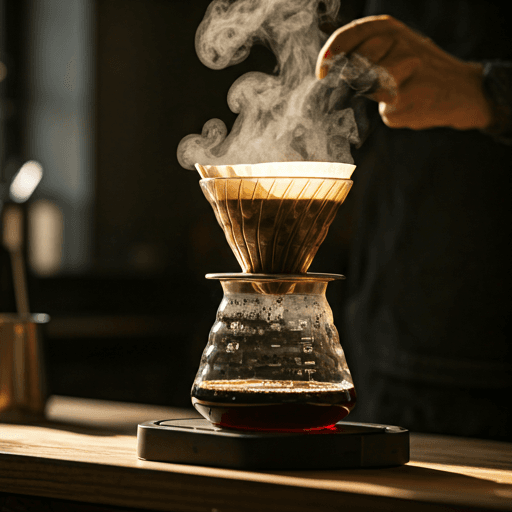
For millions of people, the good morning coffee is more than caffeine. It is a small daily ritual that marks the start of the day — a few quiet minutes of warmth, aroma and calm before everything begins. This guide is about that ritual: why the morning cup means so much, how the world makes it, and simple ways to make yours a little better.
The coffee itself is really just the vehicle. What most of us are reaching for is the moment — the hum of the grinder, the smell filling the kitchen, the first warm sip while the house is still quiet. You do not need expensive gear to have that. You need a method you enjoy and a few minutes you protect.
Why the good morning coffee ritual means so much
Ask people why they love their morning coffee and very few will say "the caffeine." They talk about the smell, the warmth of the mug, the pause before the day speeds up. The good morning coffee ritual works on three levels at once: the senses, the mind, and, often, other people.
A gentle sensory wake-up
Freshly ground coffee is one of the most evocative smells there is, and it lands before the first sip. Aroma is wired closely to memory and mood, so the scent of a fresh brew can feel comforting all on its own. Add the warmth of the cup in your hands and the quiet act of pouring, and the body wakes up gently rather than all at once. For many people the anticipation — the grinder, the steam, the smell — is half the pleasure, arriving well before any of the caffeine does.
A moment of intention and slowness
A morning coffee ritual is a rare pocket of the day that is entirely yours. Making it by hand gives you a small, repeatable task to focus on: measure, pour, wait, sip. That kind of predictable, hands-on routine is calming precisely because it asks nothing of you except attention. It is a low-stakes way to begin the day with a little intention instead of immediately reaching for a screen. Even five unhurried minutes can set a steadier tone for the hours ahead.
The social side of "let's grab a coffee"
The morning cup is also deeply social. "Let's grab a coffee" is shorthand for time together the world over — a colleague at the machine, a friend at a corner cafe, a partner sharing the first pot of the day. Coffee gives people a reason to slow down side by side, which is a big part of why the ritual has spread across so many cultures. If you want the bigger picture, our overview of coffee culture around the world traces how the drink became a social glue almost everywhere it landed.
Morning coffee rituals around the world
There is no single "right" morning coffee. Half the fun is seeing how differently people do it. These traditions are cultural color rather than rules — but they are a great source of ideas for your own morning coffee routine.
| Morning coffee style | Where it comes from | What it is |
|---|---|---|
| Espresso al banco | Italy | A quick single espresso taken standing at the bar, often with a pastry; cappuccino is generally a morning-only drink. |
| Cafe au lait | France | Coffee with plenty of steamed milk, often served in a wide bowl at home alongside a croissant or bread and jam. |
| The Nordic coffee pause | Sweden and Scandinavia | An unhurried cup, usually with something sweet and often shared — the spirit behind the beloved coffee break. |
| Turkish coffee | Turkey | Very finely ground coffee simmered slowly in a small pot (cezve), served thick and unfiltered with the grounds settling at the bottom. |
| Greek briki brew | Greece | A close cousin of Turkish coffee, brewed gently in a briki, never hard-boiled, and served with a glass of water. |
| Slow pour-over | Global specialty coffee | A hands-on, meditative method (V60, Chemex and the like) where hot water is poured over ground coffee in slow circles. |
| Vietnamese phin | Vietnam | Coffee dripped slowly through a small metal filter, classically over sweetened condensed milk. |
The Nordic version is worth a closer look, because it turns coffee into a genuine institution. In Sweden the coffee break is so central it has its own name and etiquette; we unpack it in what is fika. The through-line across all of these is the same: the drink is an excuse to pause, whether that pause lasts thirty seconds at an Italian bar or a leisurely hour over a bowl of cafe au lait.
How to make a better morning coffee
You do not need a new machine to improve the ritual. Small changes to the ingredients and the pace make the biggest difference. This is about how to make a better morning coffee, not a full brewing lesson — for step-by-step methods, see our guide on how to make coffee.
- Start with fresh beans. Coffee is at its best in the weeks after roasting, not months later. Buy smaller amounts more often and keep them in an airtight, opaque container away from heat and light.
- Grind just before you brew. Ground coffee stales fast as it loses its aromatics. Grinding fresh each morning is the single upgrade most people notice immediately — and the smell is part of the ritual anyway.
- Mind your water. A cup is mostly water, so if your tap water tastes off, so will the coffee. Filtered water at the right temperature (just off the boil, not boiling) makes a real difference.
- Pick a method you actually enjoy. A French press, a moka pot, a pour-over and a simple drip machine all make lovely coffee. The best one is the one whose rhythm you look forward to on a slow morning.
- Match the grind to the method. Coarse for French press, medium for drip and pour-over, fine for espresso and stovetop pots. Getting this roughly right fixes most "bitter" or "weak" cups.
- Do not rush it. Give yourself a few extra minutes so the coffee is something you sip, not something you gulp on the way out the door.
One gentle note on timing: if coffee on an empty stomach leaves you jittery or uneasy, you are not imagining it — it bothers some people and not others. Having your cup alongside a little breakfast can help. We cover the evidence, calmly and without scare tactics, in coffee on an empty stomach.
Turning your morning coffee into a real ritual
The difference between a caffeine habit and a ritual is intention. A few small choices are what make the good morning coffee feel like a moment rather than a chore, and they cost nothing.
- Keep a favorite mug. A cup you genuinely like — the right weight, the right feel in your hands — quietly raises the whole experience.
- Protect five phone-free minutes. Let the first cup be for the coffee, the light and your own thoughts, not the notifications. The pause is the point.
- Pair it with calm. A window, a little morning light, a book or simply silence turns a drink into a small daily reset.
- Be consistent. Rituals earn their comfort from repetition. Doing roughly the same thing each morning is what makes it feel grounding rather than random.
None of this has to be precious or complicated. The whole idea of the morning coffee ritual is to reclaim a few unhurried minutes and make them pleasant — a cup you like, a moment of quiet, a gentle start. Perfect the details you enjoy, ignore the ones you do not, and let the rest of the day wait a little longer. Whenever you feel like exploring further, there is a whole world of morning traditions above to borrow from — pick one, make it yours, and enjoy the ritual.