
On the coffee map of Indonesia the big names come easily: Sumatra, Java, Sulawesi. Flores rarely gets top billing, yet this long, mountainous island in the eastern reaches of the archipelago quietly grows some of the country's most distinctive Arabica. Named the "flower island" by early Portuguese sailors, Flores is a spine of volcanoes, crater lakes and steep green ridges, and its coffee carries that geology in the cup: dense, chocolatey, often floral, sometimes edged with tobacco and spice. The highland districts of Bajawa and Manggarai anchor the story, where thousands of smallholders farm tiny plots on ash-rich soil. For anyone who fell for Indonesian coffee through Sumatra or Sulawesi, Flores is the next door worth opening.
Where Flores sits in Indonesia
Flores lies in the Lesser Sunda chain of eastern Indonesia, part of the province of East Nusa Tenggara, strung out east of Bali and Sumbawa and just west of Timor. Most travelers know it as the gateway to the Komodo dragons and to Kelimutu, the volcano whose crater lakes shift color with the mineral chemistry of the water. The island is narrow, rugged and long — a few hundred kilometers of volcanic backbone that traps moisture and creates cool, cloud-wrapped highlands well suited to Arabica. That remoteness is part of why Flores coffee stayed under the radar for so long: harvests are small, roads are slow, and lots often move through the larger ports before reaching roasters, sometimes losing their island identity along the way.
A terroir built by volcanoes
Flores coffee is, above all, a volcanic coffee. The heart of production is the Ngada regency and its highland town of Bajawa, spread across the slopes of the Inerie and Ebulobo volcanoes at roughly 1,200 to 1,800 meters above sea level. Centuries of eruptions have laid down deep, mineral-rich Andosols — dark, porous volcanic soils that drain well and hold nutrients, prized for organic farming almost everywhere they occur. Combine that soil with high altitude, generous rainfall and the shade of the surrounding forest and you get slow-maturing cherry with concentrated sugars, the raw material behind Flores's heavy body and sweetness. Manggarai, to the west, and the area around Ende add their own highland pockets, so "Flores coffee" is really a family of neighboring micro-origins rather than one single valley.
How coffee reached the flower island
Arabica is not native to Indonesia; it arrived through the colonial trade. On Flores, coffee is generally traced to the Dutch colonial period in the early twentieth century, when Arabica was introduced to the cooler highlands of Manggarai, Bajawa and Ende. Much of that early planting was later disrupted by leaf rust, the same disease that reshaped coffee across Asia, which is one reason rust-tolerant hybrids feature so heavily on the island today. What survived and spread was tended largely by local families rather than large estates, and that smallholder pattern still defines Flores. The island's specialty reputation is much more recent, growing over the past couple of decades as exporters and cooperatives began separating cleaner, higher-grown lots and letting the Flores name travel with them.
Smallholders and shade gardens
Like most of Indonesia — where the overwhelming majority of coffee, commonly cited at well over 90 percent, comes from smallholders — Flores is a landscape of tiny farms. A typical grower may tend well under a hectare, often a mixed garden where coffee grows among clove, candlenut, banana and forest shade trees rather than in monoculture rows. Cherry is usually hand-picked and processed in small batches at the farm or a village mill, then pooled through cooperatives and collectors. This structure has trade-offs. It keeps chemical inputs low and biodiversity high, and many lots are effectively organic by default; but it also means quality can vary from farm to farm, and consistency depends heavily on how carefully cooperatives sort and dry. The best Flores coffees are the ones where that groundwork has been done well.
The varieties behind the cup
Flores grows a patchwork of Arabica varieties, a legacy of successive replanting programs. You will commonly hear names like Kartika — a locally grown selection related to Catuai, valued for productivity and a rounded, chocolatey sweetness — alongside older Typica, the S795 line, Catimor, and various Timor-derived hybrids planted for their resistance to leaf rust. Because these are interplanted rather than kept in tidy single-variety blocks, most Flores lots are blends of whatever grows in a given garden. That mix is part of the island's character: it smooths out the extremes and gives Flores its dependable body and cocoa-forward core, while the higher, cleaner washed lots let more of the delicate floral and fruit notes come through.
Processing: wet-hulled, washed, and beyond
Processing is where Flores shows its Indonesian roots most clearly. The traditional method across much of the country is wet-hulling, known locally as giling basah, in which the parchment is stripped off while the beans are still damp and the coffee finishes drying "naked." This shortens drying, deepens body, and mutes the sharper acids — the same technique that gives Sumatran coffee its earthy, syrupy signature. But Flores is not only a wet-hulled origin. Many cooperatives now offer fully washed lots that stay far cleaner and brighter, plus a growing number of honey and experimental naturals. If you want to understand how these choices reshape flavor, our overview of coffee processing methods is a useful companion.
| Process | Local name | Body | Acidity | Typical notes |
|---|---|---|---|---|
| Wet-hulled | Giling basah | Heavy, syrupy | Low | Dark chocolate, cedar, tobacco, earth, baking spice |
| Fully washed | — | Medium, clean | Bright | Apple, brown sugar, floral, citrus |
| Honey / pulped natural | — | Round, sweet | Soft | Caramel, red fruit, stone fruit |
| Natural / anaerobic | — | Full | Muted to wild | Berry, tropical fruit, ferment-driven |
What Flores coffee tastes like
There is no single Flores flavor, because processing swings the cup so far in each direction — but there are family traits. Across styles you tend to find a chocolate-and-caramel backbone, a full mouthfeel, and comparatively gentle acidity. Wet-hulled Bajawa is the classic: low-acid and dense, with dark chocolate and cocoa nib up front, cedar and tobacco through the middle, and earthy, spicy sweetness on the finish. It is the expression that rewards drinkers who love a big, savory Indonesian cup. Washed and honey lots pull the opposite way, staying cleaner and livelier, with apple-like brightness, brown-sugar sweetness, and the floral, almost perfumed lift that earns Flores its "flower island" reputation. Occasional notes of berry, orange and rose show up in the more carefully processed coffees. Whichever style you meet, Flores usually reads as smooth and long rather than sharp — a coffee built for body and depth.
Flores among its Indonesian siblings
Flores is best understood in the company of Indonesia's other origins. Set beside the earthy, herbal heaviness of Sumatra, Flores often feels a touch cleaner and more chocolate-driven, its wildness dialed back. Against the coffees of Sulawesi — including the celebrated Toraja — it shares a similar volcanic sweetness and structured body, though Flores can lean more floral in its washed form. And where Bali tends toward soft, mild, often washed profiles, Flores keeps a deeper, more savory core, especially in wet-hulled lots. Placed side by side, these islands make a compelling flight: same archipelago, same volcanic lineage, four clearly different cups. Flores is the one that most rewards seeking out precisely because it is still comparatively hard to find as a named single origin.
Brewing and enjoying Flores
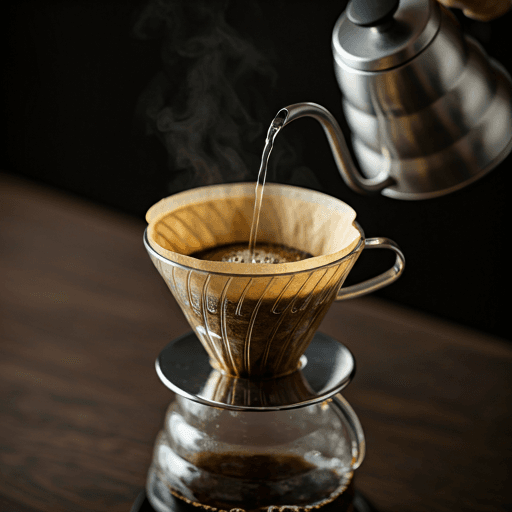
How you brew depends on which Flores you have. Wet-hulled lots shine in full-immersion and pressure methods — a French press, a moka pot, or espresso — where their body and low acidity turn into a thick, cocoa-heavy cup that also holds up beautifully to milk. Washed and honey lots are worth treating like a bright single origin: a pour-over or drip brew will open up the floral and fruit notes that gentler processing preserves. A medium roast is a safe home for most Flores, keeping the chocolate sweetness intact without scorching the more delicate aromatics; go darker only if you specifically want the roasty, smoky side of a wet-hulled lot. However you approach it, seek it out as a stated single origin when you can — that is when the island's volcanic character comes through most clearly, and when you are most likely to taste why Flores is one of Indonesia's quietest, most rewarding coffees.