
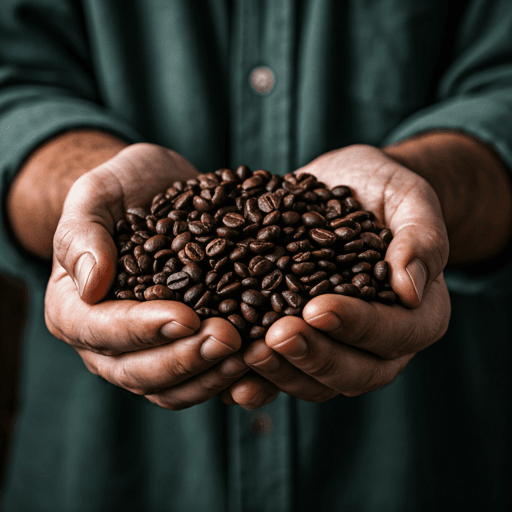
High in the central Andes, where the Colombian cordillera folds into ridge after emerald ridge, lies the country's coffee heartland: the Eje Cafetero, or "Coffee Axis." Often called the Coffee Triangle in English, it is the compact cluster of departments — Caldas, Quindío and Risaralda, with spillover into Tolima and Valle del Cauca — where Colombia's identity and its most famous export grew up together. For more than a century, families have terraced these steep green slopes into a mosaic of small coffee farms, and the result is one of the most storied growing regions on Earth.
This guide is the hub for that region. It explains where the Eje Cafetero is, why UNESCO added it to the World Heritage List in 2011, and what makes the coffee taste the way it does — the clean, balanced "mild Colombian" cup that shaped how much of the world imagines Colombian coffee. From there it links out to each of the three core departments and to the wider story of Colombian coffee as a whole.
What is the Eje Cafetero?
The Eje Cafetero is the traditional name for Colombia's central coffee-growing region, a diagonal band of the Andes that runs through the departments of Caldas, Quindío and Risaralda. In Spanish, eje cafetero translates literally as "coffee axis" — the phrase captures the idea that this trio of departments has long been the pivot around which the national coffee economy turns. In everyday Colombian usage the terms Coffee Axis, Coffee Triangle and Zona Cafetera all point to the same place.
Although the three departments form the core, the coffee landscape does not stop neatly at their borders. Cultivation spills into northern Tolima and, to the south, into the department of Valle del Cauca. What unites the whole area is a shared way of life built around Arabica coffee grown on family-scale fincas (farms), and a set of natural conditions — altitude, volcanic soil and a distinctive rainfall rhythm — that make the region exceptionally well suited to the crop.
A UNESCO World Heritage landscape
In June 2011, UNESCO inscribed the "Coffee Cultural Landscape of Colombia" (Paisaje Cultural Cafetero) on its World Heritage List. The recognition is unusual: rather than a single monument, it honors a living, working landscape shaped by generations of farmers. The inscribed area spans dozens of municipalities and hundreds of rural veredas (hamlets) across Caldas, Quindío, Risaralda and Valle del Cauca, taking in tens of thousands of small coffee farms along with the towns, architecture and traditions that grew around them.
UNESCO cited the region as an outstanding example of human adaptation to difficult terrain — steep, high mountains where coffee is still largely harvested by hand. It also recognized the area's cultural fabric: the distinctive bahareque architecture, the social structures of the coffee cooperatives, and the intangible heritage of language, music and craft that the communities have deliberately preserved. That is what makes the Eje Cafetero a World Heritage Site — not one building, but an entire way of living with the land.
The geography that shapes the cup
Great coffee is a product of place, and the Eje Cafetero has a remarkable one. Farms here typically sit between roughly 1,200 and 2,000 meters above sea level on the flanks of the Andes. At those elevations the cool nights slow the ripening of the coffee cherry, letting sugars concentrate and acidity develop — the same high-altitude effect that gives so many prized origins their clarity and sweetness. For more on how place translates into flavor, see our explainer on coffee terroir.
The soils are the second gift. Much of the region is blanketed in andisols — young, fertile volcanic soils rich in organic matter and minerals, replenished over millennia by ash from the surrounding volcanoes. Chief among them is the snow-capped Nevado del Ruiz, which looms above Caldas and continues to feed the surrounding valleys with nutrients. Deep, well-drained and slightly acidic, andisols are close to ideal for Arabica.
The third factor is rainfall. Sitting near the equator, the region sees the Intertropical Convergence Zone pass overhead twice a year, producing a bimodal pattern of wet and dry spells. That double rhythm triggers two flowerings and, in turn, two harvests annually: a main crop and a smaller mid-year harvest that Colombians call the mitaca or traviesa. Few origins can pick fresh coffee twice a year, which is part of why the Eje Cafetero has been so productive for so long.
A culture built on coffee
The human story is inseparable from the geography. The region was largely settled during the colonización antioqueña, the 19th-century wave of Antioquian families who pushed south in search of land and carved farms out of the forest. Their culture — hardworking, independent, deeply tied to the land — became the paisa identity that still defines the area. Its emblematic figure is the arriero, the muleteer who once hauled sacks of coffee down the mountains on trains of mules; his poncho, machete and felt hat remain the visual shorthand for the whole coffee country.
At harvest, the fields fill with pickers. The romantic icon is the chapolera, the woman coffee picker in a lace blouse and bright skirt with a basket at her waist, wedging herself into the bushes on the muddy slopes to select only the ripe cherries. Presiding over it all in the popular imagination is Juan Valdez — the fictional coffee grower created in 1959 by the National Federation of Coffee Growers to stand for every Colombian producer. He is a marketing character, not a real person, and it is worth being honest that the polished image can flatten the harder realities of smallholder farming. But he was modeled on exactly this landscape: the small, family-run finca of the paisa coffee belt.
That smallholder structure endures. Most coffee here comes not from large estates but from thousands of modest family farms, many just a few hectares, organized through local cooperatives — a pattern that underpins both the region's resilience and the UNESCO designation.
Eje Cafetero coffee in the cup: the 'mild Colombian' profile
Classic coffee from the region is almost always washed (wet-processed) Arabica, and it set the template for what the trade historically called "mild Colombian" — a clean, well-balanced cup with medium body, gentle brightness and a sweetness that leans toward caramel, nuts and soft citrus rather than the wilder fruit of some other origins. It is coffee built for approachability and consistency, the profile that made Colombian coffee a byword for dependable quality worldwide.
It helps to put the marketing language in perspective. "Mild Colombian" was a trade grade, not a promise of blandness, and the modern specialty scene has shown that these mountains can produce far more expressive, complex and experimentally processed lots when farmers choose to. Neighboring regions such as Huila to the south have become specialty stars in their own right. Still, the balanced, sweet, washed style remains the signature the Eje Cafetero is best known for.
Cenicafé: the science behind Colombian coffee
The Eje Cafetero is not only a place of tradition; it is also the scientific engine of Colombian coffee. In Chinchiná, Caldas, sits Cenicafé (the Centro Nacional de Investigaciones de Café), the national coffee research center founded in 1938 by the Federación Nacional de Cafeteros. For decades its plant breeders have worked to keep Colombian farms productive in the face of coffee leaf rust and, more recently, a changing climate.
Two of its releases are especially important. The Colombia variety, released in 1982, was a composite line that married the compact stature of Caturra to the leaf-rust resistance of the Timor Hybrid — arriving, as it happened, just before coffee leaf rust took hold in the country in 1983. Its successor, Castillo, launched in 2005 and bred in regional forms tuned to different growing zones, has since become one of the most widely planted varieties in Colombia. Both are pillars of how the country has stayed competitive, and both were born in the heart of the Eje Cafetero.
The three departments of the Coffee Triangle
Each of the three core departments has its own character, capital city and coffee reputation. This guide keeps them brief and links to a dedicated page for each.
| Department | Capital | Known for |
|---|---|---|
| Caldas | Manizales | Home of Cenicafé and the Nevado del Ruiz volcano; high, steep farms. |
| Quindío | Armenia | The smallest department; wax-palm valleys and the region's tourism hub. |
| Risaralda | Pereira | Commercial gateway of the axis, with farms climbing toward the western cordillera. |
Together these three departments, with their neighbors in Tolima and Valle del Cauca, make up the landscape the world pictures when it imagines Colombian coffee: a patchwork of green ridges, red cherries and small farms that has fed the global cup for well over a century.
Frequently asked questions
What is the Eje Cafetero?
The Eje Cafetero, or "Coffee Axis," is Colombia's central coffee-growing region in the Andes, made up of the departments of Caldas, Quindío and Risaralda, with parts of Tolima and Valle del Cauca. It is the historic heartland of Colombian coffee, defined by small family farms on steep, high mountain slopes. In English it is often called the Coffee Triangle.
Which departments make up Colombia's Coffee Triangle?
The three core departments are Caldas, Quindío and Risaralda, whose capitals are Manizales, Armenia and Pereira, respectively. Coffee cultivation also spills into neighboring Tolima and Valle del Cauca; the UNESCO-inscribed landscape itself reaches into Valle del Cauca alongside the three core departments, though not into Tolima.
Why is the Eje Cafetero a UNESCO World Heritage Site?
In 2011, UNESCO inscribed the "Coffee Cultural Landscape of Colombia" as a World Heritage Site. It was recognized as a living cultural landscape — an exceptional example of people adapting to steep, high terrain — along with its distinctive architecture, cooperative social structures and coffee-growing traditions passed down over generations.
What makes Eje Cafetero coffee special?
The combination of high Andean altitude (roughly 1,200–2,000 m), fertile volcanic andisol soils fed by volcanoes like the Nevado del Ruiz, and a bimodal rainfall pattern that allows two harvests a year creates ideal conditions for Arabica. The classic result is a clean, balanced, washed "mild Colombian" cup with medium body, gentle acidity and caramel-like sweetness.
Where is Colombia's coffee region located?
Colombia's most famous coffee region sits in the central Andes, west of the capital Bogotá, on the slopes around the cities of Manizales, Armenia and Pereira. This is the Eje Cafetero. Coffee is grown in many other parts of Colombia too, but this central axis is the traditional heartland.