
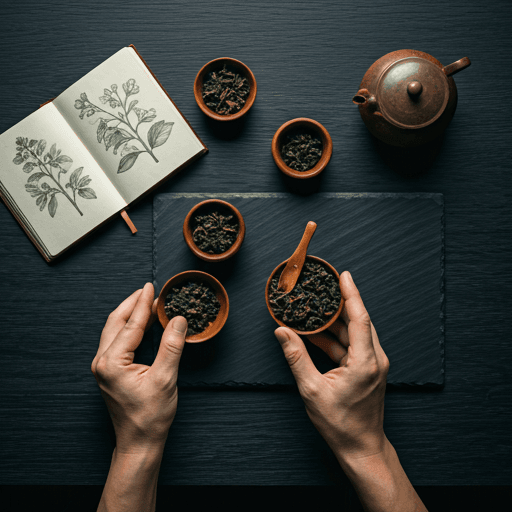
Does lemon balm tea have caffeine? No — pure lemon balm tea is naturally caffeine-free. It is a herbal tisane brewed from the leaves of lemon balm (Melissa officinalis), a lemon-scented member of the mint family, not from the tea plant Camellia sinensis. Because a plain cup never touches a true tea leaf, it carries no caffeine at all — which is exactly why so many people reach for it in the evening.
Does lemon balm tea have caffeine? The short answer
If you only remember one thing, remember this: a cup made from lemon balm and nothing else contains zero caffeine. It belongs to the same easygoing family as peppermint, chamomile and rooibos — drinks we call "tea" out of habit even though, botanically, they are infusions of herbs, flowers or leaves that have never grown a milligram of caffeine.
The word "tea" is the source of nearly all the confusion. In everyday speech we use it for almost anything steeped in hot water. But when it comes to caffeine, only one thing matters: whether the leaf came from Camellia sinensis, the true tea plant. Lemon balm does not, so it is a caffeine-free tisane by nature. For the wider picture of which drinks actually earn that label, see our guide to caffeine-free tea.
Why lemon balm tea has no caffeine
Caffeine is a compound the tea plant makes in its own leaves and buds. Every true tea — green, black, oolong, white and pu-erh — is produced from Camellia sinensis, so every true tea contains at least some caffeine. The amount shifts with the leaf grade, the harvest and how you brew, but it is always there in the cup.
Herbal infusions work on completely different botany. They are built from other plants entirely — a herb, a flower, a root, a spice or a fruit — and most of those plants simply do not produce caffeine in the first place. Lemon balm is one of them. Its calming, lemony character comes from the aromatic oils in the leaf, not from any stimulant. That is the whole reason a lemon balm brew and a mug of black tea can look almost identical yet behave completely differently in your body. If the distinction interests you, our explainer on what herbal tea is goes deeper, while does tea contain caffeine covers the true-tea side of the same story.
Lemon balm tea vs true tea: caffeine at a glance
| Drink | Plant source | Caffeine per cup (approx.) |
|---|---|---|
| Lemon balm tea | Melissa officinalis (herb) | None |
| Green tea | Camellia sinensis | ~20-45 mg |
| Black tea | Camellia sinensis | ~40-70 mg |
| Lemon balm + green or black blend | Herb plus true tea | Has caffeine (varies) |
Those true-tea figures are rough guides rather than promises, since caffeine varies widely by leaf and steeping time. The lemon balm tea caffeine content, by contrast, is a flat zero whenever the leaf is the only ingredient.
The exceptions worth checking
So is lemon balm tea caffeine free? For a single-herb brew, yes, every time. A handful of products blur the line, though, so a quick glance at the label is always worth it:
- Blends with true tea. Some relaxing or "bedtime" blends pair lemon balm with green or black tea for extra flavour or body. The moment real tea leaf joins the mix, the cup has caffeine — occasionally a meaningful amount.
- Bottled or bagged products. A supermarket "lemon balm" tea bag or a ready-to-drink bottle can include added tea, guarana, yerba mate or another stimulant. The ingredient list is the only reliable guide, so read it rather than trusting the front of the pack.
- Flavoured combinations. Lemon balm often turns up alongside chamomile, lavender or mint, all of which are caffeine-free — but occasionally beside matcha or another Camellia sinensis ingredient that is not.
When in doubt, read the ingredients. If lemon balm (or Melissa officinalis) is the only botanical named, you are holding a caffeine-free cup.
Does Melissa tea have caffeine? Same plant, same answer
You will sometimes see lemon balm sold simply as "Melissa" tea, after its botanical name Melissa officinalis. It is the identical plant, so the answer does not change: Melissa tea has no caffeine. The label is just using the Latin. Whether a box says lemon balm or Melissa, the caffeine count stays at zero as long as no true tea has been added to the blend.
What lemon balm tea tastes like
Expect something mild, bright and gently sweet. Lemon balm gives a soft citrus lift — closer to lemon zest than to a sharp squeeze of juice — layered over the cool, herbaceous quality you would recognise from other mint-family leaves. It is delicate rather than bold, with almost no bitterness or astringency, which makes it easy to sip on its own or to round out with chamomile, a sprig of mint or a little honey. The flavour is a big part of the appeal: nothing about it demands the jolt of a stimulant.
Why people drink lemon balm tea before bed
Because it is caffeine-free, lemon balm tea before bed is an easy choice — there is simply nothing in a plain cup to keep you wired. The herb has a long history as a calming, wind-down drink, and many people find that a warm mug makes a pleasant part of an evening routine. It is best to treat that as comfort and ritual rather than medicine: responses vary from person to person, and this is not medical advice. What is not in question is the caffeine, and an all-lemon-balm brew will never add a stimulant to your night the way a cup of black or green tea might.
How to brew lemon balm tea
Lemon balm is forgiving, which suits its relaxed reputation. Use a generous pinch of dried leaves, or a small handful of fresh ones torn lightly to release their oils, per cup. Pour over water that has just come off a rolling boil — a touch below a fierce boil is kinder to the delicate aromatics — then cover and steep for around five minutes, a little longer if you like it stronger. Strain and sip. Fresh leaves give a livelier, greener flavour, while dried leaves are more concentrated. A slice of lemon or a spoon of honey suits it well, and it cools into a refreshing iced brew for warmer days. None of this changes the caffeine: steep it as long as you like and the answer stays zero.
Who should be cautious
Lemon balm is a gentle, everyday herb for most people, and caffeine is not the concern here. Even so, herbs can interact with individual circumstances and medications. If you are pregnant or breastfeeding, take thyroid medication or any other regular medication, or are simply unsure how lemon balm fits your own situation, check with your healthcare provider before making it a daily habit. As always, responses vary and this is general information, not medical advice.
The bottom line
Pure lemon balm tea is caffeine-free, full stop — it is a mint-family herbal tisane, not a product of the tea plant, so there is no caffeine to speak of. The only cups that carry any are blends and bottled products that quietly fold in true tea or another stimulant, which a glance at the label will always reveal. Brew it single-herb and it stays exactly what it has always been: a soft, lemony, easy-drinking cup you can enjoy right up to bedtime. For more on the herb itself, our guide to lemon balm tea is a natural next stop.