
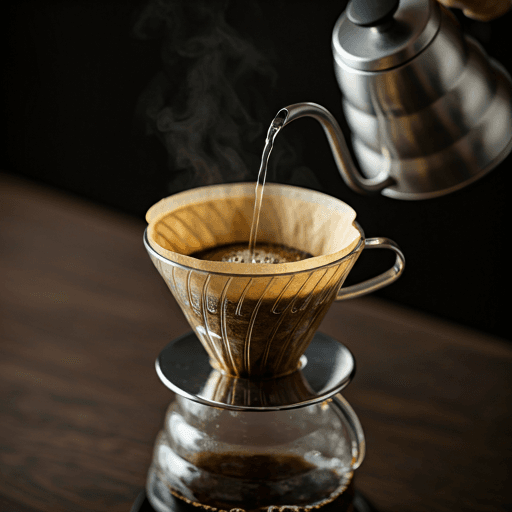
Cuban espresso is a small, intensely strong, and noticeably sweet shot of coffee that comes from Cuba. What sets it apart is the sweetening: sugar is whipped into the first dark drops of the brew to make a creamy golden foam called espuma, so the sweetness is built into the coffee rather than stirred in at the end. Known in Spanish as cafe cubano or cafecito, it sits at the heart of a whole family of drinks.
This guide explains what Cuban espresso is, why it looks and tastes different from an Italian shot, and how the cafecito, colada, cortadito, and cafe con leche all relate. For the step-by-step method, see our companion guide to making Cuban coffee at home.
What is Cuban espresso?
Cuban espresso is a concentrated, dark-roast coffee that is sweetened during the brewing process. Traditionally it is brewed in a stovetop moka pot rather than a pump espresso machine, using a finely ground, dark Italian- or Spanish-style roast. As the first thick drops come out of the pot, they are beaten together with sugar to create the signature foam. Everything else builds from that base. You will also hear it called espresso cubano, cafe cubano, or simply cafecito, and in practice those names point to the same sweet, foam-topped shot.
It is worth being clear about what Cuban espresso is not. It is not an instant coffee, and it is not a flavored syrup drink. It is real espresso-style coffee, just sweetened in a particular way. If you want the foundation that everything here rests on, our explainer on what espresso actually is covers the basics of the shot itself.
The espuma: the foam that defines it
The espuma (sometimes called espumita) is the single most important detail. To make it, you put a spoonful or two of sugar in a cup, pour over just the first strong drops of the brew, and beat the mixture hard with a spoon until it turns into a pale, creamy, caramel-colored paste. The rest of the hot coffee is then poured in, and the paste floats up as a thick, crema-like layer on top.
Because the sugar dissolves into the hottest, most concentrated coffee, it sweetens more deeply than sugar stirred into a finished cup. Plain white sugar is the classic choice and gives the smoothest foam, though some Cuban households reach for raw or demerara sugar for a thicker, slightly molasses-rich espuma. The result is a coffee with an airy sweet head, a rounder body, and far less of the sharp bitterness you might expect from a dark roast.
Why Cuban espresso tastes and looks different
Three things separate Cuban espresso from a plain Italian shot. First, the roast: it leans dark and bold, which gives a deep, slightly smoky base. Second, the sweetness is upfront and integral, not optional. Third, the espuma gives it a tan, foamy crown that looks a little like espresso crema but is sweeter and more substantial.
Put together, the drink reads as small but powerful and dessert-like sweet, without being heavy. That balance is the whole point. It is built to be knocked back in a sip or two, leaving a sweet, roasty finish.
The Cuban coffee family: cafecito, colada, cortadito, and cafe con leche
Cuban espresso is really a base that branches into several named drinks. The difference between them comes down to how much there is, whether milk is added, and how they are served. Here is the quick map.
| Drink | What it is | Milk? | How it is served |
|---|---|---|---|
| Cafecito (cafe cubano) | The classic sweet, foam-topped Cuban espresso | No milk | A tiny demitasse, roughly 1–2 oz, often as a quick solo shot |
| Colada | A larger batch of cafecito brewed to share | No milk | A foam cup of about 3–4 oz with a stack of small plastic cups, split among a group |
| Cortadito | A cafecito "cut" with a little hot or steamed milk | A splash | A small cup, sweet but mellower, between a cafecito and a cafe con leche |
| Cafe con leche | Strong Cuban espresso loosened with plenty of hot milk | Mostly milk | A larger breakfast cup, often with toasted bread on the side |
Cafecito (cafe cubano)
The cafecito is the original and the reference point. It is the straight, sweet, espuma-topped shot, served in a small cup and meant to be drunk quickly. When someone offers you "a cafecito," this is what they mean.
Colada
A colada is the social engine of Cuban coffee. It is essentially several cafecitos brewed at once and poured into a single larger cup, handed over with a sleeve of thumb-sized plastic cups. The idea is to share: one person buys, then pours a tiny cup for everyone at the office, the shop, or the job site. It is less a drink than a ritual of passing coffee around.
Cortadito
A cortadito takes the sweet cafecito and "cuts" it with a small amount of hot or scalded milk, softening the intensity without turning it into a milky drink. It is the middle ground for people who want the Cuban sweetness with a gentler edge.
Cafe con leche
Cafe con leche is the milky, breakfast end of the family: a shot of strong Cuban espresso topped up with a generous amount of hot milk, sweetened to taste. It is the closest cousin to a latte in spirit. If you enjoy milkier coffee, you might also like our look at the iced latte and how milk changes a coffee's character.
The culture: ventanitas and the shared pick-me-up
Cuban espresso is inseparable from Cuban and Cuban-American daily life. In Cuba it punctuates the day, offered to guests and shared among neighbors. In the United States, especially in Miami, Tampa, and across South Florida, it lives at the ventanita, the small walk-up "little window" of a Cuban cafe or bakery where people line up for a cafecito or a colada.
The ventanita is a social hub as much as a counter. A colada bought for the table or the crew is a small act of generosity, and the few minutes spent drinking it together function as a shared break. That communal, pass-it-around spirit is as much a part of the drink as the espuma itself. It is one of the most distinctive coffee traditions in the world, and it slots neatly alongside the other styles in our overview of types of coffee drinks.
How Cuban espresso is made (the short version)
The method is simple and does not need a machine. In brief:
- Brew a dark roast in a stovetop moka pot.
- Put sugar in your serving cup or a small jug.
- Pour just the first few drops of coffee over the sugar and beat hard until it turns pale and creamy.
- Pour in the rest of the coffee; the espuma rises to the top.
- For a cortadito, add a little hot milk; for a cafe con leche, add a lot.
That is the outline; for exact ratios, timing, and technique tips, follow the full Cuban coffee how-to.
Caffeine and what to expect
Cuban espresso is real coffee, so it carries normal caffeine. It is brewed from dark roast at espresso strength, which means it is potent ounce for ounce, but the servings are small. A single cafecito delivers a concentrated but modest dose; a colada is bigger, though it is usually split several ways. The sugar can make it feel like an instant lift, but the energy comes from the coffee itself, not the sweetness.
The takeaway
Cuban espresso is a small idea executed beautifully: a dark, strong shot sweetened at the source into a foamy, crema-like treat, then shared. Once you know the espuma trick, the whole family of drinks falls into place, from the solo cafecito to the communal colada to the milky cafe con leche. Brew one in a moka pot, pour a round for friends, and you have the gist of one of coffee's great social rituals.