
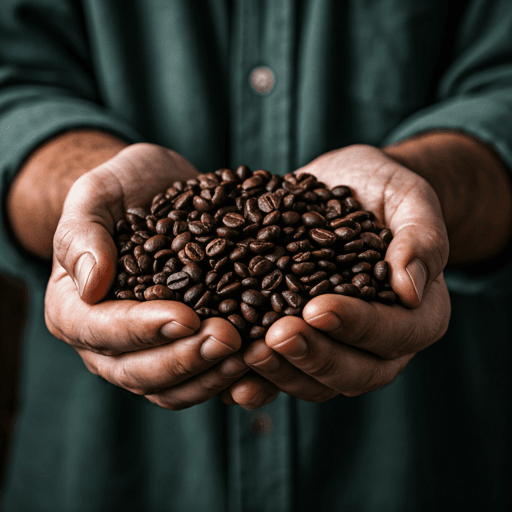
Guanacaste coffee comes from the hot, dry northwest of Costa Rica — the country's largest and least typical coffee-growing region. Spread across the Pacific-facing slopes of the Guanacaste and Tilarán mountain ranges, it is one of Costa Rica's eight official coffee regions, and the one that most defies the national stereotype of cool, sky-high, ultra-bright cups. Where Tarrazú trades on altitude and acidity, Guanacaste offers something milder and rounder: a smooth, classic, easy-drinking coffee shaped by lower elevations and a fierce dry season.
Where Guanacaste coffee grows
Guanacaste sits in Costa Rica's northwestern Pacific corner, a landscape better known for cattle ranches, savannah, and beach towns than for coffee. The plantations climb the volcanic foothills of two mountain chains — the Cordillera de Guanacaste and the neighbouring Cordillera de Tilarán — and extend down toward the Nicoya Peninsula and the plains of the Northern Zone. The region is simply where these beans are grown — part of the wider coffee origins story of Central America.
Elevations here typically run from around 600 to 1,350 metres (about 2,000 to 4,400 feet), with some higher pockets reaching toward 1,700 metres on the cooler upper slopes. That is meaningfully lower than Costa Rica's celebrated high-grown regions, and it is the single biggest reason Guanacaste coffee tastes the way it does. The soils are volcanic — mineral-rich and free-draining — a common thread across Costa Rican terroir that supports healthy plants and steady cherry development.
What makes Guanacaste different
Guanacaste is the hottest of Costa Rica's coffee regions and the one defined by the most pronounced dry season. The northwest has a strongly seasonal tropical climate: a long, marked dry stretch from roughly December to April, followed by a concentrated wet season. Total annual rainfall in the coffee-growing foothills can still be substantial — on the order of 2,000 millimetres or more — but it arrives in a short, intense window, so the defining feature is seasonality rather than constant moisture. Average temperatures in the planted zones sit near 22°C, warmer than the crisp highlands of Tarrazú or the Central Valley.
Two forces set the region apart:
- Lower average altitude. Cooler high-altitude sites slow cherry ripening, concentrating sugars and acids and producing the intense brightness Costa Rica is famous for. Guanacaste's warmer, lower slopes ripen fruit faster, yielding a softer, gentler cup with less sharp acidity.
- A pronounced dry season. The reliable dry stretch overlaps with harvest — generally October to February — which aids even ripening and, importantly, makes sun-drying practical. That climate is a natural fit for the honey and natural processing styles that have spread across Costa Rica.
The result is coffee with its own regional signature rather than a pale imitation of the highlands. Guanacaste will rarely win a cupping table on dazzling acidity, but it delivers approachability, balance, and consistency — qualities many everyday drinkers actually prefer.
The Guanacaste cup profile
Because it is grown lower and warmer, Guanacaste coffee is typically milder, smoother, and softer in acidity than Costa Rica's flagship high-grown lots. Expect a medium body, gentle brightness, and a comforting, classic flavour base: nutty and chocolatey tones, mild caramel sweetness, and light tropical-fruit accents. Costa Rica's coffee institute, ICAFE, characterises the region with balanced acidity, body, and aroma — a fair summary of the whole region.
That balance makes Guanacaste a versatile, forgiving coffee. It suits medium roasts beautifully, holds up well in filter and drip brewing, and plays nicely with milk without turning thin or sour. If Tarrazú is the bright, citrusy soloist, Guanacaste is the dependable rhythm section — less flashy, but easy to live with cup after cup.
Guanacaste vs Tarrazú at a glance
Comparing Guanacaste with Tarrazú, Costa Rica's most prestigious high-grown region, is the quickest way to understand what altitude does to a cup.
| Feature | Guanacaste | Tarrazú |
|---|---|---|
| Location | Northwest Pacific slopes & lowlands | Central-southern highlands (Los Santos) |
| Typical altitude | ~600–1,350 m (up to ~1,700 m) | ~1,200–1,900 m |
| Climate | Hot, strongly seasonal dry season | Cool, mountainous, more even rainfall |
| Acidity | Soft, mild, balanced | High, bright, citrus-forward |
| Body | Medium, smooth | Medium, clean, structured |
| Typical notes | Nutty, chocolate, mild tropical fruit | Lemon, orange blossom, apricot |
| Best for | Everyday, milk drinks, easy filter | Bright single-origin filter, showcase lots |
Neither is "better" — they are different tools. Read side by side with our guide to Costa Rica Tarrazú coffee, the contrast shows how a few hundred metres of elevation reshape flavour.
Costa Rican context: arabica, micro-mills, and processing
Guanacaste's character only makes full sense inside Costa Rica's national coffee story. In 1988 the country banned the planting of robusta to protect its reputation for quality, which is why Costa Rica became famous as an essentially all-arabica origin. That ban was eased in 2018 to allow robusta in a few designated low-lying zones as a climate-adaptation measure, but the country's coffee — Guanacaste included — remains overwhelmingly 100% arabica, and that quality-first commitment applies as much to a lower-grown Guanacaste lot as to a competition Tarrazú.
The second defining force is the micro-mill revolution. Historically, smallholders sold cherry to large centralised mills that blended everyone's harvest together, erasing individual character. From the late 1990s onward, farmers increasingly built their own small "micro-mills" to process their own cherry, keeping single-farm and single-lot identity intact and experimenting with new methods. Roughly nine in ten of Costa Rica's coffee farmers are smallholders, and this shift put quality and creativity back in growers' hands. Guanacaste's Northern Zone is one of the areas where new micro-mills continue to appear.
That experimentation shows up most clearly in processing. Alongside the traditional washed method, Costa Rica helped popularise honey processing — drying the bean with some of its sweet, sticky fruit mucilage still attached, a middle path between washed and natural. Guanacaste's dependable dry season makes honey and full natural drying practical, adding extra sweetness and body that flatter the region's already mellow base.
Where Guanacaste fits on Costa Rica's map
Costa Rica recognises eight coffee-growing regions: Tarrazú, the Central Valley, the West Valley, Tres Ríos, Orosi, Turrialba, Brunca, and Guanacaste. Guanacaste is often considered one of the newer and less-established of these in specialty terms, and its output is comparatively modest — small next to the highland heavyweights. To see how all of these fit into the broader picture, our overview of Costa Rican coffee maps the country region by region, while the coffee belt guide places Costa Rica within the worldwide tropical growing zone.
There is one more reason Guanacaste draws attention: the Nicoya Peninsula, which falls within the region, is one of the world's five "Blue Zones," areas famous for exceptional longevity. A handful of local cooperatives lean into that identity, highlighting coffee grown in the same landscape where people are known to live remarkably long lives — a nice piece of regional storytelling layered on top of an honest, everyday cup.
Choosing and brewing Guanacaste coffee
When you come across a Guanacaste lot, a few things are worth keeping in mind:
- Expect balance, not fireworks. This is a coffee that rewards a medium roast and gentle handling rather than a light roast chased for extreme acidity.
- Check the process. A honey or natural Guanacaste will read sweeter and fuller than a washed one; a washed lot will taste cleaner and more restrained.
- Great for milk and everyday drip. Its nutty-chocolate backbone holds up beautifully with milk and makes for a very drinkable morning pot.
- Look for the farm or mill name. Thanks to the micro-mill movement, more Guanacaste coffee now carries single-farm traceability, which is your best guide to quality within the region.
The takeaway
Guanacaste coffee is proof that Costa Rica is more than its famous highlands. Grown low and warm on volcanic slopes in the country's driest corner, it trades the piercing acidity of Tarrazú for smoothness, balance, and a comforting nutty-chocolate character — all built on the same overwhelmingly arabica, micro-mill, quality-first foundation as the rest of the country. It may not be the region that wins the auctions, but for an honest, approachable, drink-it-every-day Costa Rican cup, Guanacaste more than earns its place on the map.