
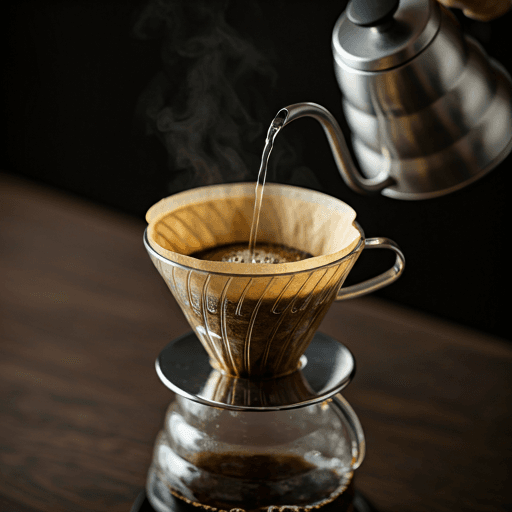
Cometeer is specialty coffee that real roasters have already brewed for you, then flash-frozen into small sealed aluminium capsules of concentrated coffee that ship and live in your freezer. To drink it you do not brew anything. You pop out a frozen capsule, melt it with hot water for a hot cup, or drop it straight into cold milk or water for an iced one, and stir. No machine, no grinder, no filter.
That makes Cometeer frozen coffee one of the more unusual ideas in coffee right now: cafe-grade coffee with the speed of instant, made in a completely different way. Below is exactly how it works, how it differs from instant coffee and from machine pods, what the format actually is, and the honest trade-offs of keeping your coffee in the freezer.
What is Cometeer frozen coffee?
Cometeer is a US coffee company, founded in 2015 by Matthew Roberts and Douglas Hoon and based in Gloucester, Massachusetts. The idea grew out of a simple frustration: great coffee is fragile, and most ways of making it convenient (instant powder, supermarket pods, hours-old brewed coffee in a flask) sacrifice the flavour. Cometeer's answer was to brew excellent coffee carefully, capture it at its peak, and freeze it so hard that almost nothing degrades before you drink it. The capsule line launched in 2019 and won a best-new-product award at the Specialty Coffee Association expo.
Each capsule holds a concentrated brewed coffee extract, roughly ten times the strength of a normal cup, sealed inside a small puck of pure aluminium. They are not pods you brew and not powder you dissolve. They are real, already-brewed coffee, frozen solid. When you want a drink, you melt one and dilute it to taste.
What the capsules actually are
- Concentrate, not a finished cup. The frozen extract is espresso-strength. You add water or milk to bring it to the strength you like, which is also why one format can make a hot black coffee, a latte or an iced coffee.
- Graded by roast and intensity. Capsules come in light, medium and dark roasts, plus decaf, so a box can range from a delicate, fruity light roast to a bold dark one. Curated boxes mix several roasters and roast levels.
- Real coffee caffeine. This is normal brewed coffee, not a watered-down novelty, so a full-strength capsule carries roughly 180 mg of caffeine; half-caff capsules run around 90 mg and decaf only a trace (about 9 mg).
- Sealed in 100% aluminium. The puck is a single material, which matters for both freshness and recycling (more on that below).
How Cometeer works, step by step
The whole system is built around one goal: lock the coffee in at its best and keep it there until your cup. Here is the journey from roaster to mug.
- Brew. A partner roaster's coffee is brewed to a precise, strong concentrate rather than a ready-to-drink cup.
- Flash-freeze. The concentrate is frozen almost instantly with liquid nitrogen, at around -321 F (-196 C). Freezing this fast traps the volatile aromatic compounds in place before they can escape or oxidise, which is what normally makes coffee taste flat and stale over time.
- Seal. Each frozen dose is sealed into its aluminium capsule, airtight and light-proof.
- Ship cold and store frozen. The capsules travel in an insulated box with dry ice and go straight into your freezer, where they keep for a long time (the company cites up to 36 months frozen).
- Melt to serve. When you want coffee, you melt a capsule and add your liquid of choice. That is the only "brewing" step, and it takes seconds.
Once a capsule is melted it behaves like fresh coffee concentrate: best enjoyed soon, but it holds for roughly 24 hours at room temperature or about 3 days in the fridge.
How to make a cup from a capsule
There is no fixed recipe, which is part of the appeal. Treat the melted capsule as an espresso-style base and build the drink you want.
A hot black coffee
- Peel off the foil lid and push the frozen puck out into your mug, or run the sealed capsule under warm tap water for about 10 seconds first to loosen it.
- Add about 6 to 8 oz of hot water.
- Stir until the concentrate fully melts and dissolves. That is it.
An iced coffee or iced latte
- Thaw the capsule in the fridge overnight, or submerge the sealed capsule in cool water for a few minutes.
- Pour the concentrate into 6 to 8 oz of cold water or milk over ice.
- Stir, sweeten if you like, and drink. Because the base is already cold-stable concentrate, nothing gets watered down.
A latte or a stronger shot
For a latte, melt the capsule and stir it into warm steamed or frothed milk. For something closer to an espresso shot, use less liquid so the concentrate stays intense. If you are new to building drinks from a coffee base, our guide on how to make coffee covers ratios and temperatures that apply here too.
Cometeer vs instant coffee vs pods vs fresh-brewed
The quickest way to understand Cometeer coffee is to line it up against the formats it is often confused with. They all promise convenience, but they get there very differently.
| Format | What it is | Freshness approach | Effort to make a cup |
|---|---|---|---|
| Cometeer | Brewed specialty coffee, flash-frozen into an aluminium capsule of concentrate | Frozen at its peak; aroma locked in until you melt it | Melt a capsule, add water or milk, stir |
| Instant coffee | Brewed coffee with the water removed, leaving soluble powder or granules | Dried and shelf-stable; some aroma lost in drying | Spoon granules into a mug, add hot water, stir |
| Machine pods | Dry ground coffee sealed in a plastic or aluminium pod | Sealed dry until a machine pierces and brews it | Drop in a pod and let a Keurig or Nespresso machine brew it |
| Fresh-brewed | Ground beans brewed on demand by drip, espresso, French press, etc. | Brewed fresh each time; best flavour, shortest shelf life | Grind, dose, brew with a machine or manual method |
How it differs from instant coffee
This is the comparison that confuses people most, because both are fast and need no machine. The difference is in the science. Instant coffee is brewed and then has its water removed by spray- or freeze-drying, leaving a dry powder you rehydrate; the heat of drying strips out some delicate aromatics. Cometeer keeps the water in. It freezes the actual liquid coffee at its peak, so what you melt is real brewed coffee, not reconstituted powder. If you want the full picture on the dried-granule approach, see our explainer on instant coffee.
How it differs from machine pods
Cometeer capsules look a little like espresso pods, but they are not brewed by a machine. A Keurig or Nespresso pod holds dry grounds that a machine pierces and forces hot water through. A Cometeer capsule holds coffee that is already brewed and frozen, so there is no machine and no piercing; you simply melt it. The capsule is also a single recyclable material, pure aluminium, which you rinse and put in curbside recycling. For how the brewed-by-machine pod world works, our guide to coffee capsules and pods breaks it down.
Who brews Cometeer coffee?
The thing that separates Cometeer from instant is the coffee itself. Rather than make its own house blend, the company partners with well-known third-wave roasters and freezes their coffee. Names that have featured include Counter Culture Coffee, Intelligentsia, George Howell, Onyx Coffee Lab and Square Mile, among others. These are roasters built around traceable, carefully sourced beans and precise roasting, the same world covered in our guide to specialty coffee. One of those partners, Counter Culture, is a sustainability-focused specialty roaster, exactly the kind of carefully sourced coffee the freeze-at-peak format is built to protect. The format is the clever part; the coffee inside is meant to be the real thing.
The trade-offs: quality, convenience, cost and the freezer
Cometeer is a genuinely clever idea, but it is not free of compromises. Here is the balanced view.
- Quality and convenience are the strengths. You get coffee from respected roasters with effectively zero skill, gear or cleanup, and far more aroma than typical instant. For people who want good coffee but do not want to grind, dose and brew, that is a real win.
- It costs more. This sits at the premium end of at-home coffee. You are paying for specialty beans, careful brewing, flash-freezing and cold-chain shipping, so it is pricier per cup than a bag of beans or a jar of instant. (We do not quote prices; expect premium, not budget.)
- You must have freezer space. The capsules only stay good frozen, so a box needs a chunk of freezer real estate, and the format does not suit a hotel room or a long off-grid trip the way instant or a moka pot does.
- Shipping has a footprint. The aluminium capsule is recyclable and the system avoids stale coffee, but frozen delivery with dry ice is energy-intensive, which is a fair thing to weigh.
The bottom line on Cometeer
Cometeer reframes the old trade-off between good coffee and easy coffee. By brewing specialty coffee, flash-freezing it at its peak and sealing it in a recyclable aluminium capsule, it lets you melt a near-cafe cup in seconds with no machine. It is not instant powder and it is not a brew-it pod; it is real frozen coffee you finish in your own mug. Whether it is worth the premium and the freezer space comes down to how much you value that mix of quality and convenience, and whether you would rather spend those few minutes grinding and brewing a cup yourself. Either way, it is one of the clearest signs of how far the convenient end of great coffee has come.