
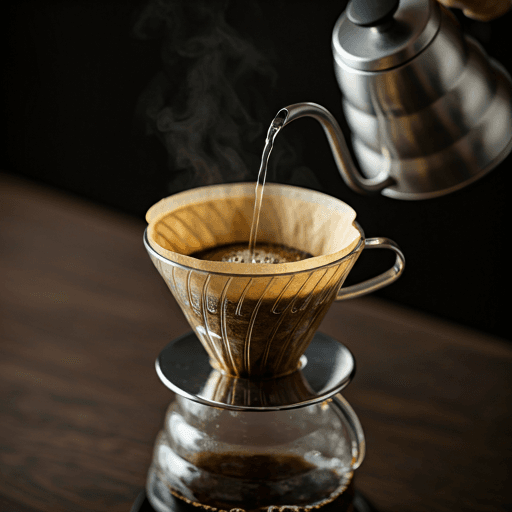
The cold brew vs pour over question comes down to one clean split: temperature and time. Cold brew steeps coarsely ground coffee in cold or room-temperature water for a long stretch, usually 12 to 24 hours, to make a smooth, low-acid concentrate. Pour over sends hot water through a bed of medium-ground coffee just once, by gravity, in a paper or metal filter over a few minutes for a bright, aromatic hot cup.
Both are manual, filter-based ways to make coffee without a machine, and both can taste wonderful. Whether you frame it as cold brew vs pour over or pour over vs cold brew, the underlying contrast is the same: they pull flavor out of the grounds in almost opposite ways, which is why the same beans can taste like two different drinks depending on which method you reach for.
Cold brew vs pour over: the short answer
Put simply, cold brew is cold, slow and full immersion, while pour over is hot, fast and single pass. Cold brew is a make-ahead batch: you combine grounds and cool water, walk away for half a day or more, then strain out a rich concentrate you dilute to taste. Pour over is a live, hands-on pour: you wet a filter of fresh grounds and coax hot water through in a steady spiral, and the cup is ready in three or four minutes.
If you want the full method for each, the deep how-tos live in their own guides. For cold brew, see what is cold brew coffee and the step-by-step in how to make cold brew coffee. For the pour-over ritual, the pour over coffee guide walks through gear, grind and pour technique. This piece stays focused on the difference between cold brew and pour over so you can pick the right one for the moment.
Temperature and time
Temperature is the headline difference. Cold brew never sees heat: it uses cold or room-temperature water, and it makes up for that with time. A typical batch steeps for roughly 12 to 24 hours, often in the fridge. The long soak slowly dissolves the flavors that hot water would grab in minutes, and it tends to leave behind much of the sharper, more acidic and bitter compounds.
Pour over does the opposite. Water just off the boil, commonly around 90 to 96 C (about 195 to 205 F), passes through the grounds once and drains away in roughly three to four minutes. Heat speeds extraction dramatically, so pour over trades the long wait for a fast, aromatic result. The trade-off is that hot water also lifts more of the bright, acidic notes, which some people love and others find sharp. Exact numbers vary with beans and gear, so treat these as ballpark figures.
Grind size
Grind follows from brew time. Because cold brew steeps for so long, it likes a coarse grind, similar to raw sugar or coarse sea salt. A coarse grind slows extraction to match the long soak, keeps the concentrate from turning muddy or over-extracted, and makes straining much easier.
Pour over works best with a medium grind, roughly like table salt or coarse sand, though the exact setting shifts with your filter and cone. The medium grind gives water enough resistance to extract evenly in a few minutes without either racing through (weak, sour) or clogging (slow, bitter). Grind too fine for cold brew and it can turn silty; grind too coarse for pour over and the cup can taste thin. As a rule of thumb, cold brew leans coarse and pour over leans medium.
Flavor and acidity
This is where the two methods really part ways. Cold brew tends to taste mellow, rounded and slightly sweet, with noticeably low acidity and a heavier, smoother body. The cold, slow process pulls fewer of the acidic and bitter compounds, which is why cold brew often reads as gentle and easy to drink, even from beans that taste sharp when brewed hot. Results vary with beans, ratio and steep time, so treat this as a tendency rather than a guarantee.
Pour over usually goes the other way: crisp, clean and nuanced, with more acidity and clarity. Because the paper or fine metal filter catches most of the oils and fines, the cup can taste bright and almost tea-like, letting delicate floral, fruity or citrusy notes show through. If you want to taste what makes a single-origin coffee distinctive, pour over tends to spotlight it; if you want those edges smoothed off, cold brew tends to soften them.
Strength and dilution
Strength works differently for each. Cold brew is usually brewed as a concentrate, using a higher coffee-to-water ratio, so what you strain out is meant to be diluted. Many people cut it roughly one part concentrate to one part water, milk or ice before drinking, then adjust to taste. That also makes cold brew flexible: the same batch can be a strong morning cup or a lighter afternoon glass depending on how much you add.
Pour over is brewed ready to drink. You choose the ratio up front, commonly somewhere around 1 gram of coffee to 15 to 17 grams of water, and what drips into the cup is the finished drink, no dilution needed. If a pour over tastes too strong or too weak, you adjust the ratio or grind on the next brew rather than watering down the cup in front of you.
Hot vs iced, and the effort involved
The practical rhythm of each method matters as much as the flavor. Cold brew is a make-ahead fridge project. It takes a few minutes of hands-on time to combine grounds and water, then it brews itself overnight, and a single batch can last several days in the refrigerator. It is naturally suited to iced coffee: pour the concentrate over ice, add water or milk, and go. The catch is planning, since you have to start it half a day ahead.
Pour over is the opposite kind of effort. There is no waiting, but each cup is made fresh and rewards a steady hand. A gooseneck kettle helps you control where and how fast the water lands, and a slow, even pour makes a real difference to the result. It is a small ritual, usually served hot, though you can brew it stronger and pour it over ice for a quick iced cup. If you enjoy a hands-on few minutes, pour over is satisfying; if you would rather grab a ready batch, cold brew wins.
Cold brew vs pour over at a glance
| Feature | Cold brew | Pour over |
|---|---|---|
| Water temperature | Cold or room temperature | Hot, about 90 to 96 C (195 to 205 F) |
| Brew time | About 12 to 24 hours | About 3 to 4 minutes |
| Grind | Coarse | Medium |
| Body and acidity | Full, smooth body; low acidity | Lighter, clean body; brighter acidity |
| Typical serve | Diluted concentrate, usually iced | Fresh hot cup, ready to drink |
Which to choose, and when
Neither method is better; they suit different moods. Reach for cold brew when you want a smooth, low-acid batch to keep in the fridge, especially for iced coffee on warm days or busy mornings when grabbing a ready glass beats brewing from scratch. It is also a gentle choice if bright acidity tends to bother your palate, though how coffee sits with you is personal, so listen to your own body. Responses vary, and this is not medical advice.
Reach for pour over when you want a clean, aromatic hot cup made fresh, and when you enjoy the few minutes of ritual. It is the method that best shows off the character of a good single-origin bean, and it lets you dial in a new cup every time. If you are torn between manual methods more broadly, the pour over vs French press comparison covers another popular pairing, since French press shares cold brew's full immersion but uses hot water and a short steep.
Many coffee lovers keep both in rotation: a cold brew batch resting in the fridge for easy iced drinks, and a pour-over setup on the counter for a mindful hot cup. Once you understand the cold-slow-immersion versus hot-fast-single-pass split, choosing between cold brew or pour over becomes less about which is best and more about what you feel like drinking today.