
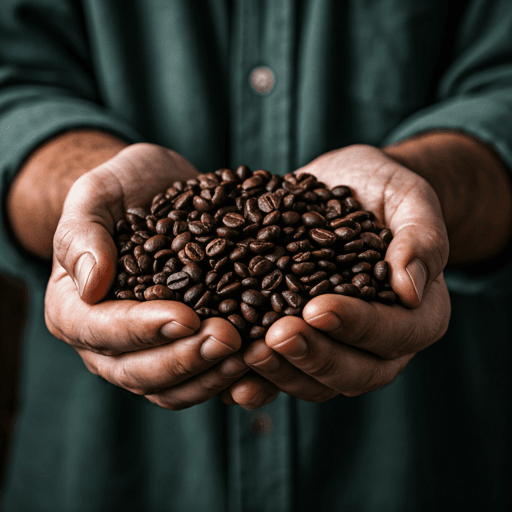
The coffee plant lifecycle runs from a single planted seed to a productive tree that yields cherries for decades. A Coffea plant passes through germination, a long nursery childhood, years of vegetative growth, its first fragrant flowering, and finally the annual rhythm of cherry set and harvest. Understanding these stages explains why good coffee is a patient, multi-year crop rather than an annual one.
The coffee plant lifecycle at a glance
From seed to first meaningful harvest, a coffee tree needs roughly three to four years, and it can keep producing for two to three decades after that. The table below maps the full arc so you can see how the pieces fit together before we walk through each stage.
| Stage | Approximate timing | What happens |
|---|---|---|
| Seed & germination | Weeks 0–8 | Seed swells and sprouts; the "soldier stage" pushes up |
| Seedling / nursery | Months 2–12 | Cotyledons open; plant grows under shade |
| Transplant & vegetative growth | Years 1–3 | Moved to the field; builds roots, stem, and branches |
| First flowering | Year 2–3 | White jasmine-scented blossoms appear after rain |
| Cherry development & ripening | 6–11 months per cycle | Green cherries set, swell, and turn red or yellow |
| First real harvest | Year 3–4 | First commercially useful crop is picked |
| Peak production | Years 7–20 | Highest, most consistent yields |
| Decline / renovation | Years 20–30+ | Yields fall; trees are stumped or replaced |
Stage 1: Seed and germination
Every coffee tree begins as a seed — the same green bean found inside a ripe cherry, still wrapped in its papery parchment. Planted in moist, shaded seedbeds, the seed absorbs water and swells over several weeks. Germination is slow by crop standards, typically taking four to eight weeks, and it depends heavily on freshness, temperature, and consistent moisture.
The first visible sign of life is the soldier stage: the hypocotyl arches upward and lifts the seed above the soil, still capped by the hard parchment husk, so it resembles a tiny matchstick or a soldier standing to attention. This fragile shoot is the plant's entire future, and nurseries protect it carefully from drying out, damping-off fungi, and direct sun.
Stage 2: Seedling and nursery
Once the two seed leaves, or cotyledons, unfold and open — a phase growers nickname the "butterfly" stage — the plant is officially a seedling. It now spends roughly six to twelve months in a coffee nursery, growing in bags or beds under shade cloth that filters out harsh light. During this childhood it develops its first true leaves, a sturdy central stem, and a root system strong enough to survive transplanting.
Nursery management sets the ceiling for everything that follows. Weak, root-bound, or disease-carrying seedlings rarely recover once they reach the field, so producers cull runts, water daily, and gradually "harden off" plants by increasing sun exposure before they leave the shade. A healthy seedling reaches roughly 20–40 cm and carries several pairs of leaves before it is ready to move.
Stage 3: Transplanting and vegetative growth
After about a year, seedlings are transplanted into their permanent home on the farm, usually at the start of a rainy season so the young plants get reliable water. This begins the vegetative growth phase, a two-to-three-year stretch with no fruit to show for it. The tree invests everything in building woody structure: a deep taproot, lateral roots, a thickening trunk, and the horizontal branches that will one day carry cherries.
Spacing, shade trees, soil, and altitude all shape how vigorously the plant grows during these years, which is why site selection and layout are such important parts of how coffee is grown. Farmers may also begin light formation pruning now to encourage a strong, well-branched frame. Patience here pays off for the next quarter-century.
Stage 4: First flowering
Somewhere around the second or third year, a mature-enough tree produces its first flowers. Coffee blossoms are small, waxy, and brilliant white, growing in dense clusters along the branches, and they release an unmistakable jasmine- or orange-blossom-like fragrance. Individually the flowers are short-lived, often lasting only a few days before their petals brown and drop.
What triggers coffee flowering
Flowering is not random. In most origins it is triggered by rainfall after a distinct dry period — the "flowering rains" or "blossom showers." The dry spell primes the flower buds, and the sudden moisture releases them to open more or less together. Where the dry season is pronounced, this produces synchronized, farm-wide blooms and a concentrated harvest; where rainfall is spread out, a tree can flower several times a year and ripen cherries in overlapping waves. On some robusta estates, growers even use overhead irrigation to imitate this trigger and coordinate the bloom.
Stage 5: Cherry set, development, and ripening
Pollinated flowers set fruit; unpollinated ones simply fall. Each surviving flower becomes a green coffee cherry that then swells and matures over many months. This is the longest single step in the annual cycle, and its length is one of the clearest differences between the two commercial species: arabica cherries generally take about six to nine months from flower to ripeness, while robusta needs roughly nine to eleven.
As the cherry matures it moves through a predictable color sequence — hard and green at first, then softening and coloring up to yellow, orange, and finally deep red or, in some varieties, golden yellow. That color change signals peak sugar content in the fruit and is the visual cue pickers rely on. Because cherries on the same branch do not always ripen in perfect unison, selective picking of only the ripe fruit is what separates high-quality lots from mixed ones.
Stage 6: Harvest and productive years
A tree may set a few cherries in its second or third year, but the first commercially worthwhile crop usually arrives in year three or four. From that point the tree enters its long productive career. Yields climb toward a peak that generally spans years seven to twenty, when a well-tended plant delivers its heaviest and most consistent harvests. The timing and rhythm of picking are covered in more depth in our guide to coffee harvesting and picking.
After two decades, productivity gradually declines as the tree ages and wood becomes less fruitful. Most farms keep trees economically productive for twenty to thirty years — sometimes longer — before renovating the plot. Rather than uprooting everything, many growers "stump" old trees, cutting them back hard to force vigorous new growth, or replant in stages so income never stops entirely. In this way the lifecycle loops: seeds from today's productive trees become the seedlings of the next generation.
Arabica versus robusta: two lifecycle clocks
Both species follow the same broad path, but they keep different schedules and reproduce differently. These distinctions ripple through farm planning, flavor, and yield.
- Pollination: Arabica is largely self-pollinating, so a single tree can set fruit on its own and stays genetically stable. Robusta is self-incompatible and must be cross-pollinated, usually by wind and insects between different plants.
- Cherry ripening: Arabica cherries ripen in roughly 6–9 months; robusta takes about 9–11 months, lengthening its annual cycle.
- Environment: Arabica favors cooler, higher-altitude zones, while robusta tolerates hotter lowlands — both live within the tropical coffee belt that circles the equator.
- Vigor and lifespan: Robusta is generally hardier and more disease-resistant, whereas arabica is more delicate and demands more careful management across its productive life.
The takeaway
The coffee plant lifecycle is a lesson in patience. Years pass between planting a seed and pouring the first cup grown from it, and a single flowering event sets a harvest that will not be ready for the better part of a year. That long timeline is exactly why farm decisions — variety choice, nursery care, spacing, pruning, and renovation — echo for decades. When you understand the full journey from seed to soldier stage to a red-ripe cherry, the seasonal, agricultural nature of coffee stops being abstract and becomes something you can taste.