
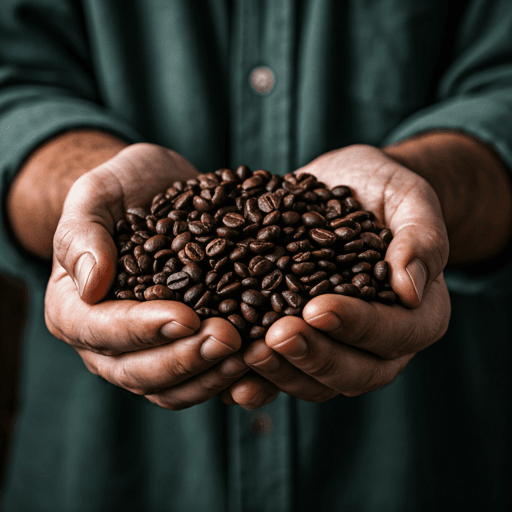
Density grading is the stage of green-coffee sorting that separates beans by mass rather than by size, color or defect count. Denser beans are generally grown at higher altitudes and are more fully developed, so they roast more evenly and tend to cup with more clarity and sweetness. Mills achieve this using oscillating densimetric gravity tables and, upstream, water flotation to skim off the lightest fragments. It is one powerful quality signal, not the whole story.
Where density fits in the grading picture
Most producing countries run green coffee through several sequential sorts, and density is only one axis. The broader framework is covered in our overview of coffee grading, which spans defect counting, screen size, color sorting and cup score. Density grading is the mass dimension of that system, and it is the natural complement to size (screen) grading: screen sorting asks how big a bean is, while density sorting asks how heavy it is for its volume.
The two are related but not identical. A large bean is not necessarily a dense one — a bean can be big yet under-filled, hollow or malformed. That is why premium lots are usually passed over a gravity table after being screen-graded: sizing narrows the range, and the densimetric table then pulls the heaviest, most intact beans out of an already uniform stream.
Why bean density matters
Density is a useful proxy for how the coffee cherry ripened and how completely the seed developed inside it. Several factors push a bean toward higher density:
- Altitude and cooler temperatures. Slower ripening at elevation lets sugars and other precursors accumulate, and the bean tends to be harder and heavier.
- Full seed development. A properly matured seed fills its space; poorly developed or immature seeds leave voids and weigh less.
- Cell structure. Denser beans have a tighter, harder cellular matrix, which is why the trade calls high-grown coffee "hard bean."
The roasting consequence is significant. Beans of similar density in a batch absorb heat at a similar rate and reach first crack together, giving an even roast. A mix of dense and light beans roasts unevenly — the light ones scorch or over-develop while the dense ones lag — muddying flavor. Removing the outliers by weight is therefore both a green-quality decision and a roast-consistency decision, which is why density work matters for anyone chasing specialty-grade results.
How density is sorted
Densimetric (gravity) tables
The workhorse of density grading is the densimetric gravity table, sometimes called a gravity separator or oscillating table. It is a slightly inclined, porous deck that vibrates while air is blown up through it from below. The airflow partially fluidises the bed of beans, so the mass behaves almost like a fluid: heavier beans sink to the deck surface and lighter beans float to the top of the layer.
The combination of oscillation and incline then stratifies and walks the beans in different directions. The dense fraction, gripped against the moving deck, is conveyed to the high side, while the light fraction rides the air cushion and slides down to the low side. Intermediate weights exit in between. Operators tune deck angle, oscillation speed and air pressure to set exactly where the cut between "keep" and "reject" falls, so the same machine can be run aggressively for a top lot or gently for a commercial one.
Because the table responds to actual weight per bean, it catches defects that a size screen or color camera can miss: insect-damaged seeds, partially hollow beans and low-density immatures that happen to be the right size and color.
Water flotation
Flotation exploits the same principle with water instead of air. When cherries or parchment are dropped into a flotation tank or channel, sound, dense material sinks while the lightest material floats. Floaters are skimmed off the surface and diverted. This step appears at more than one point in processing — at intake to remove damaged and unripe cherry, and again later on parchment or green — and it is one of the simple, low-cost separations discussed across the coffee processing methods.
What floats tends to be undesirable:
- Floaters — lightweight, often over-dried, immature or damaged beans.
- Hollow beans — seeds with internal voids that failed to fill.
- Quakers — underripe, low-density beans that fail to brown properly in the roaster and stay pale, adding papery, cereal-like off-notes. Because quakers are light, both flotation and the gravity table help pull them out, though many still slip through and are removed by hand or color sorter after roasting.
Measuring density in practice
On the mill floor, density is expressed most often as bulk density, the mass of green coffee that fills a fixed volume, reported in grams per liter. A lab fills a standard container, levels it and weighs it, so a heavier reading for the same volume signals a denser, better-filled lot. This bulk measure is quick but blunt: it averages the whole sample, so it can hide a minority of light defects that a gravity table would still separate out bean by bean.
Because moisture adds weight, density readings are only comparable when moisture and water activity are controlled. A lot dried too wet can look deceptively dense, while over-dried coffee reads light and brittle, which is one reason buyers pair density with moisture testing rather than trusting either number alone. Bean shape matters too: rounded peaberries pack differently from flat beans, so like should be compared with like when density is used to rank lots.
The altitude-to-density link and hard-bean grades
The connection between elevation and density is formalised in the grading vocabulary of several Central American origins, where altitude is used as a stand-in for density and hardness:
| Grade | Full name | Rough elevation band |
|---|---|---|
| SHB | Strictly Hard Bean | Highest — typically above about 1,350 m |
| HB | Hard Bean | High |
| SHG | Strictly High Grown | Highest (the equivalent term in other origins) |
| HG | High Grown | High |
"Strictly Hard Bean" (SHB) and "Strictly High Grown" (SHG) are the top tiers used in countries such as Guatemala, Costa Rica, Honduras, El Salvador and Nicaragua. The exact elevation bands vary by country and are defined by each origin's own standards, so the numbers above are indicative rather than universal. The logic is consistent: higher, cooler slopes ripen cherry slowly, producing harder, denser seed — which is precisely what a gravity table is measuring directly rather than by proxy.
Density is one signal, not the whole story
For all its usefulness, density should not be treated as a single verdict on quality. A very dense bean can still carry processing faults, fermentation taints or storage problems that only the cup reveals. Conversely, some prized varieties and some naturally processed lots are less dense than a hard-bean benchmark yet cup beautifully. Density also interacts with roasting rather than dictating it — denser beans usually need more energy and a slightly adjusted roast curve, so knowing a lot's density helps a roaster plan a profile, not skip tasting it.
The best practice is to read density alongside the rest of the picture: screen size, defect count, moisture and water activity, variety, processing style and, above all, the cup. Used that way, gravity sorting is one of the most effective, non-destructive tools a mill has for lifting a lot's consistency before it ever reaches a roaster.
Frequently asked questions
What is coffee density grading?
Coffee density grading sorts green beans by their mass, or weight per unit volume, rather than by size or color. It is done mainly with oscillating densimetric gravity tables and with water flotation. Denser beans are generally higher-grown and more fully developed, so grading by density concentrates the heaviest, most intact beans and removes light, hollow or damaged ones that would roast unevenly.
How does a densimetric gravity table work?
A gravity table is an inclined, porous deck that vibrates while air is blown up through it. The airflow fluidises the bean bed so heavier beans sink to the deck and lighter beans float on top. Oscillation and incline then carry the dense fraction to the high side and the light fraction to the low side, letting operators set exactly where the cut between kept and rejected beans falls.
What are floaters, quakers and hollow beans?
These are low-density defects that density sorting targets. Floaters are lightweight, over-dried, immature or damaged beans that rise in a flotation tank. Hollow beans have internal voids because the seed never fully filled. Quakers are underripe, low-density beans that stay pale in the roaster and add papery, cereal off-flavors. Flotation and gravity tables remove much of this material, though some quakers are picked out after roasting.
What do SHB and SHG mean?
SHB stands for Strictly Hard Bean and SHG for Strictly High Grown. Both are top grades used in several Central American origins to indicate coffee from the highest, coolest elevations. Because slow ripening at altitude produces harder, denser seed, these grades use elevation as a proxy for density. The exact elevation bands are defined by each producing country's own standards and vary between origins.
Is denser coffee always better?
Not automatically. Density is a strong quality signal because it tracks altitude, seed development and roast evenness, but it is not the whole story. A dense bean can still have processing, fermentation or storage faults, and some excellent varieties or natural lots are less dense yet cup very well. Density is best read alongside screen size, defect count, moisture, variety and, most importantly, the cup itself.