
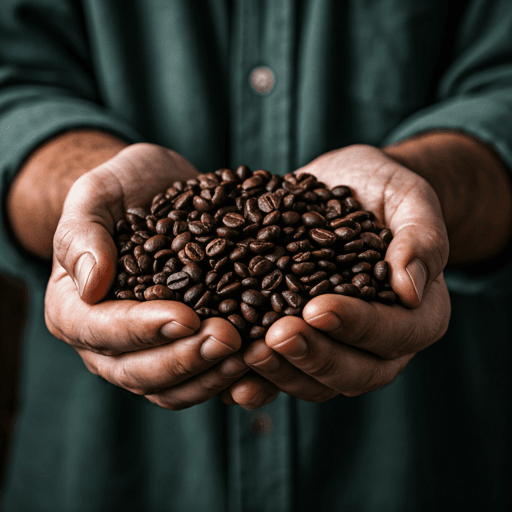
Coffee brands fall into a handful of clear categories, and once you can name them the supermarket aisle stops being a wall of bags. This guide is a map of the coffee brands landscape: what each kind of coffee brand actually offers, what the labels on the pack mean, and how to choose one that fits your taste, budget and brew method. It is not a ranked list of winners. For our take on specific standout picks, see our companion guide to the best coffee brands; here the goal is simply to help you read the field.
What a coffee brand name really tells you
A brand name on a bag is a promise about consistency, not a guarantee of quality. Big roasters earn loyalty by tasting the same in January and July, year after year. Small roasters trade that uniformity for freshness and character, so a bag from one harvest can taste noticeably different from the next. Neither approach is "better" in the abstract; they solve different problems. The trick is to figure out which promise you want, then shop the category that keeps it.
It also helps to know that many familiar names sit inside a few large groups. Nestle owns Nescafe and Nespresso, while the investment group behind JDE Peet's has, over the years, gathered brands as different as Peet's, Stumptown, Intelligentsia and Keurig. That consolidation is why two bags that look like rivals can share an owner, and why "independent" is itself a meaningful signal on a label.
The main types of coffee brands
Almost every coffee brand you will meet fits into one of six buckets. Learn the buckets and you can place a new name in seconds.
Mass-market and supermarket roasters
These are the household names built for scale, value and availability: Folgers and Maxwell House in the United States, Cafe Bustelo for a bold Latin-style roast, and dozens of grocery-store own-labels worldwide. They sell pre-ground and whole-bean coffee in large tins or bags, usually with a "best before" date rather than a roast date. Expect reliable, crowd-pleasing, often medium-to-dark blends at an entry-level price. They are commodity coffee done competently, which is exactly what a big drip pot of everyday coffee usually wants.
Instant giants
Nescafe is the planet's most recognised coffee brand by sheer volume, and instant (soluble) coffee is its home turf, alongside names like Maxwell House instant and many regional players. Instant trades nuance for speed and shelf life: just-add-water, no equipment, years in the cupboard. Modern freeze-dried and microground versions taste far better than the instant of decades past, though even the best soluble coffee gives up some aroma in exchange for that convenience.
Single-serve and pod brands
Pod brands sell coffee sealed in capsules designed for one machine: Nespresso (Original and Vertuo lines), Keurig with its K-Cup pods, and Dolce Gusto. The headline fact is that these systems are not cross-compatible, so the brand you buy is tied to the machine on your counter. You are paying for convenience and repeatability more than for raw bean quality, though specialty roasters increasingly sell capsules too. Pods suit one-cup households and offices that value zero mess over ritual.
Premium and Italian espresso houses
illy and Lavazza are the classic examples: Italian espresso specialists with polished house blends, typically a touch darker, sold in pressurised tins or valve bags to protect freshness. illy is famous for a single, consistent blend; Lavazza spans many. These brands are built around espresso and the moka pot, and they sit in the mid-to-premium tier. If that world appeals, our illy coffee brand guide unpacks one house in detail.
Specialty and third-wave roasters
This is where coffee behaves like wine. Specialty roasters such as Blue Bottle, Stumptown, Counter Culture and Intelligentsia sell freshly roasted, traceable beans, often single-origin, almost always stamped with a roast date. The roasts skew lighter to show off origin character: the floral notes of an Ethiopian, the cocoa of a Brazilian. You buy whole bean, grind fresh and brew soon. It is the premium tier, and the reward is flavour you simply cannot get from a tin that has sat for months. Our explainer on what specialty coffee is covers the grading and sourcing behind these names.
Cafe chains that sell their own beans
Finally, big coffeehouse chains package their house roasts for home: Starbucks, Peet's and many regional chains stock the same beans you would brew in their stores. These tend to run darker and bolder, are widely available and make easy gifts, but freshness varies because the bags travel through ordinary retail. Think of them as a familiar flavour you already trust rather than the cutting edge of origin coffee.
A quick comparison of coffee brand types
| Brand type | What it offers | Best for |
|---|---|---|
| Mass-market / supermarket (Folgers, Maxwell House, Cafe Bustelo) | Consistent ground and whole-bean blends, widely stocked, budget-friendly | Everyday drip, big households, value |
| Instant giants (Nescafe) | Soluble coffee, no equipment, long shelf life | Convenience, travel, the office drawer |
| Single-serve / pod (Nespresso, Keurig, Dolce Gusto) | Sealed capsules, push-button repeatability, locked to one machine | One-cup convenience, low-mess kitchens |
| Premium / Italian espresso (illy, Lavazza) | Polished espresso blends, sealed for freshness, mid-to-premium | Moka pot and home-espresso fans |
| Specialty / third-wave (Blue Bottle, Stumptown, Counter Culture, Intelligentsia) | Fresh-roasted, single-origin and traceable, roast-dated | Pour-over and flavour seekers |
| Cafe-chain retail beans (Starbucks, Peet's) | Recognisable house roasts, mostly darker, easy to find | Familiar flavour, gifting |
What the tiers and labels actually mean
The categories above map onto a few ideas that are worth understanding directly, because they explain the price gap between a giant tin and a small bag.
Commodity versus specialty
"Commodity" coffee is bought and sold as an interchangeable raw material, graded mostly on the absence of defects and priced against the global market. "Specialty" coffee is scored for positive flavour by trained tasters (an 80-plus score on a 100-point scale is the usual cutoff) and sourced with far more traceability. Mass-market and most chain brands live in the commodity world; third-wave roasters live in specialty. The gap is real, but it is about sourcing and care, not marketing alone.
Roast freshness
Coffee is at its best in the weeks after roasting, then slowly fades as its aromatic oils oxidise. That is why specialty bags carry a roast date and big tins carry a distant best-before. A roast date is the single most useful thing to look for if flavour is your priority.
Single-origin versus blend
Single-origin coffee comes from one country, region or farm and showcases a distinct character. A blend mixes beans to build a consistent, balanced profile that does not change with the seasons. Neither is superior; blends suit espresso and everyday drinking, single-origins suit curious palates and filter brewing.
Certifications
Labels like Fair Trade, Rainforest Alliance and organic speak to how the coffee was traded and grown, not directly to how it tastes. They can signal genuine ethical sourcing, though some excellent small roasters skip the paid certifications and instead publish direct-trade relationships and farm details. Read them as part of the story, not the whole of it.
How to choose a coffee brand
With the map in hand, picking among popular coffee brands comes down to matching the category to your own setup. Run through this short checklist.
- Start from your brew method. A pod machine needs its own capsules; a moka pot or espresso machine loves an Italian-style blend; a pour-over or French press rewards fresh specialty beans. Buy for the gear you actually own.
- Decide on format. Whole bean is freshest, ground is convenient, pods are tidy and instant is fastest. Be honest about which you will use day to day.
- Look for a roast date if flavour leads. No date usually means the brand is optimising for shelf life, which is fine for value but not for nuance.
- Pick single-origin or blend on purpose. Want to explore origins? Go single-origin. Want the same cup every morning? Go blend.
- Set a budget tier honestly. Entry-level mass-market, mid-range Italian houses, and premium specialty all have a place. Spend where it matters to you and save where it does not.
- Buy what you will finish fresh. A small bag of great coffee you drink in two weeks beats a giant tin that stales in the cupboard.
If you would rather start from the cup than the brand, choosing by bean and origin is its own skill; our guide to the best coffee beans approaches the same decision from that angle, and the brand-specific guides go deep on individual names.
The bottom line on coffee brands
There is no single best coffee brand, only the right category for what you are trying to do. Mass-market names deliver dependable value, instant and pods sell convenience, Italian houses polish espresso, specialty roasters chase origin flavour, and chains offer a familiar taste you already know. Once you can sort any new name into its bucket and read its labels, the whole landscape becomes navigable. From here, dig into the individual brand guides for the names that catch your eye, or come at the choice from the bean side instead of the brand side and let the cup lead.