
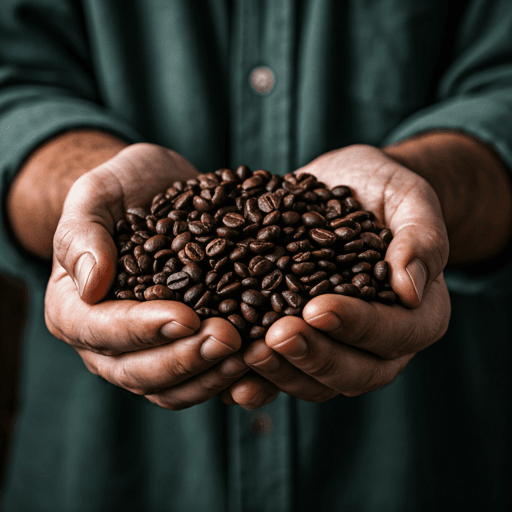
Chlorogenic acid in coffee is the name for the main family of antioxidant polyphenols packed into the bean — and it is a genuinely big deal. These compounds make coffee one of the largest sources of antioxidants in many people's everyday diets, add to the drink's brightness and acidity, and sit behind much of the green coffee health talk you see on supplement labels. Below is what chlorogenic acid actually is, how roasting reshapes it, and why it matters both in your cup and on the marketing page.
What chlorogenic acid in coffee actually is
"Chlorogenic acid" is a slightly misleading name, because it is not one single molecule. It refers to a whole family of related plant compounds — esters formed when acids like caffeic, ferulic and coumaric acid join with quinic acid. Chemists usually shorten the group to CGAs. They occur naturally in the coffee cherry and, especially, in the green (unroasted) bean, where they are among the most abundant compounds after carbohydrates and caffeine.
Green coffee beans are unusually rich in them: figures vary by species and origin, but green beans commonly land somewhere around 6 to 10 percent chlorogenic acids by dry weight. That density is why coffee, alongside a few other everyday drinks, contributes such a large share of the polyphenols in many diets — often more than fruit or vegetables, simply because people drink it every day. Robusta beans tend to carry more chlorogenic acid than arabica, which is one reason the two can taste so different. For more on how the raw bean starts out, see our guide to green coffee beans.
How roasting changes chlorogenic acid
Roasting is where most of the chlorogenic acid story happens. Heat breaks these compounds down, so the darker and longer you roast, the less chlorogenic acid survives — this is one of the clearest trade-offs in coffee. Light roasts keep noticeably more; dark, oily roasts keep much less, because a large share of the CGAs has been transformed into other molecules such as lactones and the brown melanoidins that give dark roast its colour and roasty flavour.
Exact losses depend on the bean, the roaster and how you measure, so treat any single number with caution. As a rough guide, a light roast might retain a majority of the green bean's chlorogenic acid, while a very dark roast can lose most of it. The table below sums up the main levers. If you want the full picture on roast colour, our roast levels explainer goes deeper.
| Factor | Effect on chlorogenic acid |
|---|---|
| Green (unroasted) bean | Highest levels — roughly 6-10% by dry weight (varies) |
| Light roast | Retains the most; least broken down by heat |
| Medium roast | Moderate loss as roasting continues |
| Dark roast | Much lower; heat converts most of it to other compounds |
| Robusta vs arabica | Robusta usually starts with more than arabica |
| Bean freshness | Fresher, well-stored beans hold antioxidant activity better |
| Brew method | Changes how much dissolves into the finished cup |
How much is in a typical cup
Putting a firm number on it is hard, because the amount that reaches your cup depends on the bean, the roast, the dose of grounds and the brew method. Estimates in the research literature range widely — often cited somewhere in the tens to a few hundred milligrams per cup. What is safe to say is that, because people drink it daily, coffee ends up being a leading everyday source of these polyphenols for many adults, even though berries or dark chocolate may be more concentrated per gram. Consistency, not any single cup, is what makes coffee such a notable contributor.
Its role in flavour and acidity
Chlorogenic acids are not just a nutrition footnote — they shape how coffee tastes. They contribute to the perceived brightness and gentle sourness that specialty drinkers prize in a light-roasted, high-grown coffee. As they break down during roasting, some of their by-products lean bitter and astringent, which is part of why a heavy dark roast reads as more bitter and less lively than a light one. So the same compounds that carry much of coffee's antioxidant load also help define its acidity. If your brew tastes sharper or brighter than expected, chlorogenic acid and its relatives are part of the reason.
The wellness angles researchers study
This is where it pays to stay measured. Chlorogenic acid is one of the most-studied compounds in coffee, mainly because of its antioxidant activity — its ability, in the lab, to neutralise reactive molecules. Researchers have also looked at how chlorogenic acids interact with blood sugar and metabolism, and studies suggest some interesting associations. But associations are not the same as proof, the doses used in studies often differ wildly from a normal cup, and much of the work is still early.
So the honest summary is this: chlorogenic acid contributes to coffee's reputation as an antioxidant-rich drink, and it is an active area of research — not a treatment for anything. It is not a weight-loss agent, a blood-sugar cure or a detox. Responses vary from person to person, and none of this is medical advice; if you have specific health questions, ask your own healthcare provider. For a broader, still-general look at what the drink may offer, see our overview of the benefits of coffee.
Green coffee extract and the chlorogenic acid marketing
If you have seen "green coffee bean extract" sold as a supplement, chlorogenic acid is the reason. Because unroasted beans are so rich in these polyphenols, extracts are standardised for their chlorogenic acid content and marketed on the back of it. That marketing has, at times, run well ahead of the evidence. The factual takeaway is simple: green coffee extract is concentrated for chlorogenic acid because roasting would otherwise destroy much of it — which tells you the compound is real and abundant, but says nothing about any promised effect. Treat bold claims on a label with the same skepticism you would give any supplement, and remember that a cup of lightly roasted coffee already delivers a meaningful dose with none of the hype.
How to keep more chlorogenic acid in your cup
If chlorogenic acid content is something you care about, a few practical choices push in the right direction — all of them hedged, because bean and method matter as much as any rule of thumb:
- Choose a lighter roast. This is the single biggest lever, since roasting is what destroys chlorogenic acid.
- Buy fresh and store well. Fresher, airtight-stored beans hold their antioxidant activity better than stale ones left open to air.
- Do not fear robusta. Good robusta tends to carry more chlorogenic acid than arabica, even if it tastes bolder.
- Keep it fairly simple. Milk and sugar do not remove chlorogenic acid, but they do change what the overall cup contributes.
- Above all, drink coffee you enjoy. Any brewed coffee — light or dark, filter or espresso — still supplies chlorogenic acids and their relatives.
Worth noting: even decaf keeps its chlorogenic acid, because decaffeination targets caffeine, not the polyphenols. And coffee is not the only antioxidant drink on the table — tea brings its own family of polyphenols, which we cover in our guide to antioxidants in tea.
Chlorogenic acid is one of those behind-the-scenes compounds that quietly does a lot: it helps make coffee taste bright, gives the drink much of its antioxidant reputation, and powers a whole shelf of green coffee supplements. Knowing that lighter roasts and fresher beans preserve more of it is genuinely useful — but the best reason to reach for a cup is still the one you already have. Brew what tastes good, keep the health talk in perspective, and let the chlorogenic acid come along for the ride.