
Tucked into the folds of southwestern Colombia, the Cauca department produces some of the country's most quietly dependable coffees. It is a place of steep green mountains, indigenous and Afro-descendant farming communities, and a signature high tableland: the Meseta de Popayán, or Popayán plateau, which sits in the valley of Pubenza and gives the region its calm, elevated character. Coffee here leans toward balance rather than fireworks — caramel and panela sweetness, a clean medium body, and a gentle thread of citrus and florals that reward an attentive palate. If Colombia's coffee map can feel like a blur of famous departments, Cauca is worth learning as its own distinct voice, neighbor to Nariño and Huila yet unmistakably itself.
Where Cauca Sits on Colombia's Coffee Map
Cauca lies in the far southwest of the country, wedged between the Pacific lowlands and the central Andes, with the colonial city of Popayán as its cultural and commercial heart. The department's coffee grows across a wide altitude band, but its reputation rests on the high Popayán plateau, an elevated basin ringed by mountains and volcanoes. This is high-grown coffee by any measure: the officially recognized growing zone averages somewhere around 1,750 meters above sea level, and plots climb well past 2,000 meters in places. That elevation, combined with Cauca's near-equatorial position, is the foundation of everything in the cup.
Coffee is not a boutique sideline here. It is a livelihood shared by tens of thousands of smallholder families, many of them indigenous and Afro-Colombian, farming plots that are frequently five hectares or less. That structure — many small hands rather than a few large estates — shapes both the character and the community story of Cauca coffee, and it places the department firmly within the broader tradition of Colombian coffee as a smallholder, cooperative-driven origin.
A Terroir Built on Volcanoes and Cool Nights
Two natural gifts define Cauca's terroir. The first is soil. The Popayán plateau and surrounding slopes sit downwind of active and dormant volcanoes, including Puracé, and over millennia their ash has weathered into deep, mineral-rich, free-draining earth. Volcanic soils tend to give coffee a clean, sweet backbone, and Cauca's are a textbook example.
The second gift is the region's stable equatorial climate paired with a pronounced day-to-night temperature swing. Sitting close to the equator, Cauca has no true seasons in the temperate sense; instead the altitude delivers warm, bright days and genuinely cold nights. That diurnal swing is prized by growers because cool nights slow the cherries' final ripening. Slower ripening lets sugars and acids develop more fully inside the bean, which is where Cauca's hallmark combination of gentle acidity and dense sweetness comes from. It is a quieter, more even climate than some of Colombia's more dramatic microclimates, and that steadiness shows up as consistency in the roast.
The Cup: Panela Sweetness and Gentle Citrus
Ask a roaster to sum up Cauca in a sentence and you will usually hear the word "balanced." These are not the loud, tropical, high-toned coffees of some neighboring zones. Instead, Cauca tends to pour a rounded, approachable cup built on caramelized sugar — think panela (unrefined cane sugar), brown sugar, and molasses — carried by a smooth medium body. Acidity is present and lively but rarely sharp, most often reading as a soft citrus brightness: mandarin, orange, sometimes a squeeze of lime on the finish. Above that sweet base you will frequently find mild florals and, in the better lots, a whisper of stone fruit or red apple.
This makes Cauca an unusually versatile origin. It is sweet and clean enough to please drinkers who want an easygoing everyday cup, yet layered enough to interest the specialty crowd. Because the profile is so even, Cauca also takes roast well: a lighter roast preserves its citrus lift and floral edges, while a medium roast leans into the caramel and chocolate. If you are unsure how those choices change what lands in your cup, our guide to coffee roast levels is a useful companion.
Washed Processing and Smallholder Craft
Almost all of Cauca's coffee is washed, and that is central to why the cups taste so clean. In the washed process, ripe cherries are pulped to remove the skin and fruit, then fermented in tanks to break down the sticky mucilage before being rinsed and dried. Stripping the fruit away before drying pushes the origin's underlying acidity and clarity to the front, rather than layering on the jammy, boozy notes you get from natural or honey methods. For a region whose appeal is transparency and balance, washing is the natural fit — though a small but growing number of Cauca producers now experiment with honey and anaerobic lots for specialty buyers.
Much of this work happens on the farm itself. Smallholders typically pick selectively by hand, pulp and ferment in modest home wet mills, and dry the parchment coffee on patios or raised beds and in parabolic solar dryers that shelter it from Cauca's mountain rain. Cooperatives and the national growers' federation then aggregate, mill, and grade the coffee for export, so what reaches a roaster is a blend of countless careful decisions made cherry by cherry.
| Attribute | Typical Cauca character |
|---|---|
| Body | Medium, smooth, silky |
| Acidity | Medium-bright; soft citrus (mandarin, orange, lime finish) |
| Sweetness | Pronounced; panela, brown sugar, molasses, caramel |
| Aromatics | Caramelized sugar, mild florals, occasional stone fruit |
| Overall | Clean, balanced, easy-drinking yet layered |
Varieties Grown in Cauca
Cauca's fields are planted mostly to the workhorse Arabicas of Colombia. Caturra was long the region's mainstay, valued for its cup quality and compact, high-yielding plants. Over recent decades much of the department has shifted toward rust-resistant hybrids — chiefly Castillo and the older Variedad Colombia — because leaf rust and changing weather make disease resistance a practical necessity for smallholders. Pockets of heirloom Typica and Bourbon persist on older or more remote farms, and a handful of specialty growers are trialing more exotic varieties for competition lots.
None of this dramatically changes Cauca's core signature — terroir and washed processing do most of the talking here — but variety does nudge the details. If you want to understand the parent of so many local trees, our profile of the Caturra variety explains why it became a backbone of Colombian coffee in the first place.
Cauca vs. Nariño vs. Huila
Cauca is easiest to understand next to its two celebrated southern neighbors, because the three departments form a loose triangle of high-altitude Colombian coffee that buyers often compare directly. All three grow clean, high-grown, washed Arabica, but each leans a different way.
| Region | Signature profile | Character in one line |
|---|---|---|
| Cauca | Panela and caramel sweetness, medium body, soft citrus, mild florals | The balanced middle path |
| Nariño | Very high altitude, vivid bright acidity, floral, juicy citrus | The high-toned, aromatic one |
| Huila | Caramel and cocoa sweetness, red fruit, rounded body | The sweet, fruit-forward one |
In broad strokes, Nariño coffee tends to be the brightest and most floral of the three, pushed by some of the highest coffee-growing altitudes on earth. Huila coffee is typically the sweetest and most overtly fruity, all cocoa and red fruit. Cauca sits between them: cleaner and steadier than Huila, softer and more caramel-driven than Nariño. That middle position is exactly why so many blenders and roasters keep it on the shelf — it plays well with almost everything.
Café de Cauca: A Protected Origin
Cauca's reputation is formal, not just folklore. Café de Cauca holds a Denomination of Origin, a protected geographical designation that ties the name to coffee grown within defined municipalities of the department under specific quality standards. The official description points to a caramelized, sweet, and balanced cup with medium body, clean profile, and notable acidity — essentially a codified version of what tasters describe by hand. The designation is also a story about people: Cauca's coffee is grown largely by rural, indigenous, and Afro-descendant families across dozens of municipalities, and the protected name is meant to help that value flow back to the growers who create it.
For drinkers, a protected-origin label is a helpful signal of traceability and consistency, though it is not a guarantee of a stellar individual lot. As always, the roaster's sourcing and how recently the beans were roasted matter as much as the origin stamp.
How to Brew and Enjoy Cauca Coffee
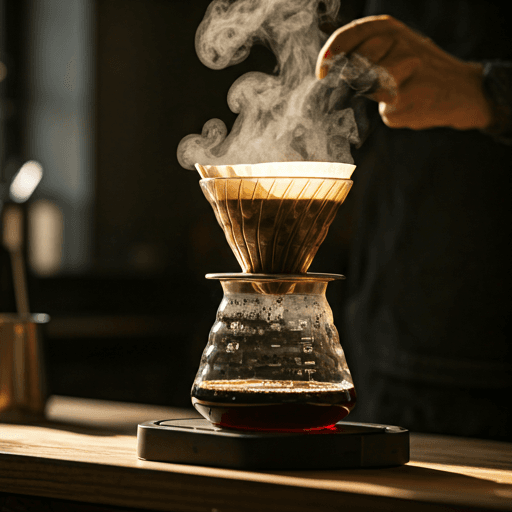
Cauca's balance makes it forgiving and rewarding across brew methods. As a pour-over or filter coffee at a light-to-medium roast, it shows off its citrus brightness and clean sweetness; this is where the origin's nuance is easiest to taste. As a slightly darker medium roast it makes an excellent, syrupy espresso base, its caramel and chocolate notes standing up well to milk without turning bitter. Because the acidity is gentle, Cauca rarely reads as sour even when brewed a touch strong, which makes it a safe recommendation for anyone easing into single-origin coffee.
Look for whole beans, grind just before brewing, and check for a recent roast date and, where possible, the specific municipality or cooperative. Cauca does not shout for attention the way some hyped micro-lots do, but poured with a little care it delivers precisely what Colombian coffee does best: clean, sweet, dependable pleasure with just enough complexity to keep you interested cup after cup.