
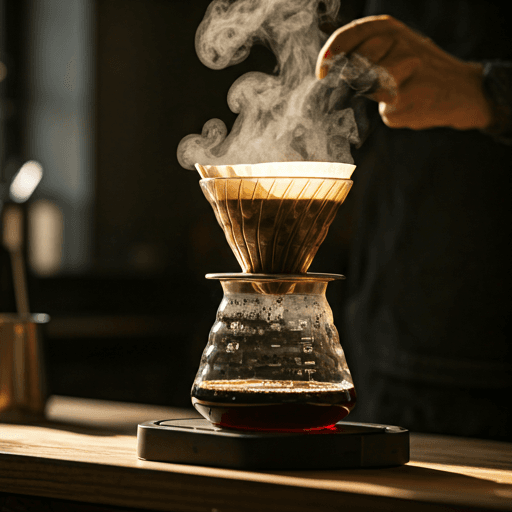
A Greek cafe, a Japanese kissaten and a Singaporean kopitiam all do the same job — they give a neighbourhood its living room — yet no two serve the same drink or move at the same pace. A cafe is a "third place" the world over, a spot that is neither home nor work, but what people order there and how long they linger is shaped entirely by local culture. This guide tours cafe traditions around the world, from the Greek cafe to the kopi cafe, so you know what to order and how to settle in wherever you land.
The cafe as a "third place" everywhere
The sociologist Ray Oldenburg called the cafe a "third place" — the informal public room between home (the first place) and work (the second). Almost every culture has built one. What changes from country to country is not the idea but the details: the cup it comes in, the food beside it, the tempo of the room, and the unwritten rules about how long you may sit. An espresso gulped standing up in Milan and a Greek coffee nursed for two hours are the same caffeine and completely different rituals. International cafe culture has spread the format to every city on earth, but the best places still taste of where they are. If you want the basics of the format first, see our explainer on what a cafe actually is.
The Greek cafe: kafeneio, Greek coffee and the frappe
The Greek cafe comes in two clear generations. The traditional kafeneio is one of the oldest cafe forms anywhere — coffee houses appeared across the region as early as the 15th and 16th centuries — and it still survives in nearly every village and island. It draws an older, mostly male crowd who come to play tavli (backgammon), read the newspaper, argue politics and nurse a single cup. That cup is usually ellinikos, Greek coffee: very finely ground beans simmered with water (and sugar, if you want it) in a small pot called a briki, poured unfiltered so the grounds settle, and served with a glass of cold water. You do not rush it. A coffee with friends in Greece routinely lasts an hour and a half or more.
The second generation is the frappe cafe. The frappe — iced, frothy, shaken instant coffee — was invented almost by accident in 1957 by Dimitris Vakondios, a Nescafe representative, at the Thessaloniki International Fair. It became the unofficial drink of Greek summers and the engine of a younger, cafe-bar scene. Today you will also see the freddo espresso and freddo cappuccino, chilled specialty drinks that have largely overtaken the frappe among the under-thirties. Same long, sociable sit-down; colder glass.
The Japanese cafe: the hushed kissaten
The classic Japanese cafe is the kissaten (喫茶店), literally a "tea-drinking shop." Japan's first coffee house opened in Tokyo in 1888, and by the Showa era (1926–1989) there were well over a hundred thousand kissaten across the country. They are the opposite of a noisy bar: dim, wood-panelled, often playing jazz or classical records — some specialised so completely in music that they were called ongaku kissa, music cafes. The kissaten is famously solo-friendly. You can sit alone for an hour over a single hand-dripped cup and no one will hurry you.
It was in these rooms that techniques now central to third-wave coffee — careful pour-over and cold-water "mizudashi" brewing — were quietly perfected. Order a siphon or pour-over coffee, a slab of thick buttered shokupan toast, a melon cream soda or a wobble of purin (custard pudding). The modern Japanese cafe scene runs much wider than the kissaten — there are specialty roasters, themed and character cafes, and minimalist coffee stands — but the retro kissaten has had a real revival as younger people rediscover its "Showa nostalgia."
The Irani cafe and Persian tea houses
The Irani cafe is one of the world's great immigrant institutions. It was created by Zoroastrian Iranians who migrated to India in the 19th and 20th centuries; in Mumbai (and Pune and Hyderabad) they opened corner cafes with high ceilings, marble-topped tables, bentwood chairs, big mirrors and a wall of comically strict "no" signs. Crucially, they were inclusive in an era when many eateries were not — open to all castes, classes and religions, with family rooms so women and children could sit. The order is unchanging: bun maska (a soft bun split and spread thick with butter) dunked into Irani chai, a sweet, milky, cardamom-scented tea, often followed by a fragrant berry pulao. Once there were more than 300 Irani cafes in Bombay; today fewer than 25 of the originals survive, which is part of why they are so loved. In Iran itself the parallel third place is the chaikhaneh, the traditional tea house.
The kopi cafe: Southeast Asia's kopitiam
The kopi cafe is the kopitiam, the open-fronted coffee shop found across Malaysia, Singapore, Indonesia, Brunei and southern Thailand. The name is a mash-up: kopi is Malay for coffee, tiam is Hokkien for shop. Many were started by Hainanese immigrants who had cooked on British ships and then opened their own places, which is why the menu fuses East and West. Breakfast is the headline: kaya toast (toast with butter and coconut-egg jam), runny soft-boiled eggs you season with dark soy sauce and white pepper, and a cup of strong coffee. The coffee comes in a code worth learning — kopi is coffee with sweetened condensed milk, kopi-o is black with sugar, kopi-c uses evaporated milk, and "kosong" means no sugar. Kopitiams are loud, communal and democratic; "coffee shop talk" is a local byword for the gossip and debate that fills them.
Europe's coffee rooms: the Italian bar, Viennese kaffeehaus and French cafe
Europe runs the gamut from fast to endlessly slow. In Italy the cafe is the bar, and the default move is al banco — you stand at the counter, knock back an espresso in a minute or two, and go. Cappuccino and other milky coffees are a before-late-morning habit; order one after lunch and you mark yourself as a tourist. For more on this counter culture, see what a coffee bar is.
Vienna is the mirror image. Viennese coffee house culture is so distinctive it was added to Austria's UNESCO list of intangible cultural heritage in 2011. The kaffeehaus is built for lingering: small marble tables, bentwood Thonet chairs, a glass of water served with every coffee, and racks of newspapers you are welcome to read all afternoon. The writer Stefan Zweig called it "a sort of democratic club." Order a melange (espresso with steamed milk) or an einspänner and a slice of Sachertorte, and stay. The French cafe sits in between — a terrace for people-watching, a cafe creme with breakfast and a small black coffee (un cafe) after meals, the zinc bar inside for locals on the move. And in Sweden the ritual even has its own name, fika: a daily coffee-and-pastry pause that is as much about stopping as about the coffee. Our guide to what fika means goes deeper.
Older rituals: Ethiopian, Turkish and Arabic coffee
Some of the most important coffee cultures barely use a cafe at all. Ethiopia and Eritrea — coffee's birthplace — keep the coffee ceremony, usually performed at home by the woman of the household. Green beans are roasted over a flame in front of you, ground by hand, and brewed in a round-bottomed clay pot called a jebena. Coffee is poured in three rounds, named Abol, Tona and Baraka, amid burning incense; sitting through all three is a sign of respect and friendship that can take a couple of hours.
Turkish coffee is its own UNESCO-listed tradition: ultra-fine grounds brewed unfiltered in a small long-handled pot (a cezve), served in tiny cups with the grounds left to settle, and often followed by reading fortunes in the upturned cup. We explain the method in what Turkish coffee is. Across the Gulf, Arabic qahwa (or gahwa) is lighter, often spiced heavily with cardamom and a little saffron, poured from a spouted dallah into small handleless finjan cups and served with dates — a cornerstone of hospitality where refusing a cup can be a small insult.
The New World cafe: the American diner and the Aussie flat white
North America gave the world the bottomless cup. In the classic diner and coffeehouse, filter (drip) coffee is the default, refills are free or near-free, and the cup is large and all-day rather than small and ceremonial. The later American coffeehouse boom — Italian-inspired espresso drinks scaled up into a to-go, work-from-the-cafe habit — is now the template most chains export worldwide.
Australia and New Zealand took a different path. Built on Italian and Greek migrant espresso culture, their cities — Melbourne above all — became specialty-coffee powerhouses that largely skipped big drip coffee in favour of milk-based espresso. The flat white (a small, strong coffee with thin, velvety microfoam, claimed by both countries) is the regional signature, alongside the "short black" (espresso) and "long black." Brunch is the natural partner: the Antipodean cafe is as much about poached eggs and avocado as about the cup.
Cuisine-themed cafes: the cafe built around a food culture
Beyond these home-grown traditions sit cafes built deliberately around a country's food culture — a French patisserie cafe, an Italian caffe, a Japanese-style coffee stand or a kaya-toast kopitiam transplanted into a food court far from home. As international cafe culture has spread, so has this kind of borrowing, which is why you can find a passable freddo or a proper flat white almost anywhere now. The lesson holds: the cup travels easily, but the ritual — the pace, the food beside it, the way you order — is the part worth seeking out.
Cafe styles around the world, at a glance
| Cafe style (region) | What to order | The vibe |
|---|---|---|
| Greek kafeneio / frappe cafe (Greece) | Greek coffee (ellinikos), frappe, freddo espresso | Slow, social, backgammon and debate |
| Kissaten (Japan) | Hand-dripped coffee, thick toast, cream soda | Hushed, retro, very solo-friendly |
| Irani cafe (Mumbai; Iran's chaikhaneh) | Irani chai and bun maska, berry pulao | Faded grandeur, open to everyone |
| Kopitiam / kopi cafe (Malaysia, Singapore) | Kopi, kaya toast, soft-boiled eggs | Loud, communal breakfast |
| Italian bar (Italy) | Espresso al banco, cornetto, morning cappuccino | Quick, standing at the counter |
| Viennese kaffeehaus (Austria) | Melange, Sachertorte, a newspaper | Linger for hours over marble tables |
| French cafe (France) | Cafe creme, un cafe, a croissant | Terrace and people-watching |
| Coffee ceremony (Ethiopia, Eritrea) | Three rounds from the jebena | Ritual hospitality, usually at home |
| Turkish / Arabic coffee house | Turkish coffee; Arabic qahwa with cardamom and dates | Unhurried, hospitable, ceremonial |
| American diner / coffeehouse (USA) | Bottomless drip coffee; big espresso drinks | Casual, all-day, to-go |
| Specialty cafe (Australia, NZ) | Flat white, long black, brunch | Specialty beans, brunch-forward |
How to read any cafe when you travel
You do not need to memorise every tradition. A few habits will get you welcomed almost anywhere:
- Watch the locals first. Do people stand or sit, order at a counter or wait for a server, pay before or after? Copy them for the first minute.
- Learn the morning rules. Some places treat milky coffee as a breakfast-only drink. When in doubt, a plain espresso or black coffee is always safe.
- Notice what comes with the coffee. A glass of water (Greece, Vienna), toast and eggs (kopitiam), or dates (the Gulf) are part of the ritual, not extras to refuse.
- Match the room's pace. If everyone is lingering, linger; if it is a stand-and-go bar, do not camp at the counter.
- Ask for the house drink. "What do people order here?" is the fastest route to the real thing — a frappe, a melange, a kopi or a flat white.
The takeaway
From the Greek cafe to the kissaten to the kopi cafe, the cafe is humanity's most portable public room. The coffee changes, the food changes and the clock changes, but the purpose is the same everywhere: a place to pause, talk and belong. The next time you travel, treat the local cafe as a doorway into the culture rather than just a caffeine stop — order the house drink, match the room's pace, and let the ritual, not just the cup, tell you where you are.