
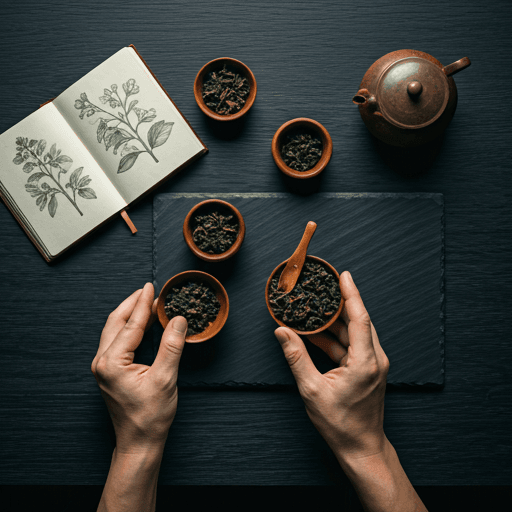
Butterfly pea flower is the vivid blue petal of Clitoria ternatea, a climbing legume from Southeast Asia, and it brews into a striking sapphire-blue herbal tea that changes color when you add something acidic. Drop in a squeeze of lemon and the blue shifts to purple, then toward pink. It is naturally caffeine-free, mild and faintly earthy in flavor, and has been used for centuries as both a drink and a natural food coloring. This guide explains what the flower is, the chemistry behind the color trick, how to brew it, and where it fits in a tea cabinet.
What is butterfly pea flower?
Butterfly pea flower comes from Clitoria ternatea, a flowering vine in the legume family (Fabaceae) that grows across tropical and subtropical Asia, including Thailand, Vietnam, Malaysia and Indonesia. The plant produces deep-blue, almost violet blooms, and it is those dried petals that you steep. The blue butterfly pea flower is sometimes sold loose, sometimes blended with other botanicals, and sometimes ground into a fine powder for lattes and baking.
You will see it marketed under several names. "Butterfly pea flower tea" and "blue tea" are the most common in English. In Thailand the drink is known as nam dok anchan and is often served with honey and a little lemon. It is worth being clear about one thing from the start: although we call it a tea, butterfly pea is a herbal infusion, not a true tea. It does not come from the tea plant, Camellia sinensis. That is why it carries no caffeine and why purists often call it a tisane.
What it tastes like
The flavor of butterfly pea is gentle and a touch earthy or woody, with a faint vegetal note that some people compare to a mild green tea or to plain chamomile. It is not floral and perfumed the way you might expect from such a bright bloom. On its own it is subtle, which is exactly why it is so often blended with lemongrass, ginger, hibiscus or citrus, or sweetened with honey. The flower's real headline act is visual rather than flavorful.
Why butterfly pea flower changes color
The color change is the reason butterfly pea went from a regional staple to a social-media favorite. The petals are loaded with anthocyanins, the same family of plant pigments that color blueberries, red cabbage and purple grapes. In butterfly pea these blue pigments are known specifically as ternatins. Anthocyanins are sensitive to pH, meaning their molecular structure and therefore their color shifts depending on how acidic or alkaline the surrounding liquid is.
In plain water, which is roughly neutral, the brewed tea reads as a deep blue. Add an acid, such as lemon or lime juice, and the lower pH nudges the pigment into a different form that appears purple, and with more acid, pink to red. Add something more alkaline and the blue can deepen toward green. The shift is a genuine chemical reaction, not a dye or a gimmick, and it is reversible, which is what makes it feel like magic in a glass.
| What you add | Effect on pH | Resulting color |
|---|---|---|
| Nothing (plain hot water) | Roughly neutral | Deep blue |
| Lemon or lime juice | More acidic | Purple, then pink to red with more |
| Hibiscus | Acidic | Red to magenta tones |
| A pinch of baking soda | More alkaline | Deeper blue toward green |
Because the effect is pure pH chemistry, your local water matters too. Hard, mineral-rich water can pull the color slightly differently than soft water, so the same flowers may brew a marginally different blue depending on where you are in the world. If you want to understand how the related red-and-pink hibiscus and lemon teas behave, our guide to lemon tea and hibiscus tea covers those acidic infusions in more detail.
How to brew butterfly pea flower tea
Brewing is forgiving. Butterfly pea flower releases its color and flavor quickly and does not turn bitter the way over-steeped black tea can, so you have a wide margin for error.
- Use a small handful of dried flowers — roughly five to ten petals, or about a teaspoon of loose flower, per cup. More flowers means a more intense blue.
- Pour over freshly boiled water (around 90 to 100°C / 195 to 212°F). Unlike green tea, the flowers do not scorch.
- Steep for three to five minutes. You will watch the water bloom blue almost immediately. Longer steeping deepens the color more than the flavor.
- Strain out the flowers. Drink it hot, or chill it over ice for a dramatic blue iced tea.
- For the color show, add a wedge of lemon or lime at the table and watch the blue turn purple in front of you.
It works beautifully cold, which is why butterfly pea iced tea, lemonades and color-changing mocktails are so popular. The chilled blue tea poured over a lemon-juice ice cube creates a slow gradient as the cube melts.
Beyond a plain cup
The flower's neutral taste and bold color make it a workhorse ingredient rather than just a sit-down brew. Common uses around the world include:
- Color-changing cocktails and mocktails — bartenders use it for "mood" drinks that shift hue when citrus is stirred in. Some gins are infused with butterfly pea and turn pink with tonic.
- Lattes and blue or "galaxy" drinks — butterfly pea powder whisked with milk makes a vivid blue latte, a caffeine-free cousin of the matcha latte.
- Natural food coloring — across Southeast Asia the flowers tint glutinous rice, desserts and noodles. Butterfly pea extract is also recognized as a food color additive in a number of markets.
- Iced teas and lemonades — the chilled blue base plus lemon is a built-in party trick.
Caffeine, caveats and who should be careful
Butterfly pea flower is caffeine-free, which is its quiet superpower. It gives you a striking, ceremonial-looking drink with none of the stimulant load of coffee or true tea, so it suits the evening and works for people limiting caffeine. If you want to understand why true teas and coffee keep you awake while a herbal infusion like this one does not, our explainer on caffeine, how it works and sensible limits walks through the science.
Like most herbal infusions, butterfly pea is generally considered well tolerated for healthy adults when enjoyed as a normal drink. As with any herbal product, a few sensible caveats apply. Evidence for specific health benefits in humans is still limited and largely early-stage, so treat dramatic wellness claims with caution rather than as established fact. People who are pregnant or breastfeeding, anyone with a known plant allergy, and anyone on medication are best advised to check with a doctor or pharmacist before making any herbal tea a daily habit, simply because rigorous safety data is thin. And as with all plant material, source it from a reputable supplier so you know you are getting clean, food-grade dried flowers.
None of that should put you off an occasional or regular cup. The point is simply to enjoy butterfly pea flower for what it reliably is — a beautiful, caffeine-free, mild herbal tea — rather than as a cure for anything.
Where butterfly pea fits in your tea cabinet
Think of butterfly pea as the showpiece of the caffeine-free shelf. If you keep a small collection of herbal infusions for the evening or for non-coffee drinkers, this is the one you reach for when you want a drink that performs. For calming, gentler everyday herbals, chamomile and mint are the classics; for color and tartness, hibiscus and lemon. To see how all of these relate and where the true teas sit, our overview of the different types of tea and the broader herbal tea guide map out the whole landscape.
The short version
Butterfly pea flower is the blue petal of Clitoria ternatea, brewed into a caffeine-free herbal tea that turns from blue to purple to pink as you add acid, thanks to pH-sensitive anthocyanin pigments. It tastes mild and slightly earthy, brews in minutes, and shines in iced teas, lattes, cocktails and as a natural food coloring. It is more spectacle than superfood, and that is perfectly fine. If you are curious about the actual tea plant behind real teas, read our guide to Camellia sinensis, the tea plant next, and keep exploring the rest of the herbal shelf.