
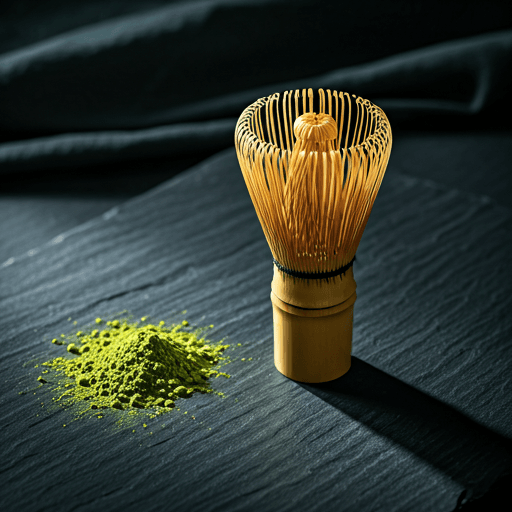
Brazil tea is real, and it is small. The country genuinely grows Camellia sinensis, almost all of it in the Ribeira valley — the Vale do Ribeira — in the southern reaches of São Paulo state, south-west of the city itself and centred on the town of Registro. What survives there is the remnant of something much bigger: a twentieth-century industry, built largely by Japanese immigrant farming families, that grew, processed and exported at scale, and then contracted so sharply that only a handful of producers were left standing.
The interesting part is why it shrank. Most origins that lose ground lose it because the ground turns against them — a disease, a frost line creeping upward, a storm belt, land eaten by cities or by a crop that pays better. That is not what happened here. The plants grew perfectly well in the Ribeira valley and still do. What disappeared was the buyer.
Where Brazil tea actually grows
The Ribeira valley is a narrow exception rather than a general condition. Most of Brazil is either too hot and seasonally dry, too high and too far inland, or already committed to crops with better economics. The valley is different: a humid, subtropical basin drained by the Ribeira de Iguape river, running down from low interior hills to a coastal estuary complex, and wrapped in what is commonly described as the largest continuous surviving block of Atlantic Forest in the country. Summers are hot and wet, winters mild, and the soils are acid and free-draining — the combination the tea plant asks for. Local accounts of the settlement years make the same point from the other direction: coffee was tried in the valley and did poorly in the humidity, while tea took to it.
Two features of that landscape shaped everything that followed. First, the terrain around Registro is low, rolling and gentle rather than steep, which meant fields could be laid out and cropped by machine. Second, it is low-lying. Altitude is not the whole story of tea quality, and it is worth being careful about assuming that it is — but the slow-grown, concentrated leaf that high mountain gardens are prized for is not what this landscape naturally produces. Growth here is fast and close to continuous, and producers describe a long picking season with repeated pluckings rather than a handful of sharply defined flushes. That is an excellent recipe for volume, and volume for blending was exactly what the industry was built to sell.
The valley has always been the poorer, greener, less industrialised end of São Paulo state, worked in small holdings — bananas, tangerines, rice, cattle — rather than in vast estates. Tea slotted into that pattern of small farms feeding a few processing factories. Registro still calls itself the country's capital of tea, and a smaller planting also exists outside the valley proper, at São Miguel Arcanjo, where a Japanese-owned company grows green tea.
Why a tea industry appeared in a coffee country
Brazil is one of the great agricultural powers of the world, and its beverage identity was settled long before tea mattered here: coffee took the country's land, capital and imagination, which is the whole reason a tea industry in Brazil was ever a curiosity rather than a national project — that story belongs to the guide to Brazilian coffee, and is not retold here.
Tea had been tried earlier. In the first decades of the nineteenth century, seedlings were planted at the botanical garden in Rio de Janeiro and later around São Paulo, with growers brought from China to work them; the São Paulo viaduct still called the Viaduto do Chá takes its name from a tea planting on the hill it crosses. Those nineteenth-century plantings belonged to the plantation economy of their period and did not outlast it. The plants were never the obstacle then either.
What made the twentieth-century industry possible was migration of a very ordinary kind: Japanese families settled the Ribeira valley in the early decades of the century and farmed it, and some of them brought tea knowledge with them. They came from a country where growing, steaming and rolling leaf was a normal rural skill rather than an exotic one — the tradition behind that is covered in the guide to Shizuoka tea. That is the entire explanation for the anomaly. Tea grew in the Ribeira valley because people who already knew how to grow tea settled in a place that could support it.
The founding story is told locally with a lot of specificity and not much agreement. A settler named Torazo Okamoto is credited in most tellings with the introductions that mattered: first tea seed of Chinese type, aimed at green tea for the settler households themselves, and later the higher-yielding assamica-type plant, usually said to have been brought from Ceylon, which made a commercial black-tea industry possible. Retellings differ on the years, on the sequence, and on how the seed travelled — a story that it was carried in concealed inside a loaf of bread circulates widely and rests on the retelling rather than on any record. The documentation behind these versions is thin and repetitive, mostly local and promotional, so no single account can be treated as settled.
The collapse had nothing to do with the ground
From roughly the middle of the twentieth century the valley ran a genuine export industry. Factories bought leaf from surrounding smallholders, made black tea by the fast, broken-leaf methods that bulk buyers want, and shipped it; accounts name the United Kingdom, Germany, the Netherlands, the United States and Chile among the destinations. Published versions of that peak disagree with one another badly. Some describe many dozens of processing factories at the height; others describe a small number of manufacturers buying from a much larger base of farmers, and the volume figures that circulate differ by a wide margin. The dating is inconsistent too: one widely repeated account has tea already slipping behind banana as the valley's leading crop from the middle of the century, another has black tea still the region's second economic activity into the mid-1980s, and most accounts of the final break point to the 1990s. What every version agrees on is the shape rather than the size — the great majority of what was made left the country, and it left as blending material rather than as tea sold under Brazil's name.
That is the whole vulnerability. An export crop with no home market is a crop with no floor.
The buyer left, and there was nothing underneath
Brazilian black leaf was bought to be blended — into tea bags, and into the iced tea that a large share of it ultimately served. Blending material is the most substitutable product in tea. It has no name recognition to defend it, no cup character a buyer is loyal to, and no reason to sit in a particular blend other than that it arrives at an acceptable standard for less than the alternative. Buyers of that kind of leaf switch origins without sentiment and without announcement.
By the 1990s several things moved at once, and none of them was a failure of the ground. Large low-cost black-tea industries elsewhere were making the same category of leaf more cheaply. Accounts from the valley name Argentina — its near neighbour, and a major supplier of bulk black leaf into iced-tea blending — as the competitor that mattered most, with the same pressure coming from the big East African and Sri Lankan industries; the model of a large, efficient, export-oriented black-tea origin is set out in the guide to Ceylon tea. At the same time Brazil's currency strengthened sharply through the stabilisation of the mid-1990s, which made anything sold abroad dearer to foreign buyers overnight, without a single leaf changing. Brazilian labour and processing were relatively costly to begin with, and the factories had not been reinvested in. The valley found itself a high-cost supplier of a commodity that is bought on cost.
In an origin with a domestic tea habit, that is a bad decade rather than an ending. China, Japan and Türkiye all drink most of what they grow; an export slump there is absorbed by the home market and the gardens stay in the ground. Brazil had no such cushion. The country drinks coffee, in quantity and by habit. Its traditional leaf infusion — chimarrão and tereré, made from erva-mate — is not tea at all but an entirely different plant, with its own vessels, rituals and supply chain that owe nothing to Camellia sinensis. And in Brazilian Portuguese chá is the word for almost any infusion, so the domestic demand that did exist for what people called tea was largely demand for chamomile, lemongrass, fennel and mint. There was no population of Brazilian black tea drinkers to sell to when the foreign orders stopped.
So the fields went quiet. Factories closed, growers moved to other crops — banana above all — and much of the planting was simply left. What did not happen is the part that matters. The valley did not stop being able to grow tea: the bushes are long-lived perennials, the plantings that supply today's producers descend from that same stock, and the climate and soils that suited the crop are unchanged. This was never a place that lost the ability to grow tea. It was a place that lost the ability to sell it.
Brazil tea at a glance
| Question | What the record supports |
|---|---|
| Does Brazil grow tea? | Yes, genuinely — but at a scale the world market does not notice |
| Where | Vale do Ribeira, southern São Paulo state, around Registro and Sete Barras; a separate planting at São Miguel Arcanjo, outside the valley |
| Why there | Humid subtropical valley, acid free-draining soils, mild winters, low rolling ground suited to mechanised fields |
| Who built it | Japanese immigrant farming families who settled the valley and brought tea knowledge with them |
| Historic product | Bulk black tea for export blending and tea bags, the great majority of it shipped abroad |
| Why it shrank | Market, not climate: cheaper competing origins, a strengthening national currency, high production costs, and no domestic tea habit to fall back on |
| Made today | Black, green, oolong and white styles from a very small number of family producers, some organic and one grown in an agroforestry system; a separate green tea operation outside the valley |
| Where it goes | Reported mainly as a domestic specialty product with small direct sales, though some coverage describes renewed artisanal export; accounts differ and none is authoritative |
| Reliable tasting record | Very limited — descriptions come mostly from producers themselves |
What is actually made in the Ribeira valley now
Vale do Ribeira tea today is a specialty product rather than a commodity, and the record on the present is thin: almost everything published about it comes from the producers, from tourism material, or from local press repeating both. With that stated plainly, the consistent picture is this. A small number of family operations remain in and around Registro — Amaya, the Shimada smallholding and Sítio Yamamaru at Sete Barras are the three usually named — alongside the Japanese-owned green tea operation at São Miguel Arcanjo. Between them they make a far wider range of styles than the old industry ever did: black tea, green tea, oolong, white tea, a roasted-rice blend, and bud-only specialty lots.
That widening is itself a consequence of the collapse. When you can no longer sell volume into a blend, the remaining move is to sell character into a small market, and character means processing choice — the same leaf handled two different ways gives two different teas, which is the distinction explained in black tea versus green tea. Amaya, described in trade coverage as the last large-scale tea operation left in the valley, makes black, green and oolong in both conventional and organic lines. The Shimada smallholding is organic-certified and is associated with white and green tea and a bud-only lot it presents as a golden tea. Yamamaru, at Sete Barras, makes green tea entirely by hand and grows it inside an agroforestry system rather than in clean monoculture rows — a working method that would have been unthinkable in an industry built to feed blending factories.
There is no established, independently documented cup character for Brazilian tea, and there are not enough producers, lots or reviewers for one to have formed. The descriptions that circulate are largely the makers' own: Amaya presents its black tea as copper in the cup and intense in flavour with light astringency, with notes it describes as ranging from floral to lightly sweet. Older trade commentary took a different line, treating Brazilian leaf as serviceable blending material rather than a distinctive cup. Both statements can be true of different eras and different plants, and neither should be taken as a settled description of what tea from this valley tastes like.
Could the scale change?
A modest revival is plausible; a return to the old scale is not. The favourable signs are real. Domestic interest in infusions and in specialty drinking has been growing. An annual tea route, built around the old roads that once linked the properties and factories between Registro and Sete Barras, has been running for about a decade and brings visitors onto the plantings themselves. The region's settler heritage gives the product a story that carries itself. And Brazil has an enormous domestic population and a sophisticated urban food culture that did not exist in the same form when the industry died.
The constraint is the same one that killed the first industry, only inverted. Building a specialty tea sector means building a drinking habit at home first, because there is still no significant Brazilian audience for fine leaf — and no Brazilian producer can win a commodity fight, since the cost structure that lost the export market has not improved. That points to a ceiling rather than a comeback: a handful of family operations selling small, well-made lots into a domestic specialty market and to a few curious buyers abroad, growing slowly if the domestic habit grows with them. That would be a good outcome. It would not be an industry.
The bottom line
Does Brazil grow tea? Yes — a real, if very small, quantity, in one humid valley in São Paulo state, made by families whose grandparents planted it. The reason to pay attention is not the cup, which is barely documented, but the mechanism. Registro and the Vale do Ribeira are the clearest case anywhere of an origin closed by its market rather than by its ground. The climate did not turn. The soil did not fail. The bushes are perennials and the ground still suits them. What went was the customer, and there was no one at home to sell to instead.