
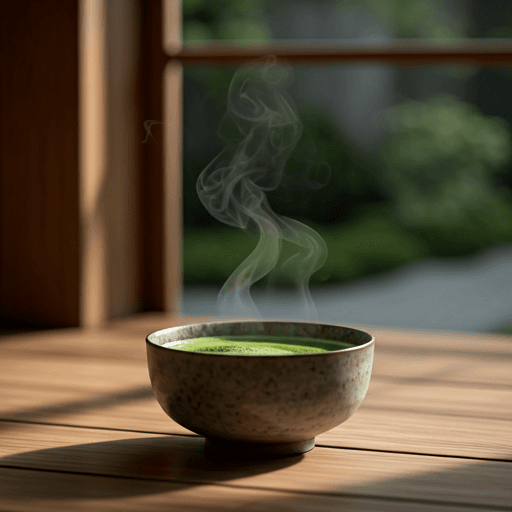
Ceylon tea is tea grown in Sri Lanka, the island nation off the southern tip of India that the world once knew as Ceylon. It is still sold worldwide under that old name, and genuine packs carry a lion logo from the Sri Lanka Tea Board certifying the leaf as pure Ceylon. Most of it is black tea, loved for a bright, brisk, citrus-edged cup, though green, white and oolong versions exist too.
What is Ceylon tea?
"Ceylon tea" is a place name, not a plant or a single flavor. It simply means tea harvested and made in Sri Lanka. Like all true tea, it comes from Camellia sinensis, the same plant behind green, white and oolong. What sets Ceylon apart is terroir: a small tropical island with high central mountains, two monsoons and a long dry season, all of which press a clean, lively character into the leaf.
The vast majority of Ceylon tea is black tea, and Sri Lanka is the world's largest exporter of orthodox black tea, the carefully rolled, whole-leaf style that keeps more nuance than fast, machine-chopped CTC. You will also find Ceylon green, white and oolong, but black is the headline. When a pack shows the striding lion mark, it is the Sri Lanka Tea Board's promise that the tea is grown and packed on the island and not blended with leaf from elsewhere. For the wider category this sits inside, see our guide to what is black tea.
A short history: from coffee to tea
Sri Lanka was once coffee country. In the late 1860s a fungus, coffee leaf rust, swept the plantations and ruined the crop. Growers needed a replacement, and in 1867 a Scottish planter named James Taylor laid out the island's first commercial tea field at Loolecondera Estate near Kandy. Tea thrived where coffee had failed, and within a few decades Ceylon became one of the most famous tea names on earth, a reputation it still trades on today even though the country was renamed Sri Lanka in 1972.
Elevation grades: low-, medium- and high-grown
The single biggest thing to understand about Ceylon tea is altitude. Sri Lankan estates are classified by how high above sea level the leaf grows, and that elevation shapes the cup more than almost anything else.
- Low-grown (up to about 600 m / 2,000 ft): bold, dark and strong, with malty, almost caramel depth. These leaves carry milk and sugar well and form the backbone of robust breakfast blends.
- Medium- or mid-grown (roughly 600-1,200 m): the all-rounders. Full-bodied and rich but rounded, good with or without milk.
- High-grown (above about 1,200 m / 4,000 ft): the most prized for delicacy. Cooler air slows the leaf, producing a lighter, brighter, more aromatic tea with citrus and floral notes. The cup is paler and often best enjoyed plain.
As a rule of thumb: the higher the garden, the lighter and more fragrant the tea; the lower the garden, the darker and stronger it gets.
The famous growing regions
Sri Lanka recognizes seven main tea regions, each with its own signature. Nuwara Eliya, Dimbula and Uva are celebrated high-grown districts; Kandy sits in the middle; Ruhuna and Sabaragamuwa anchor the low country. Here is how they compare.
| Region (grade) | Character in the cup | Best for |
|---|---|---|
| Nuwara Eliya (high-grown) | Palest and most delicate; light, floral, with a citrus brightness, the "champagne" of Ceylon | Drinking plain; gentle afternoon cups |
| Dimbula (high-grown) | Golden-orange liquor, mellow, clean and refreshing | An easy everyday cup, with or without milk |
| Uva (high-grown) | Smooth and mellow with a distinctive aromatic, almost wintergreen note | Sipping plain to taste the character |
| Kandy (mid-grown) | Full-bodied, bright and strong but well rounded | A balanced morning cup; takes milk nicely |
| Ruhuna / Sabaragamuwa (low-grown) | Dark, bold and full with malty, caramel depth | Strong breakfast blends, milk, and iced tea |
What Ceylon tea tastes like, and its caffeine
The classic Ceylon black-tea profile is bright, brisk and clean, with a lively, citrusy edge that keeps it from feeling heavy. That crispness is exactly why Ceylon is a workhorse in blends and a favorite for iced tea: it stays refreshing rather than turning flat or muddy. High-grown teas lean light and floral; low-grown teas lean dark and malty; most blends mix grades to hit a dependable, balanced cup.
On caffeine, Ceylon behaves like any black tea. A standard cup lands at a typical black-tea level, often somewhere around 40 to 70 mg per 8-ounce (240 ml) serving, depending on the leaf, the steep time and how hot the water is. That is meaningful but usually well below a similar-size cup of brewed coffee. If you want the full picture across styles, our types of tea explained guide maps where black sits among green, white and herbal teas.
Where you already drink Ceylon (often without knowing)
Even if you have never bought a pack labeled Ceylon, you have almost certainly tasted it. Its bright, dependable character makes it a default building block for everyday black-tea blends sold around the world, and many well-known "English Breakfast" and plain "Ceylon" tea bags lean on Sri Lankan leaf, sometimes blended with Assam or African teas for extra body. Big brands such as Lipton and Bigelow have long sold straightforward Ceylon or Ceylon-based black teas, a useful sign of how widely the leaf travels. Because it brews a clean, balanced cup that holds up over ice, Ceylon is also a go-to base for bottled and homemade iced tea. In short, Ceylon is less an exotic specialty and more a quiet backbone of the global tea shelf.
How to brew Ceylon tea
Ceylon is forgiving, but a few simple moves bring out its brightness rather than its bite.
- Heat fresh water near boiling, about 200 F (roughly 93-96 C). Black tea wants hot water.
- Measure the leaf: about one teaspoon of loose leaf, or one tea bag, per 8-ounce cup.
- Steep 3 to 5 minutes. Shorter for a lighter, more fragrant high-grown; longer for a stronger low-grown.
- Remove the leaf or bag when the time is up so it does not turn bitter.
- Finish your way: drink it plain, add a splash of milk to a stronger low- or mid-grown, or drop in a slice of lemon, which pairs beautifully with Ceylon's citrus note.
For iced tea, brew it stronger than usual (the ice dilutes it) and pour over a full glass of cubes. For more on getting the most from whole-leaf tea, see how to brew loose-leaf tea.
Ceylon vs Assam, Darjeeling and other black teas
All three are famous single-origin black teas, but they taste quite different. Assam, from northeast India, is the maltiest and boldest, a dark, brisk tea built for milk and the classic English breakfast cup. Darjeeling, grown high in the Indian Himalayas, is the lightest and most aromatic, with a delicate "muscatel" character usually drunk without milk. Ceylon sits between them in spirit: brighter and more citrusy than Assam, fuller and more versatile than Darjeeling, and remarkably adaptable thanks to its range of elevation grades.
Want to go deeper on the neighbors? Our Darjeeling tea guide covers that delicate Himalayan style in full, while the Assam-led breakfast tradition is a bold world all its own. Ceylon's gift, by contrast, is range.
The takeaway
Ceylon tea is less a single flavor than a whole island's worth of them, from the pale, floral high-grown cups of Nuwara Eliya to the dark, malty low-grown leaf behind your morning blend. Learn to read the elevation grade and the region on the pack and you can pick a Ceylon for exactly the mood you are in: bright and plain, or bold and milky. From there, the rest of the black-tea world, Assam, Darjeeling and beyond, is an easy next pour.