
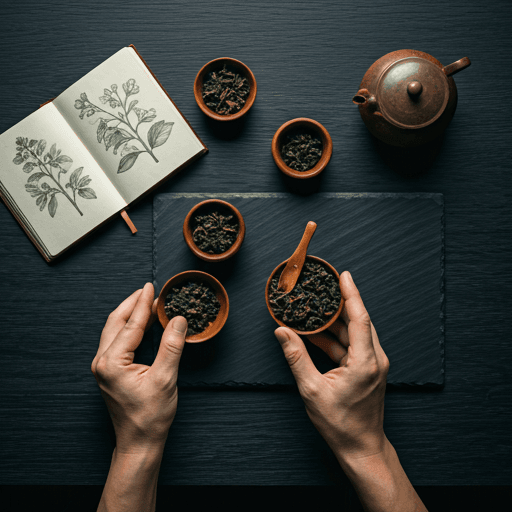
Blueberry tea is, most simply, a fruit infusion or flavored tea that tastes of blueberries. The name covers a few different drinks, and that is where the confusion starts. It can be a caffeine-free herbal blend built from dried blueberries and other fruit; a blueberry-flavored black or green tea that does contain caffeine; a more rustic homemade brew of muddled fresh or dried berries; or even a tea made from the leaves of the blueberry bush. This page is about all of those non-alcoholic versions, how to tell them apart, and how to make a good cup at home.
There is also a warm cocktail confusingly called "Blueberry Tea" that contains no blueberries at all. We will clear that up too, but only briefly, because this guide is about the drink you can pour for anyone, any time of day.
What is blueberry tea?
The phrase "blueberry tea" gets used for several related drinks, so it helps to sort them by what is actually in the cup. The deciding questions are whether real tea leaves (from the Camellia sinensis plant) are involved, and therefore whether the drink has caffeine.
The most common version sold in supermarkets is an all-fruit herbal blend. These pour a deep berry-red, taste sweet-tart, and are naturally caffeine-free because they contain no tea leaves at all. A typical commercial blend layers dried blueberries with hibiscus, apple, elderberry, currant, rosehip, or cornflower petals to round out the flavor and color. Hibiscus in particular is doing a lot of the heavy lifting on both the ruby hue and the tartness, which is why a blueberry herbal blend can taste brighter than the berry alone.
A second version is genuine tea that has been flavored with blueberry, often a black tea or a green tea base. Because these start from real tea leaves, they do contain caffeine, roughly in line with the black or green tea underneath. If caffeine matters to you, this is the single most important thing to check on the label: "herbal" or "fruit infusion" means caffeine-free, while "black tea" or "green tea" with blueberry flavor does not.
Blueberry leaf tea
There is also blueberry leaf tea, an herbal tea brewed from the dried leaves of the blueberry shrub rather than the fruit. It is more grassy and mild than the sweet-tart fruit version, and it is caffeine-free. Like other plant-leaf infusions it falls under the broad herbal tea umbrella, and the dried leaves turn up in health-food shops and online. Many home gardeners with blueberry bushes brew the leaves much as you would any garden herb.
What does blueberry tea taste like?
Done well, blueberry tea is fruity, lightly sweet, and pleasantly tart, with a jammy, almost wine-like depth from the berry skins. Fruit blends that lean on hibiscus push the tartness and color further toward cranberry-red. A blueberry-flavored black tea keeps a maltier, more tannic backbone, while a green-tea base stays lighter and more vegetal underneath the fruit. Blueberry leaf tea is the gentlest of the bunch: soft, slightly green, and far less sweet.
Because the natural sugar in blueberries is modest, most people sweeten the cup a touch. A small amount of honey or sugar lifts the fruit; a squeeze of lemon brightens it and, in fruit blends, can deepen the red. Go light, taste, and adjust, rather than over-sweetening from the start.
How to make blueberry tea at home
You do not need a special blend to make blueberry tea. Fresh berries, dried blueberries, or a fruit blend all work, and you can pair them with a real tea or with hibiscus for more body. Here is a reliable hot method.
- Pick your berries. Use a generous handful of fresh blueberries, or about a tablespoon of dried blueberries per cup. Dried blueberry tea brews a more concentrated, raisin-like flavor, while fresh berries taste brighter.
- Muddle or simmer. Lightly crush fresh berries in the bottom of a mug or pot to release their juice. For dried berries or a sturdier brew, drop them into just-boiled water and let them simmer very gently.
- Add a base if you like. For more depth, add a black or green tea bag, or a spoon of dried hibiscus, to the same pot. Skip this to keep the drink caffeine-free.
- Steep 5 to 8 minutes. Fruit and leaves need longer than ordinary tea to give up their flavor, so steep 5 to 8 minutes; whole dried berries can take up to 10 to 15. Use water just off the boil, around 200 degrees F (93 degrees C).
- Strain, sweeten, finish. Strain out the solids, pressing the berries to extract the last of the juice. Add a little honey or sugar and a squeeze of lemon to taste.
To serve it cold, brew it a bit stronger and pour over a full glass of ice, or make a pitcher and cold-steep it in the fridge for several hours before straining. The same principles apply to any fruit tea you turn into a cold drink; our guide to how to make iced tea covers the technique in full. For the fundamentals of steeping any tea well, see how to make tea.
Types of blueberry tea at a glance
| Type | What it is | Caffeine |
|---|---|---|
| Blueberry herbal / fruit infusion | Dried blueberries blended with hibiscus, apple, and other fruit; no tea leaves | Caffeine-free |
| Blueberry-flavored black tea | Real black tea leaves flavored with blueberry | Contains caffeine (like black tea) |
| Blueberry-flavored green tea | Real green tea leaves flavored with blueberry | Contains caffeine (like green tea) |
| Dried blueberry tea (homemade) | Dried blueberries steeped in hot water, alone or with a tea base | Caffeine-free unless you add tea leaves |
| Blueberry leaf tea | Dried leaves of the blueberry shrub, brewed as an herbal infusion | Caffeine-free |
Blueberry tea benefits, kept honest
Most of the interest in blueberry tea benefits comes from the berry itself. Blueberries are rich in antioxidants, especially the anthocyanins that give them their deep blue-purple color, and these compounds carry into the cup when you steep the fruit. Antioxidant-rich foods and drinks are generally associated with healthy eating patterns, and blueberry leaf tea is likewise valued for its plant polyphenols.
It is worth being clear-eyed, though. A cup of blueberry tea is a pleasant, low-calorie drink, not a medicine, and brewing fruit in water delivers far less of everything than eating the whole berries. Any wellness claims here are general, not prescriptive: blueberry tea may contribute to your overall fluid and antioxidant intake, but it does not treat, cure, or prevent any condition. If you are pregnant or breastfeeding, take medication, or have a medical concern, check with a clinician before relying on any tea for health reasons, and remember that the flavored black and green versions add caffeine to the mix. If your blend leans heavily on hibiscus, our note on hibiscus tea benefits covers that ingredient in more depth.
The "Blueberry Tea" cocktail is a different drink
One more source of confusion deserves a quick word. "Blueberry Tea" is also the name of a warm cocktail, traditionally a measure each of amaretto and Grand Marnier topped with hot black tea, often served in a brandy snifter. The almond-and-orange liqueurs combine to taste convincingly of blueberry even though the drink contains no blueberries at all. It is an adult, alcoholic drink and should be enjoyed responsibly and in moderation. Everything else on this page is about the non-alcoholic blueberry tea you can brew and share freely.
How to choose and brew well: a quick checklist
- Decide on caffeine first. Want it for evenings or for kids? Choose a fruit infusion or blueberry leaf tea, both caffeine-free. Want a lift? Pick a blueberry black or green tea.
- Read the ingredient list. "Fruit infusion" and "herbal" mean no tea leaves; "black tea" or "green tea" means caffeine is present.
- Steep long enough. Fruit and leaves give up flavor slowly, so allow 5 to 8 minutes and use water just off the boil.
- Sweeten and brighten lightly. A little honey and a squeeze of lemon flatter the berry; over-sweetening buries it.
- For iced, brew stronger. Ice dilutes, so concentrate the brew or cold-steep a pitcher overnight.
The takeaway
Blueberry tea is less one drink than a small family of them: a caffeine-free fruit infusion, a flavored black or green tea, a homemade brew of fresh or dried berries, and the gentler leaf tea. Once you know which one is in your cup, the rest is easy, and a good blueberry tea is genuinely lovely, hot or over ice. If you enjoyed this, keep exploring the wider world of fruit and flower infusions, where blueberry is just one of many berries worth steeping.