
Blue Bottle Coffee is an Oakland, California specialty roaster and cafe chain, founded in 2002 by former clarinetist James Freeman, that became one of the defining brands of the third-wave coffee movement. Its whole identity grew from a single promise: never sell coffee more than 48 hours out of the roaster. That obsession with freshness, paired with single-origin beans and minimalist cafes, turned a one-man farmers'-market cart into a global name now majority-owned by Nestle.
This is the Blue Bottle story: where it came from, what it stands for, what to order, and how it fits alongside the rest of the coffee world.
What is Blue Bottle Coffee?
Blue Bottle Coffee is a roaster-and-cafe company that treats coffee the way good wineries treat wine: as a craft product where the bean, the farm, the roast and the brew all matter. Rather than a deep menu of sugary drinks, the Blue Bottle Coffee Company built its reputation on a tight selection of carefully sourced beans, brewed with precision and served fresh.
The brand sits firmly in what the industry calls "third-wave" coffee. The first wave made coffee a mass-market household staple. The second wave, led by chains like Starbucks, made the cafe an experience and popularized espresso drinks. The third wave treats coffee as an artisanal, traceable, single-origin craft. Blue Bottle is one of the names most often used to define that third wave.
The origin story: a clarinetist, a shed and a 48-hour rule
James Freeman was a professional clarinetist before he was a coffee roaster. Frustrated with stale supermarket coffee, he began roasting tiny seven-pound batches in a roughly 186-square-foot rented potting shed in Oakland's Temescal district in 2002. He sold the results at farmers' markets around San Francisco and Oakland from a cart.
His founding pledge became the company's north star: "I will only sell coffee less than 48 hours out of the roaster to my customers, so they may enjoy coffee at its peak of flavor." That 48-hour window is the single idea everything else at Blue Bottle is built around. Roasted coffee is at its best in the days after roasting, and most mass-market coffee sits for weeks before it reaches a cup. By promising freshly roasted beans only, Blue Bottle made freshness its core differentiator.
A converted garage in a San Francisco alley became the first permanent spot, followed by a fully enclosed cafe at Mint Plaza in 2008. Growth was deliberately slow: the Bay Area filled in first, then New York in 2010 (Williamsburg, Brooklyn), Los Angeles in 2014, and Tokyo in 2015 as the first international outpost.
Where the name and the blue bottle logo come from
The name is a deliberate history lesson. It honors "Hof zur Blauen Flasche" (the House Under the Blue Bottle), remembered in legend as one of the first coffeehouses in Vienna, founded in 1683 by Jerzy Franciszek Kulczycki after the Battle of Vienna. The story goes that he recognized the sacks of dark beans left behind by the retreating Ottoman army as coffee and used them to open a coffeehouse. Historians now treat much of that tale as embellished folklore, but the literal accuracy matters less than the point Freeman was making: he was planting his brand in the long European cafe tradition.
The blue bottle logo follows the same restraint as everything else about the brand. It is a single, simple silhouette of a blue bottle on a clean background, with no slogans or busy graphics. That minimalism is a signal in itself, telling you the coffee is meant to be the star.
What Blue Bottle is known for
Beyond freshness, a few hallmarks define the Blue Bottle Coffee experience:
- Single-origin and traceable beans. The menu leans on coffees from specific farms or regions so you can taste the differences between origins, alongside a small number of signature blends.
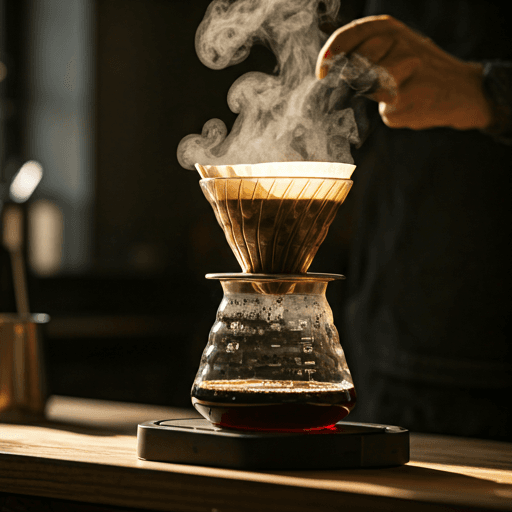
- Manual brewing. Pour-over (and methods like the siphon) are central, brewed to order so each cup highlights the bean's character rather than hiding it.
- Minimalist cafes. Spare, calm, design-forward spaces, openly inspired by the focused quiet of Japanese kissaten coffeehouses, where the room gets out of the coffee's way.
- Freshness-dated bags. Retail bags carry a roast date, reinforcing the original 48-hour philosophy for people brewing at home.
Signature drinks and blends to know
| What to order | Why it matters |
|---|---|
| New Orleans-style iced coffee | A brand staple: cold, chicory-tinged and gently sweet, an approachable signature that softened Blue Bottle's reputation for being purist. |
| Three Africas blend | A well-known house blend built around East African coffees, leaning bright and fruit-forward for people who like more spark in the cup. |
| Single-origin pour-over | The clearest window into the third-wave idea: one farm or region, brewed by hand, with the flavor notes front and center. |
| Classic espresso drinks | Espresso, cortado, latte and cappuccino made to a precise, milk-forward-but-balanced house standard. |
If you want to understand the milk drinks on that list, our explainers on what a latte is and what a cappuccino is break down the ratios, and espresso explained covers the shot underneath all of them.
The Nestle era and global scale
In September 2017, Nestle, the world's largest food and drinks company, acquired a majority stake in Blue Bottle, reported as around 68 percent, in a deal that valued the brand at over $700 million. The acquisition was a milestone for specialty coffee: it showed that a third-wave, freshness-obsessed roaster could become a serious commercial business, not just a cult favorite.
Under Nestle, Blue Bottle continued to expand internationally and now operates well over 100 stores across the United States, Japan, China, South Korea and Hong Kong, alongside a strong online business in beans and subscriptions. As with many founder-led brands that scale, longtime fans debate whether bigger ownership changes the soul of the coffee; that tension between craft origins and corporate scale is part of the modern Blue Bottle story.
How Blue Bottle compares to other coffee brands
Blue Bottle is easiest to understand next to the brands it sits between. It is more premium and origin-focused than the big second-wave chains, but more polished and scaled than a tiny neighborhood roaster.
| Brand | Founded | Wave / model | Known for |
|---|---|---|---|
| Blue Bottle Coffee | 2002, Oakland, CA | Third-wave specialty roaster | 48-hour freshness, single-origin, minimalist cafes |
| Blank Street | 2020, Brooklyn, NY | Tech-driven, value specialty | Small-footprint, app-first ordering, matcha and signature lattes |
| Starbucks | 1971, Seattle, WA | Second-wave global chain | Scale, customizable menu, the "third place" cafe |
For more on those comparisons, read the Blank Street brand story, a newer, tech-led chain with a very different model, and the Starbucks brand guide for the second-wave giant. If you are curious about the wider movement Blue Bottle helped lead, our overview of third-wave and aesthetic coffee shops puts the style in context, and the best coffee chains and roasters guide rounds up notable names.
Is Blue Bottle worth seeking out?
If you care about tasting where a coffee actually comes from, Blue Bottle is a reliable introduction to specialty coffee done well. The single-origin pour-overs and freshness-dated beans reward people who want nuance over novelty. If you mostly want a big sweet drink or maximum customization, a mainstream chain may suit you better, and that is a perfectly good choice too.
Pricing sits in the premium tier and varies by country and location, so think of it as you would a nice glass of wine rather than a value cup. The point is not that one brand is "best," but that knowing what each one is built around helps you pick the right cup for your mood.
Blue Bottle's real legacy is the idea it normalized: that coffee deserves a roast date, a known origin and a careful brew. Once you have tasted coffee that way, it is hard to unsee. To keep exploring, dig into our Blank Street and Starbucks brand stories, or head to the coffee hub for more guides on beans, brewing and the cafes shaping how the world drinks coffee.