
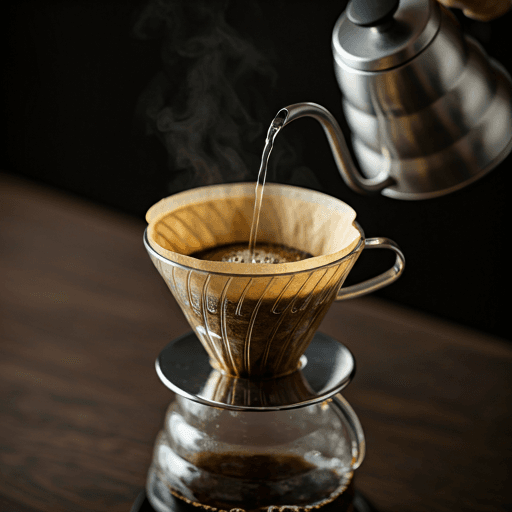
Black coffee is simply brewed coffee with nothing added: no milk, no cream, no sugar, no syrup. That is the whole definition, but it is also where most people get stuck, because a badly made cup of black coffee tastes harsh while a well-made one tastes sweet, clean, and full of character. The good news is that brewing great coffee black comes down to a handful of choices you control: the beans, the grind, the ratio, and the water. Get those right and you will understand exactly why so many people drink their coffee black on purpose.
This is a hands-on how-to. If you want the formal definition and origins, see what is black coffee; for the health side, see black coffee benefits. Here, the focus is the practical craft of making and enjoying it.
What black coffee is in one line
Black coffee is coffee brewed with hot water and served plain. Because there is nothing to hide behind, every step of the brew shows up in the cup. Milk smooths over a bitter or sour brew; black coffee does not. That sounds intimidating, but it is actually freeing once you realize the bitterness people complain about is almost always a fixable brewing mistake, not the true nature of the drink. Over-roasted or stale coffee can taste flat, ashy, and one-note, but that comes from the beans and the brew rather than from drinking it without milk.
Start with good, fresh beans
The single biggest lever for how your black coffee tastes is the beans. Two rules cover most of it: buy coffee that was roasted recently, and start with a roast level that is forgiving.
Freshness beats almost everything
Coffee is at its best in the few weeks after roasting, then it slowly fades. A flat, dull, or stubbornly bitter cup is more often a freshness problem than a brewing one. Look for a roast date on the bag rather than only a best-before date, buy whole beans, and grind them just before you brew. If you grind a week of coffee in advance, much of the aroma is gone before you ever taste it. Store beans in an airtight container away from heat and light, and resist the urge to refrigerate them. Choosing the right beans is worth its own read in best coffee beans.
A smoother roast is more forgiving
If you are new to drinking your coffee black, a balanced medium roast or a naturally sweet single origin is far more approachable than a heavy, oily dark roast. Lighter and medium roasts keep more of the bean's own sugars and gentle acidity, which read as sweetness, caramel, chocolate, or soft fruit in the cup. A very dark roast can taste smoky and sharp, and it punishes small mistakes. You do not have to chase exotic coffees; you just want beans whose natural flavor you enjoy without anything covering it up.
How to make coffee black taste great
Once you have decent beans, four variables decide whether your coffee black tastes sweet and clear or harsh and bitter: grind size, the coffee-to-water ratio, water temperature, and brew time. They all push on the same thing, which baristas call extraction, the amount of flavor the water pulls out of the grounds.
Grind for your method
Grind size controls how fast water flows through the coffee. Too fine and the water lingers, over-extracting and turning bitter; too coarse and it rushes through, under-extracting and tasting thin and sour. Match the grind to the method: coarse for French press, medium for drip and pour-over, fine for espresso and moka. A burr grinder gives an even grind, which matters more for a clean black cup than almost any other piece of gear, because uneven grounds extract unevenly and muddy the flavor. For the full breakdown, see how to make coffee.
Use a real ratio
A reliable starting point is roughly 1 part coffee to 16 or 17 parts water by weight, often written 1:16 to 1:17. In everyday terms that is about 60 grams of coffee per liter of water, or close to two tablespoons of ground coffee per six-ounce cup. A kitchen scale removes the guesswork and makes your cup repeatable day to day. If the coffee tastes too strong, that is a ratio fix, so add more water. If it tastes bitter or hollow, that is an extraction fix, so adjust grind, temperature, or time instead.
Water just off the boil
Brew with water around 195 to 205F, roughly 90 to 96C, which is just off a rolling boil. Boiling water poured straight onto the grounds scorches them and drags out bitterness. If you do not have a thermometer, boil the kettle, then wait about thirty seconds before pouring. Lower the temperature slightly for darker roasts to tame harshness, and keep it toward the higher end for lighter roasts that need a little more heat to open up. Filtered or fresh water also helps, since coffee is mostly water and off-tasting water carries straight into the cup.
Avoid over-extraction, the real cause of bitterness
Most unpleasant black coffee is over-extracted: the water spent too long with the grounds, or the grind was too fine, or the water was too hot. The fix is to back off one variable at a time. Coarsen the grind, shorten the contact time, or cool the water a touch. A bitter cup at a sensible ratio is an extraction problem, not a reason to add sugar. Dial it in and the same beans suddenly taste sweet and rounded. The flip side is under-extraction, a sour, thin, salty cup, which calls for the opposite moves: a finer grind, a touch more time, or slightly hotter water.
Black coffee by brew method
The method you choose shapes the body and clarity of your black coffee. None is objectively best; they simply highlight different things. Here is how each tends to turn out and one tip for each.
| Brew method | How black coffee turns out | Tip |
|---|---|---|
| Drip / filter machine | Clean, balanced, easy and consistent | Use a medium grind and fresh paper filters; rinse the filter first |
| Pour-over (V60, Kalita) | Bright and clear, shows off origin flavor notes | Pour slowly in stages so the bed stays even |
| French press | Full-bodied and rich, with more texture | Coarse grind; press gently and decant so it does not keep brewing |
| AeroPress | Smooth and low in bitterness, very flexible | Shorter steep and a finer-than-French-press grind |
| Moka pot | Strong and intense, almost espresso-like | Pull it off the heat as soon as it gurgles to avoid scorching |
If you want a cup that highlights distinct flavor notes such as citrus, stone fruit, or chocolate, a pour-over gives the most clarity. If you like a heavier, comforting mug, a French press is a friendlier home for darker, chocolatey beans. There is no wrong answer; the best method is the one whose result and routine you enjoy.
How to drink black coffee if you are new to it
If you have always taken coffee with milk and sugar, learning how to drink black coffee is a short adjustment, not a leap. A few habits make it easy and genuinely enjoyable.
- Ease in with a lighter or medium roast. These taste naturally sweeter and less aggressive than dark roasts, so the first sips are pleasant rather than punishing.
- Let it cool a little. Very hot coffee mutes flavor and amplifies bitterness. As the cup drops a few degrees, sweetness and fruit notes come forward and the black coffee taste rounds out.
- Taste, do not gulp. Take a small sip and let it sit on your tongue. Notice whether it is bright, chocolatey, nutty, or fruity. Naming what you taste makes plain coffee far more interesting.
- Adjust strength, not the brew. If a cup feels too intense, add a splash of hot water rather than reaching for sugar. You keep the clean flavor and lose the harshness.
- Drink it fresh. Coffee that has sat on a hot plate or gone cold and reheated turns flat and bitter. Brew what you will drink soon.
Why people love coffee black
Once you are brewing it well, the appeal of black coffee becomes obvious. There are a few reasons it wins so many people over.
Pure flavor. Without milk or sugar, you taste the coffee itself, the sweetness, the acidity, the chocolate or berry notes a good bean carries. Drinking it black is the clearest window into what your beans actually taste like.
It lets the origin shine. Coffees from different regions taste genuinely different, and black coffee is where those differences are unmistakable. A bright washed African coffee and a heavy chocolatey one from the Americas become two distinct experiences rather than two versions of the same milky cup.
Zero calories and simplicity. Black coffee is calorie-free, which is part of why it comes up in conversations about black coffee benefits. It is also wonderfully low-effort: no frothing, no syrups, just coffee and water. Note that caffeine still affects sleep and can cause jitters in some people, so moderation matters.
The ritual. For many drinkers, the quiet routine of grinding, brewing, and sipping a clean cup is half the pleasure. Black coffee turns a daily habit into a small, repeatable craft you can keep improving.
The short version
To make coffee black taste great, start with fresh beans and a forgiving medium roast, grind to match your method, use about a 1:16 ratio, brew with water just off the boil, and pull back if it turns bitter. Ease in with lighter roasts, let the cup cool slightly, and pay attention to what you taste. Do that and black coffee stops being a chore and becomes the most honest, rewarding way to enjoy what is in your cup. From here, you might explore which beans suit you in best coffee beans or revisit the fundamentals in how to make coffee.