
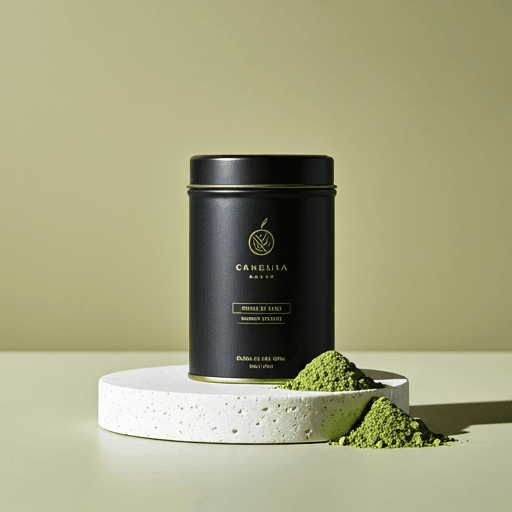
Bai Ji Guan — "White Cockscomb" — is the odd one out among Wuyi's Four Famous Bushes: a naturally pale, yellow-green cultivar that yields the lightest, least-roasted cup in the whole rock-oolong family. Where its cousins are dark and heavily charred, bai ji guan is soft, buttery and floral, with a sweet cornsilk note that surprises anyone expecting the usual Wuyi fire. This guide explains what the tea is, why its leaves are so pale, the temple legend behind the name, and how its gentle roast sets it apart from its famous siblings.
What is Bai Ji Guan oolong?
Bai Ji Guan oolong is a Wuyi rock tea, or yancha, made from a distinctive pale-leaved cultivar of Camellia sinensis grown in the mineral cliffs and ravines of the Wuyi Mountains in northern Fujian, China. Its name, written 白鸡冠, translates as "white cockscomb" or "white rooster crest," after the pale, comb-shaped young leaves. Like all oolong tea, it is partly oxidized and then dried and baked, sitting between green and black tea in style — and like the rest of the Wuyi rock tea family, it is prized for the cool mineral aftertaste that Chinese drinkers call yan yun, or "rock rhyme."
One thing to clear up first: despite the "bai" (white) in the name, white cockscomb tea is not a white tea. It is a true oolong. The "white" refers to the colour of the leaf, not to the minimally processed white-tea category. It is also one of the celebrated Wuyi mingcong — the "famous bushes" of the mountain — and specifically one of the Si Da Ming Cong, or Four Famous Bushes.
The pale leaf: Wuyi's albino-ish cultivar
The one thing bai ji guan owns, more than any legend or roast, is its leaf. Almost every other Wuyi cultivar produces dark green foliage that turns coppery and then near-black through oxidation and baking. This bush does the opposite. Its spring flush emerges a striking golden-white to pale yellow-green, so light it looks bleached against the dark cliffs — the feature that earned the "white cockscomb" name, as the pale, serrated new leaves are said to resemble a rooster's comb.
That pallor is not a trick of the light. Bai ji guan is widely described as an "albino" or low-chlorophyll cultivar: the young leaves carry less of the green pigment than a normal tea plant, which is what gives them their cornsilk colour and, many believe, their unusually sweet, low-astringency character. It is often called the "artwork" of the rock-tea gardens precisely because it stands out so vividly from its neighbours. A genuine pale Wuyi oolong of this kind is instantly recognisable in the dry leaf, which stays far lighter than the twisted, near-black strips of a typical yancha.
The rooster legend
Every famous bush comes with a story, and this one is worth telling as a story rather than as fact. As the tale is usually told, a monk from Huiyuan Temple in the Wuyi Mountains kept chickens near his tea garden. One day he heard frantic crowing and found a rooster fighting off a hawk that had come for its chicks. The rooster drove the predator away but died of its wounds. Moved by the bird's courage, the monk buried it beside the tea plants — and the following spring a new bush grew from the spot, its pale, white-edged leaves resembling the fallen rooster's crest. He named it bai ji guan, "white cockscomb," in the bird's memory.
Like most origin legends in Chinese tea, the details shift from teller to teller and none of it can be verified. What matters for a drinker is that the name is old, the pale leaf is real, and the folklore has kept this quirky cultivar alive for centuries when more commercial bushes might have crowded it out.
A light roast in a house of fire
Wuyi rock tea is famous for the charcoal roast — repeated bakes that push the leaf toward caramel, dried fruit and cocoa. Bai ji guan is the exception. Because the pale leaf is so delicate and its sweetness so easily lost, it is given a deliberately lighter roast than an ordinary yancha, often just enough to set the tea without masking the cultivar's soft, floral character. Push the fire too hard and you burn away the very thing that makes it special.
Sources disagree on exactly how oxidized it is — some place it toward the higher-oxidation end typical of Wuyi, others describe it as lighter and "almost dancong-like" in its florality — so it is fair to say only that bai ji guan tends to be processed more gently than its darker cousins, with a lighter hand at the roaster. The upshot is the same either way: this is the pale Wuyi oolong you reach for when you want the mineral backbone of rock tea without the smoke and char.
What Bai Ji Guan tastes like
The cup pours a clear, bright gold to light amber — noticeably paler than the chestnut liquor of a heavily roasted rock oolong. The aroma is soft and sweet: think warm butter, cornsilk and a wash of orchid-like florals rather than roasted grain. On the palate it is gentle and rounded, with a buttery, almost creamy sweetness that tasters often compare to mooncake pastry or marzipan, a light nutty edge, and a cooling mineral finish underneath. There is little of the sharp spice or heavy toast of its siblings; instead it lingers with a mellow, faintly toasty sweetness and that signature Wuyi rock-rhyme coolness in the throat.
Because the leaves are large and open slowly, bai ji guan rewards patience. A small vessel, a generous scoop of leaf, water at a full boil, and a series of short steeps will draw out layer after layer — the florals and butter up front, the minerality building through the middle infusions. Keep steeps brief and it will give many satisfying cups before it fades.
At a glance
| Attribute | Bai Ji Guan (White Cockscomb) |
|---|---|
| Type | Oolong — Wuyi rock tea (yancha); one of the Si Da Ming Cong |
| Origin | Wuyi Mountains, northern Fujian, China |
| Cultivar | Bai Ji Guan — a pale, low-chlorophyll ("albino-ish") bush |
| Leaf colour | Golden-white to pale yellow-green (unusually light for Wuyi) |
| Oxidation | Partial; contested — generally gentler than a typical yancha |
| Roast | Light — the least roasted of the famous bushes |
| Liquor | Bright gold to light amber |
| Flavour | Buttery, cornsilk-sweet, floral, lightly nutty, cool mineral finish |
| Signature | Pale leaf + light roast; soft rock-rhyme without the char |
Bai Ji Guan vs the other famous bushes
The Four Famous Bushes — Si Da Ming Cong — are the storied cultivars of Wuyi, and bai ji guan is the gentle one in a lineup built for intensity. The grouping is usually given as Da Hong Pao, Tie Luo Han, Bai Ji Guan and Shui Jin Gui, though the lists vary and some traditions swap Da Hong Pao (often treated as the crowned king above the four) for Ban Tian Yao. Whatever the exact roster, Bai Ji Guan is the pale, lightly roasted outlier among teas otherwise known for dark leaves and deep fire.
It also sits apart from the mountain's everyday workhorse, Shui Xian, which leans thick, woody and charcoal-roasted. If Shui Xian is comfort and Da Hong Pao is depth, Bai Ji Guan is delicacy — the one that trades power for a soft, buttery clarity.
| Feature | Bai Ji Guan | Da Hong Pao | Shui Xian |
|---|---|---|---|
| Leaf colour | Pale gold-green | Dark, twisted | Long, dark strips |
| Roast | Light | Medium to heavy | Medium to heavy (charcoal) |
| Character | Soft, buttery, floral | Rich, roasted, complex | Mellow, woody, thick |
| Signature note | Cornsilk, butter, mineral | Roasted fruit, cocoa | Orchid, moss, seasoned wood |
| Best for | Delicacy and sweetness | Depth and body | Comfort and mellowness |
Where it grows and why it is scarce
Like all true yancha, bai ji guan draws its character from the Wuyi terroir — the weathered volcanic and sandstone cliffs, the cool misted ravines, and the thin mineral soils that give rock tea its cooling finish. Bushes are cultivated on mountainside plots within the protected Wuyi ecological area, some cited at around 600 m elevation, and the most prized leaf comes from the zhengyan, or "true cliff," core zone.
Authentic bai ji guan is genuinely uncommon. It is a lower-yielding, fussier bush than the region's commercial cultivars, and over the years many gardens replaced it with easier, more profitable plants, so real old-stock material is hard to find. It is fair to call the tea scarce and hand-made; exact production figures vary widely from source to source, so treat any single number with caution rather than as a fixed fact.
The bottom line
Bai Ji Guan is the rock oolong for people who think they do not like rock oolong — or who want to taste the softest, sweetest corner of the Wuyi tradition. Its pale, albino-ish leaf and unusually light roast give a buttery, cornsilk-sweet, floral cup with just enough mineral coolness to remind you it is still yancha. It is the odd one out among the famous bushes, and that is exactly the point: a pale Wuyi oolong that proves rock tea does not have to be dark to be memorable.
As a true tea, bai ji guan contains caffeine — roasted oolongs generally sit in a moderate range, though the exact amount shifts with leaf quantity, water temperature, steep time and how many infusions you draw, so treat any single figure as an approximation. Many people find a lightly roasted oolong easy and warming to sip, but responses vary from person to person; this is general information, not medical advice, and anyone sensitive to caffeine can simply steep it shorter and lighter.