
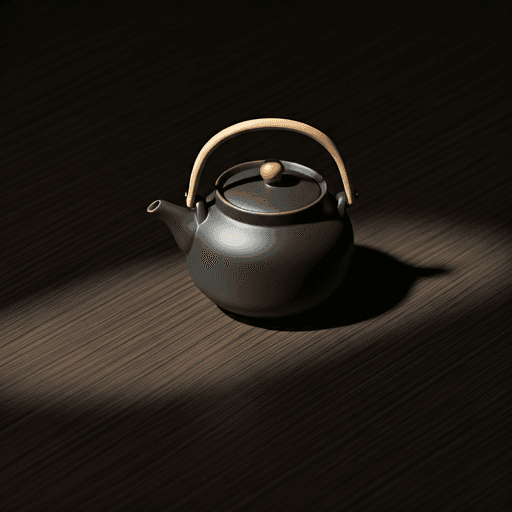
Shui Xian is one of the great mellow voices of Wuyi rock oolong — a charcoal-roasted, orchid-and-moss tea with a thick, soothing body and a long mineral finish. Its name, written 水仙, is usually rendered "water sprite" or "narcissus," yet the tea has nothing to do with the spring flower. This guide explains what shui xian oolong tea is, where it comes from, why old-bush "Lao Cong" examples are so prized, and how to brew it to draw out that famous rock rhyme.
What is Shui Xian Oolong Tea?
Shui Xian oolong tea is a partly oxidized, roasted oolong made from the Shui Xian cultivar of Camellia sinensis (often catalogued as cv. Wuyi Narcissus). In its most celebrated form it is a Wuyi yancha, or "rock tea," grown in the mineral-rich cliffs and ravines of the Wuyi Mountains in northern Fujian, China. Alongside Da Hong Pao and Rou Gui, it is one of the pillars of the Wuyi rock tea family.
Where many oolongs are rolled into tight beads, Shui Xian is a strip-style tea: long, twisted, dark leaves that have been oxidized to a medium-to-high level and then baked over charcoal. The result is a deep amber liquor and a flavor that leans woody, floral and sweet rather than green or grassy. Among Wuyi teas it is prized as the gentle, rounded counterpart to the region's spicier cultivars — the tea people reach for when they want comfort and depth rather than aromatic fireworks.
The name: water sprite, not a flower
The characters 水仙 translate literally as "water immortal," and are the same ones used for the narcissus (daffodil) flower — which is why you will see the tea sold under labels like "narcissus" or "water sprite" oolong. That floral connection is a happy accident of language, not botany. By the most commonly told account, the name grew out of a dialect homophone: the original mother tree is said to have stood beside a cave known as Zhu Xian, and because "Zhu" sounds much like "Shui" (water) in the local speech, the name gradually settled into the "Shui Xian" we use today.
The important point for a drinker is that Shui Xian is a cultivar, not a place or a single garden. The same varietal is grown in several regions and processed in different styles, so "Shui Xian" on a label tells you the plant, while words like "Wuyi," "Min Bei" (northern Fujian) or "Zhangping" tell you the origin and style. Keeping cultivar and place separate is the key to reading these teas well, and it is a good habit to carry across all of oolong tea.
Origins in northern Fujian
The Shui Xian cultivar is usually traced to Jianyang, in northern Fujian, in the hills around Xiaohu (Xiao Hu) township, with its discovery commonly dated to the Qing dynasty's Daoguang era (roughly 1821–1850). By tradition, a farmer found a fragrant wild tea tree near a cave, took cuttings, and propagated it by layering; the plant proved vigorous and well suited to oolong processing. By the late nineteenth century it had spread widely across the region, valued for both its hardiness and its aromatic, mineral cup.
Because the plant is naturally tall and large-leafed, it adapted beautifully to the Wuyi tradition of open-fire roasting and repeated bakes. Today "Wuyi Shui Xian" and the broader "Min Bei Shui Xian" account for a large share of everyday rock tea, from humble daily-drinkers to prized old-bush lots. The cultivar also travels beyond Fujian: it is grown in parts of Guangdong and in Taiwan, though the Wuyi expression is the one that defined its reputation.
Lao Cong: the old-bush prize
The most sought-after Shui Xian carries the words Lao Cong (老枞), "old bush" or "old tree." There is no single legal age threshold, but the term is generally reserved for plants that are decades old — often cited as 50, 80 or 100 years and up, with a handful of venerable plots said to hold bushes a century old or more. Age matters here because older trunks and deeper root systems, colonized by moss and lichen in the damp Wuyi ravines, are commonly said to lend a character younger plants cannot fake.
Enthusiasts call this quality Cong Wei (枞味), the "old-bush taste": a cool, woody, mossy, almost forest-floor note layered over the tea's orchid sweetness. You may also see Gao Cong ("tall bush") used for younger-but-mature plants. None of these labels guarantee quality on their own, but a genuine Lao Cong Shui Xian is one of the most soothing experiences in Chinese tea — broad, slow and deeply comforting.
Flavor and the rock rhyme
A well-made Shui Xian pours a clear amber-to-chestnut liquor with a thick, almost silky texture. The aroma suggests orchid and lilac florals, seasoned wood and a toasty sweetness from the roast; the taste follows with stone-fruit sweetness, a mineral core and a long, cooling aftertaste. That lingering mineral sensation is the celebrated yan yun (岩韵), or "rock rhyme" — the signature of true Wuyi tea, usually felt alongside a returning sweetness known as hui gan. In old-bush lots the mossy Cong Wei sits on top of all of it, giving the cup a cool, mountain-forest depth.
| Attribute | Shui Xian (Wuyi) |
|---|---|
| Type | Roasted oolong (Wuyi yancha / rock tea) |
| Cultivar | Shui Xian (cv. Wuyi Narcissus) |
| Leaf style | Long, twisted, dark strips |
| Oxidation | Medium to medium-high |
| Roast | Charcoal, often several bakes |
| Liquor | Amber to chestnut |
| Flavor | Orchid, moss, seasoned wood, stone-fruit sweetness, mineral finish |
| Signature | Yan yun (rock rhyme); Cong Wei in old-bush lots |
Shui Xian vs Rou Gui
Wuyi drinkers love to taste Shui Xian and Rou Gui side by side, because the two cultivars sit at opposite poles. A well-worn saying captures it: "no aroma surpasses Rou Gui; no mellowness surpasses Shui Xian." Rou Gui is bright, high and spicy, with cassia-bark heat; Shui Xian is deep, broad and calming, with orchid and wood. Neither is better — they are two ends of the same rock-tea spectrum, and tasting them together is one of the quickest ways to learn what "cultivar character" really means.
| Shui Xian | Rou Gui | |
|---|---|---|
| Character | Mellow, rounded | Aromatic, sharp |
| Signature note | Orchid, moss, wood | Cassia / cinnamon spice |
| Body | Thick, silky | Firm, brisk |
| Leaf | Larger, tall bush | Smaller, compact |
| Best for | Comfort and depth | Fragrance and intensity |
Charcoal roasting
Roast is central to Shui Xian's identity. After the leaves are withered, bruised, oxidized and dried, they are baked over charcoal — traditionally in several sessions spread over weeks or months, with rest periods in between. A lighter roast keeps the florals forward; a heavier roast pushes toward caramel, dried fruit, cocoa and toasted grain, and helps the tea age gracefully. Skilful roasting smooths rough edges without scorching the leaf, and a freshly baked tea is usually left to "settle" for a few months so the fire recedes and the fruit and minerality return to the front. This is why the same tea can taste noticeably different across a single year, and why many drinkers deliberately hold a fresh-roasted Shui Xian before opening it.
Zhangping Shui Xian: the pressed oolong
The same cultivar travels south to Zhangping, in Longyan (southern Fujian), where it becomes something genuinely unusual: Zhangping Shui Xian, widely described as the only oolong pressed into cakes. Small squares of leaf, usually around 8–10 grams each and wrapped in paper, are compressed and then dried. The southern style is generally lighter and greener than Wuyi rock tea, with a brighter, milky-floral sweetness closer in spirit to the ball-rolled oolongs of the south. It is a lovely curiosity worth seeking out, though the Wuyi strip-style Shui Xian remains the reference point whenever the name is used on its own.
How to brew shui xian oolong tea
Shui Xian rewards the gongfu approach: a small vessel, a generous leaf-to-water ratio and many short steeps. Roasted Wuyi oolongs like full, hot water to open up, so reach for a rolling boil rather than the cooler water you might use for a green tea.
- Use roughly 7–8 g of leaf in a 100–120 ml gaiwan or small clay pot.
- Heat water to a full boil (about 100°C / 212°F) and warm the vessel first.
- Give the leaves a quick rinse, then steep the first infusion for 10–15 seconds.
- Add a few seconds each round; a good Shui Xian will give many satisfying infusions.
Because the leaves are long and unfurl slowly, do not judge the tea by the first cup — the middle steeps, where the rock rhyme peaks, are the reward. A Western-style brew (a couple of grams per larger cup, one longer steep) works too, but the gongfu method shows off the texture and the many-layered finish best. If a cup ever turns harsh, shorten your steeps or drop the leaf a touch rather than cooling the water.
Caffeine and a general note
As a true tea, Shui Xian contains caffeine. Roasted oolongs typically sit in a moderate range — often cited around 30–55 mg per cup, but this varies widely with leaf quantity, water temperature, steep time and how many infusions you draw. Roasting does not dramatically strip caffeine, so treat any single number as an approximation rather than a fixed value.
Many people find roasted oolong warming and easy to sip, and some feel it sits more gently than a brisk black tea, but responses differ from person to person. This is general information, not medical advice; if you are sensitive to caffeine, are pregnant, or manage a health condition, follow your own clinician's guidance.