
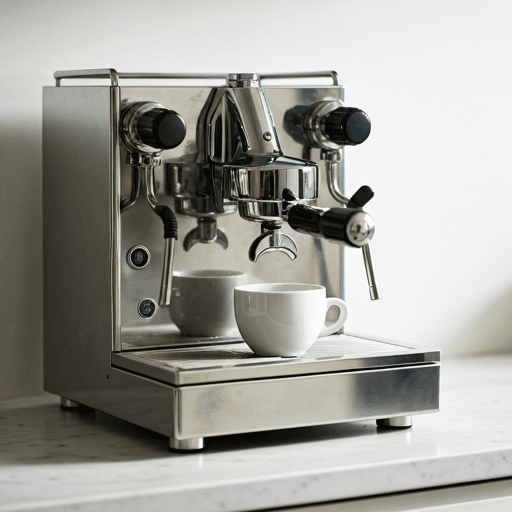
An affordable coffee machine can make genuinely good coffee, but only if you choose the right type for how you actually drink. The short answer: decide what cup you want first (filter, espresso, or single-serve), then spend a fair share of your budget on a decent grinder rather than chasing flashy machine features. This guide walks through every budget option, what each one costs you in convenience versus quality, and the pitfalls of the very cheapest gear.
You do not need an expensive setup to drink well. Some of the best-value brewers on earth are simple manual ones, and a modest electric machine paired with fresh beans and a sensible grind beats a pricey machine fed stale supermarket dust every time.
What "affordable coffee machine" really means
"Affordable" is a moving target, so think in tiers rather than numbers. Entry-level covers the cheapest electric drip makers, basic pod machines, and manual brewers. Mid-range buys you a sturdier build, a real espresso pump, or a built-in grinder. Premium is where heated group heads, dual boilers, and commercial-grade parts live, and that is well beyond what a budget shopper needs to make a great cup.
You will see machines everywhere from supermarket own-brand ranges and budget chains to specialist brands. Own-brand and budget-chain machines are a real category and can be fine for casual drinking, but they are usually rebadged versions of generic designs, so judge them on the same criteria as anything else rather than on the logo. A cheap coffee machine is not automatically a bad one. The trap is paying for features that do not improve the coffee.
Start with the cup, not the catalogue
Before you compare a single product, answer three questions. What drink do you actually make most mornings: a mug of filter, a milky espresso drink, or a quick single serve? How much effort are you happy to put in on a weekday? And how many people are you brewing for? A household that wants a pot of clean coffee with breakfast has different needs from one person who wants a flat white. Buying for the drink you wish you made, rather than the one you reliably make, is the most common way people waste money on a machine that ends up in a cupboard.
The affordable machine types, ranked by what they ask of you
Every budget option trades money, effort, and cup quality differently. Here is how the main types stack up before we get into picking one.
Budget drip and filter machines
An automatic drip machine heats water and trickles it through a basket of grounds into a carafe. It is the classic affordable workhorse: cheap to buy, simple, and good for making several cups at once. Filter coffee from a decent drip machine is clean and easy to drink. The catch with the cheapest models is weak, lukewarm brewing, because budget heating elements often fail to hold the water hot enough for proper extraction. Good coffee is brewed close to boiling, roughly in the low-to-mid nineties Celsius. Look for a machine that gets the water properly hot and showers it evenly over the whole bed of grounds rather than dribbling it onto one spot, which leaves half the coffee under-extracted. A glass carafe on a hotplate slowly stews the coffee bitter; an insulated thermal carafe keeps it drinkable for longer.
Pod and capsule machines
Pod machines push hot water through a sealed capsule. They are the kings of convenience: consistent, fast, and almost no cleanup, which is why they sell so well at the affordable end. The machine itself is often inexpensive, but the ongoing pod cost is the real price, and over months that quietly outweighs the cheap sticker. You also trade away control and freshness, since the coffee was ground and sealed long before you brewed it. If you value zero fuss and a reliable cup over flavor adventures, a pod machine earns its place. If you go this route, check that pods are easy to buy where you live before you commit to a system, so you are not locked into a narrow, pricey range.
Entry-level pump espresso
This is where budget shopping gets risky. A true espresso machine needs a pump that delivers around 9 bar of pressure at the coffee. The cheapest "espresso" machines are steam-driven toys that manage only one to two bar, producing hot, bitter, watery coffee that is not really espresso. Even many genuine pump machines advertise 15 bar as a marketing number; the pump may peak there, but the pressure that actually matters settles back toward 9 bar at the grounds, which is exactly what you want. A higher number on the box is not a better shot, and budget machines rarely include a pressure gauge to show what is really happening. Honest entry-level pump machines exist, but expect to spend into the mid-range for one that holds steady pressure and steams milk with any real power. Below that floor, you are usually better served by a manual brewer.
Manual brewers: the best value of all
If you want the most coffee quality per unit of money, skip the electrics. A French press steeps coarse grounds for about four minutes and pours a rich, full-bodied cup with almost nothing to go wrong. A moka pot uses stovetop steam pressure to make a strong, concentrated brew that is close to espresso in spirit. An AeroPress is light, near-indestructible, and endlessly adjustable, pressing a smooth single cup in under two minutes. All three are inexpensive, need no electricity, and make coffee that embarrasses many machines costing far more. For a tight budget, this is the smartest place to start, and even people with expensive setups keep one around.
Comparing budget options at a glance
| Type | What it makes | Effort | Value on a budget |
|---|---|---|---|
| Budget drip / filter | Clean filter coffee, multiple cups | Low | Good for households; avoid the weakest, coolest-brewing models |
| Pod / capsule | One consistent cup, fast | Very low | Cheap machine, but pod costs add up over time |
| Entry-level pump espresso | Espresso and milk drinks | Medium to high | Only worth it above the steam-toy floor with a real 9-bar pump |
| French press | Full-bodied immersion coffee | Low | Excellent; among the best value anywhere |
| Moka pot | Strong, concentrated stovetop brew | Medium | Excellent; espresso-like for very little |
| AeroPress | Smooth, customizable single cup | Low to medium | Excellent; durable and travel-friendly |
What to prioritize on a budget
Once you know the type, a few priorities separate a satisfying budget coffee machine from a disappointing one.
- Spend on the grinder, not the gadget. Among people who care about coffee, the saying goes that the grinder matters more than the brewer, and it is largely true. Fresh, evenly ground coffee transforms any method, while pre-ground coffee goes stale within days of opening. If your money is split, put a healthy share toward grinding, and remember a burr grinder beats a spinning-blade one for even particle size.
- Demand a real pump for espresso. If you want espresso, insist on a genuine pump machine, not a steam-pressure unit. Ignore inflated bar numbers and look for stable pressure around 9 bar at the coffee, plus a steam wand with enough power to actually froth milk.
- Favor simplicity and easy cleaning. Fewer parts mean fewer failures and a machine you will actually keep using. Removable, dishwasher-safe components, an easy-to-reach water reservoir, and parts you can descale matter more day to day than a long feature list.
- Buy fresh beans and store them well. The cheapest upgrade of all is better coffee. A modest machine with fresh, well-stored beans in an airtight container, away from light and heat, beats an expensive one fed old grounds.
Count the running cost, not just the sticker
The price on the box is only the start. The cheapest pod machine can become the most expensive way to drink coffee once you tally a year of capsules, while a slightly dearer drip machine or a manual brewer using whole beans costs very little to run after the first purchase. Think in qualitative tiers: a manual brewer plus beans sits at the low end of ongoing cost, a drip machine is similar, and pods sit higher because every cup carries a built-in charge. Also weigh durability. A flimsy entry-level machine that dies inside a year is dearer in the long run than a plain, well-built one that lasts. Spending a little more up front on something solid and simple is usually the cheaper choice over time.
Pitfalls of the very cheapest machines
The bottom of the market hides a few reliable disappointments. Steam-only "espresso" makers cannot brew real espresso. Ultra-cheap drip machines often brew too cool, so the coffee tastes thin and sour. Flimsy plastic parts crack, warp, or leak within a year, and tiny water tanks need refilling constantly. Machines loaded with gimmicks, programmable clocks, and chrome trim spend your money on everything except the cup. And a machine with no clear path to replacement parts or descaling becomes landfill the moment something clogs. The smartest best budget coffee maker is usually the simple, well-built one that does a single job properly.
So which affordable coffee machine should you choose?
Match the machine to your real routine. If you brew for a household and value ease, a solid budget drip maker is hard to beat. If you live for grab-and-go convenience and do not mind the running cost, a pod machine fits. If you crave espresso, save until you can afford a true pump rather than wasting money on a steam toy. And if you simply want the most flavor for the least cash, a French press, moka pot, or AeroPress will outperform almost anything in its price class.
Whatever you choose, the cup is built from fresh beans and a good grind far more than from the machine itself. If you want to dig deeper before deciding, read our broader walkthrough on how to choose a coffee maker and compare specific picks in the best coffee maker guide. Spend thoughtfully, brew fresh, and an affordable setup will keep you happily caffeinated for years.