
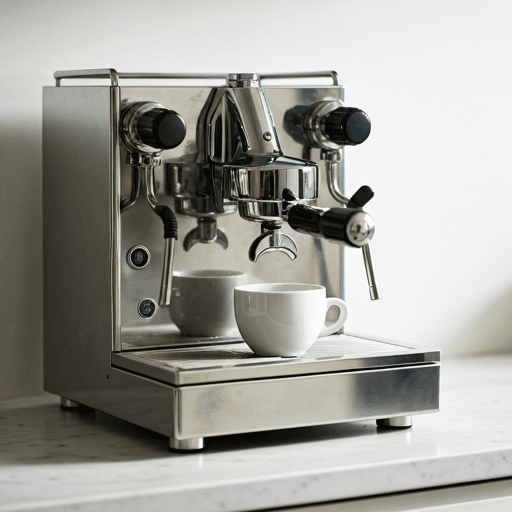
If you have ever wondered how aeropress vs espresso really stacks up, here is the honest contrast: both push hot water through ground coffee, but they do it with wildly different force. A true espresso machine drives water through a tightly packed puck at around 9 bars of pressure to pull a small, intense shot topped with crema. An AeroPress relies on gentle hand pressure, only a fraction of a bar, so it makes a smooth, concentrated cup that tastes rich but is not a genuine 9-bar espresso.
The short answer: aeropress vs espresso at a glance
In the aeropress vs espresso debate, the cleanest way to think about it is pressure. A machine espresso is defined largely by that roughly 9-bar push, which forces oils and fine particles into suspension and builds the golden layer of crema on top. An AeroPress uses your arm, so the pressure is far lower and far gentler. The result is what many people call an espresso-style cup: strong, low in volume and more concentrated than drip, but softer, cleaner and usually without much crema. So is AeroPress coffee espresso? Not in the strict sense; it is espresso-adjacent, not the real thing. We will keep the full walk-through of the brewer for the AeroPress guide and the precise shot definition for what is an espresso shot, and focus here on how the two compare side by side.
Pressure is the key difference
Pressure is the single fact that separates these two brewers. Espresso machines, whether a pump machine or a lever, are built to reach somewhere around 9 bars, roughly nine times atmospheric pressure. That intense, sustained force is what emulsifies the coffee oils and dissolved gases into the fine foam we call crema, and it is why a well-pulled espresso pours as a thick, syrupy stream in something like 25 to 30 seconds. Those numbers are typical rather than absolute, and real results vary with the grind, dose, roast and machine.
An AeroPress cannot get anywhere near 9 bars. When you press the plunger by hand, you are generating well under one bar of pressure in most cases. That is plenty to push water through a fine grind and pull out a bold, concentrated brew, but it is not enough to build true crema or the syrupy body of a pulled shot. This is the heart of the aeropress espresso vs real espresso question: the hardware simply is not producing the same force, so the cup cannot be identical no matter how firmly you press.
Taste and body: what each cup is like
Because the mechanics differ, the flavors land differently too. A well-pulled espresso is intense and syrupy, with a heavy mouthfeel, a lingering finish and that signature crema carrying aromatic oils. It can be gloriously rich, though it can also taste sharp or bitter if the shot is not dialed in.
An AeroPress leans the other way: clean, smooth and rounded, usually with lower perceived bitterness and a lighter, thinner body than espresso. The paper filter traps most of the oils and fine particles, so the cup reads as tidy and easy to drink rather than dense and coating. A metal filter lets a little more body through, but it still will not match a pulled shot. Neither style is better in the absolute; it depends on whether you want a punchy, textured shot or a smoother concentrated coffee. Taste is subjective, so treat these as tendencies rather than rules.
AeroPress vs espresso machine at a glance
| Attribute | AeroPress | Espresso machine |
|---|---|---|
| Pressure | Gentle hand pressure, usually well under 1 bar | About 9 bars from a pump or lever |
| Crema | Little to none | Signature golden crema |
| Body | Clean, smooth, thinner | Intense, syrupy, heavy |
| Best for | One smooth cup, travel and easy cleanup | True espresso, crema and milk drinks |
Gear: a countertop machine vs a small manual device
The two tools live in different worlds. An espresso machine is a countertop appliance with a pump, a boiler or thermoblock, a portafilter and, often, a steam wand for milk. It is designed to hit temperature and pressure targets repeatably, which is exactly what cafe-style shots demand. Because a consistent grind matters so much, most people pair a machine with a capable grinder, and choosing between models can get involved; the trade-offs are worth a read in how to choose an espresso machine.
An AeroPress is the opposite: a small, lightweight manual device made of a chamber, a plunger and a paper or metal filter. There is no pump, no electricity and no steam wand. You add coffee and hot water, stir, and press. It is capability, not complexity, which makes it a favorite for people who want a strong cup without a machine taking over the counter.
Effort and everyday use
Day to day, the AeroPress wins on convenience. It is genuinely portable, shrugs off being tossed in a bag, and cleans up in seconds; you pop the puck of grounds into the bin or compost and rinse the parts. It shines for a single cup, for the office, and for travel or camping where an espresso machine would be impractical.
A machine asks more of you: warm-up time, dialing in the grind, tamping, and cleaning the group head and portafilter. In return it gives you repeatable cafe-style shots and, crucially, the steam power to froth milk for cappuccinos, lattes and flat whites. If milk drinks are the goal, that steam wand is hard to replace with a manual brewer.
Can an AeroPress make espresso?
So can an AeroPress make espresso? Honestly, not a true one. What an AeroPress can do is produce a strong, espresso-style concentrate: a small, punchy shot of coffee you can drink on its own or build into other drinks. Add hot water and you have an americano-style cup; add steamed or frothed milk and you get a passable milk drink. Some fans push the technique with a fine grind, a firm press and a metal filter to coax out a little faux crema.
Purists will still say it is not espresso, and by the strict 9-bar definition they are right. That is the crux of aeropress espresso vs real espresso: you can get espresso-like strength and a similar role in a recipe, but not the identical pressure-built texture and crema. If you want a concentrate for lattes and americanos, an AeroPress does the job well; if you want a textbook shot with thick crema, you need the machine.
How each compares to drip coffee
One thing both methods share is strength: an espresso and an AeroPress shot are each far more concentrated than a mug of drip. Espresso packs the most intensity into the smallest volume, while an AeroPress sits between drip and espresso, stronger and more concentrated than a regular filter cup but gentler than a pulled shot. If you want the full contrast between a pulled shot and a drip machine, that is covered in espresso vs drip coffee. On caffeine, both can be lively, though the actual amount varies widely with dose, grind and how you serve it, so treat any figure as a rough guide rather than a promise. Responses to caffeine differ from person to person, and this is not medical advice.
Which should you choose?
Choose an espresso machine if you want genuine 9-bar espresso, real crema and the ability to steam milk for cappuccinos and lattes at home, and you do not mind the space, the routine and the learning curve. Choose an AeroPress if you want a simple, portable, low-fuss way to make one smooth, strong cup, especially for travel or a tidy kitchen. Plenty of people happily own both: the machine for weekend milk drinks and the AeroPress for a quick, clean cup on the move. In the aeropress vs espresso decision, it comes down to whether you are chasing the true shot and its crema, or a simpler concentrated coffee you can make almost anywhere.