
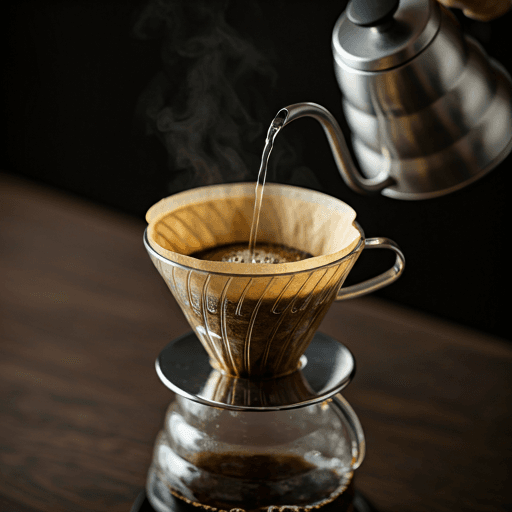
AeroPress vs Chemex comes down to how the coffee meets the water: both use a paper filter for a clean cup, but they brew in completely different ways. An AeroPress is a small immersion-plus-pressure brewer, so grounds steep briefly in a sealed chamber and then you plunge them through a paper disc for a strong, smooth single serving. A Chemex is a pure gravity pour-over, where hot water drips slowly through a thick, bonded paper filter into an hourglass glass carafe, giving a light, very clean, larger batch. One makes a concentrated cup for one; the other makes a delicate potful to share.
AeroPress vs Chemex: the quick answer
If you want the difference between AeroPress and Chemex in a sentence: reach for the AeroPress when you want one strong, smooth cup fast and with almost no mess, and reach for the Chemex when you want a light, crystal-clean pot to share and do not mind a slower, more deliberate pour. Both filter through paper, so both land on the cleaner end of the spectrum, but the AeroPress adds gentle hand pressure to a short steep while the Chemex relies on gravity alone. That single mechanical split shapes everything else — strength, body, batch size, speed and how fussy each one is to get right.
| Attribute | AeroPress | Chemex |
|---|---|---|
| Brew style | Immersion, then press | Gravity pour-over |
| Filter | Paper disc (thin) | Thick bonded paper |
| Body & texture | Fuller, smooth for its size | Light, delicate, very clean |
| Strength | Concentrated, stronger per serving | Lighter, more diluted |
| Typical yield | One cup at a time | Several cups per batch |
| Grind | Medium-fine | Medium-coarse |
| Speed & effort | Fast, forgiving | Slower, technique-driven |
| Portability | Compact, near-unbreakable | Bulky glass, stays home |
| Best for | A quick strong single cup or travel | A clean, light carafe to share |
What an AeroPress is
An AeroPress is a small plastic cylinder and a plunger that seal against each other. You add medium-fine grounds and hot water to the chamber, stir, let it steep for a short time, then press the plunger down so the brew is forced through a small round paper disc at the base. It is part immersion (the coffee soaks) and part pressure (your push drives it through the filter), which is exactly why it produces a cup that is concentrated yet smooth and remarkably free of grit. Because the whole cycle is short, sealed and forgiving, it is hard to brew a genuinely bad cup, which is a big reason beginners and travellers love it.
There are many ways to brew with one — standard and inverted, hot and cold, strong concentrate or a longer pour — and we keep the full method out of this comparison on purpose. For the device itself, grind and step-by-step recipes, see our AeroPress guide. Here the point is simpler: the AeroPress is a small, forgiving, single-serve brewer that presses coffee through paper for a strong, clean cup.
What a Chemex is
A Chemex is a one-piece hourglass carafe of glass with a wooden collar, and it brews by pure gravity pour-over. You seat a distinctively thick, bonded paper filter in the top, add medium-coarse grounds, and pour hot water over them in slow, steady stages so the coffee drips down through the heavy filter and collects in the carafe below. Nothing presses; the water simply falls through the bed under its own weight. That thick filter is the Chemex's signature — it strips out oils and the finest particles more thoroughly than most papers, which is why the cup comes out so light, transparent and free of sediment.
The pour is a technique in itself, and again we defer the how-to rather than repeat it. Our Chemex coffee maker guide covers the brewer, the filters, the ratios and the pour stage by stage. For this article, the Chemex is simply a slow, elegant, gravity pour-over that makes a light, very clean pot.
The key difference: immersion and pressure vs gravity pour-over
The whole Chemex vs AeroPress story is really one contrast in two parts. An AeroPress steeps the coffee like an immersion brewer and then adds pressure: the grounds sit in water for a short time, and your plunge pushes the liquid through the paper. It is small by design, made for roughly a cup at a time, and the combination of soak-plus-push gives a fuller, stronger extraction in very little time.
A Chemex does the opposite on both counts. There is no immersion and no pressure — water is poured on top and drains straight through the bed by gravity, the way any pour-over works (a broader contrast our AeroPress vs pour-over comparison unpacks). And it is built to brew a batch: a full carafe pours several cups at once. So one axis is immersion plus pressure in a small serving, the other is gravity pour-over in a large carafe. Almost every difference you taste follows from that.
Taste and body
Because the AeroPress presses a short, concentrated steep through paper, its cup tends to be smoother and fuller for its size — clean, low in bitterness, and rounder in body than you might expect from a paper-filtered brew, since the pressure and short contact keep it rich without much grit. It is a satisfying, easy-drinking cup that leans toward sweetness and body.
The Chemex goes the other way. Its thick filter and gentle gravity flow give a lighter, cleaner, more delicate cup with exceptional clarity — the sort of transparent, tea-like brew that lets bright, floral and fruity notes stand out one by one. It has less weight on the palate than an AeroPress cup, which fans consider a feature: nothing muddies the flavour. If you like a bold, rounded mouthful, the AeroPress suits you; if you prize clarity and delicacy over body, the Chemex is the one. Neither is better; it simply comes down to whether you want more body or more clarity in the cup.
Strength and size: is an AeroPress stronger than a Chemex?
For a single serving, yes — an AeroPress is generally stronger than a Chemex. It is built to make one concentrated cup: the short, pressurised brew and the tight coffee-to-water ratio produce an intense, punchy serving, and you can push it further into an espresso-adjacent concentrate if you want. So the answer to “is an AeroPress stronger than a Chemex” is that, cup for cup, the AeroPress usually wins on intensity.
Size is the flip side of that strength. The AeroPress makes essentially one cup per cycle; if you want a second, you brew again. The Chemex is a batch brewer — a common carafe makes several cups in one pour and larger ones make more, so it is the natural pick for a household, a slow weekend breakfast or guests. Its coffee is lighter partly by design: a larger volume, a longer draw-down and that thick filter all pull toward a gentler, more diluted cup. In short, the AeroPress trades volume for strength, and the Chemex trades strength for volume.
Filter: both paper, but not the same paper
Both brewers filter through paper, which is why both give a clean, low-sediment cup and set themselves apart from metal-mesh methods like the French press. But the papers are not equal. The AeroPress uses a thin, small paper disc that catches sediment while still letting a fuller body through. The Chemex uses a much thicker bonded filter — noticeably heavier than a standard cone paper — that removes more oils and fine particles, which is the main reason its cup is even cleaner and lighter than most pour-overs. Same idea, different intensity: the Chemex's heavier paper simply strains harder.
Speed and effort
Day to day, the AeroPress is the fast, low-effort option. The brew takes a minute or two, the technique is forgiving enough that a wobble rarely ruins the cup, and cleanup is a few seconds — you eject the paper disc and the compact puck of grounds straight into the bin and rinse the plunger. It is also compact and made of tough plastic, so it is near-unbreakable and travels beautifully; for a hotel room, an office or a camp stove, it is hard to beat.
The Chemex asks for more of you and gives back a certain ritual in return. The pour is slower and more technique-driven — pace, water temperature and a steady, even pour all shape the result, ideally with a gooseneck kettle — so it rewards attention and punishes rushing more than an AeroPress does. It is also a piece of glass, elegant enough to bring straight to the table but bulky and breakable, so it lives on the counter rather than in a bag. The upside is that it doubles as an attractive serving carafe, which the AeroPress never pretends to be.
Grind: medium-fine vs medium-coarse
Grind is one of the clearest practical differences, and getting it right matters more than which brewer you own. The AeroPress generally wants a medium-fine grind — finer than drip, roughly in fine-sand territory — to suit its short brew, though its flexibility means you can go finer or coarser depending on your recipe. The Chemex wants a medium-coarse grind, a touch coarser than a standard drip machine, so the water can draw down through that thick filter at a sensible pace without stalling. Too fine in a Chemex and the bed clogs and over-extracts; too coarse in an AeroPress and the cup turns weak and sour.
Which should you choose?
So, AeroPress or Chemex? Choose the AeroPress when you want a quick, strong, smooth single cup, when cleanup speed matters, when you are travelling, or when you are new to hands-on brewing and want something forgiving. Choose the Chemex when you want a light, clean, delicate pot to share, when you enjoy the slow ritual of a careful pour, and when you like a brewer that looks good enough to set on the table.
Plenty of people happily keep both and switch by mood: the AeroPress for a fast, tidy weekday cup or a trip, the Chemex for an unhurried weekend carafe. This is a different question from choosing between two immersion brewers — if that is where you have landed, our AeroPress vs French press comparison covers it. Whichever way the AeroPress vs Chemex choice falls for you, both filter through paper, both reward a good grind and fresh beans, and both prove that the same simple ingredients can give you two very different cups.