
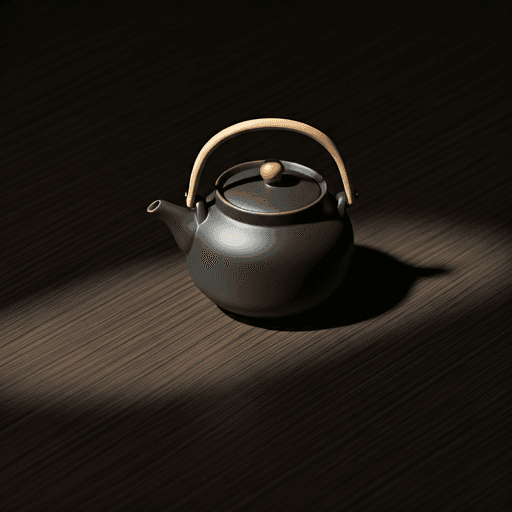
Xing Ren Xiang (杏仁香, "Almond Fragrance") is a distinctive aroma-type of Phoenix (Feng Huang) Dancong oolong grown in the Phoenix Mountains of Chaozhou, in China's Guangdong Province. It is named for a warm, sweet, marzipan-and-stone-fruit-kernel aroma that sets it apart from the honeyed and orchid-scented dancongs — the nutty outlier in a family that is otherwise almost entirely floral. Nothing is ever added: that almond note is the leaf's own, coaxed out by oxidation and a firm charcoal roast.
This guide covers what xing ren xiang is, where and how it grows, the roast that gives it its signature warmth, what it tastes like, and how this nutty oolong compares with its more floral dancong siblings. Because dancong varies from bush to bush and maker to maker, treat every range here as a map rather than a rulebook.
What is xing ren xiang dancong?
Xing ren xiang dancong is one named aroma-type within Phoenix Dancong, a family of twisted, roasted oolong tea that sits between green and black tea on the oxidation scale. Dancong (单丛, "single bush") teas are sorted less by grade than by fragrance — each celebrated bush is picked and finished to keep its own particular scent intact — and the whole tradition is covered in our guide to Phoenix Dancong. What makes this one an almond aroma dancong is simply which scent it carries: where most phoenix dancong oolong smells of honey, orchid or gardenia, xing ren xiang smells of toasted almond and marzipan.
"Xing ren" (杏仁) is the Chinese term for almond or apricot kernel, and "xiang" (香) means fragrance or aroma. The name is a description of how the tea smells — nothing more.
The almond that never touches the tea
This is the one point worth being clear about: xing ren xiang contains no almonds. It is made only from the leaves of the tea plant, Camellia sinensis — there are no almonds, apricot kernels, nuts or flavourings of any kind in it, and none are added at any stage. The "almond" is purely an aroma descriptor, the same way tasters reach for words like "marzipan," "amaretto" or "stone-fruit kernel" to pin down a scent the leaf makes on its own. If you avoid nuts, this is a naturally nut-free tea; the resemblance lives entirely in the nose. Skilled processing draws the note out and the roast rounds it into something warm and almost confectionary, but the tea itself is just oolong.
Where xing ren xiang grows: Wudong and the Phoenix Mountains
Like the rest of the dancong family, xing ren xiang comes from Fenghuang Shan — Phoenix Mountain — behind the city of Chaozhou in eastern Guangdong. The most prized leaf is grown high on Wudong Shan (Wudong Mountain), the highest and most famous of the tea villages, where mist, cool nights and mineral-heavy soils slow the leaf and deepen its fragrance. Elevations for good gardens are commonly cited from a few hundred metres up to roughly 1,200–1,400 m, and as a rough rule, higher and older bushes give a more concentrated, longer-lasting cup.
The cultivar behind the aroma is a traditional phoenix bush that Chaozhou growers know by the dialect name Ju Duo Zai (锯朵仔), a name that points to the fine saw-tooth serrations on its small leaves. Those leaves are picked so small that local tea makers nicknamed the tea xia mi cha — "shrimp tea" — because the finished, tightly rolled leaf looks like little dried shrimp. As with much dancong folklore, the exact age of any given "old tree" and the neatness of its lineage are easy to overstate, so it is wise to read very precise claims as "commonly said to be" rather than documented fact. What is not in dispute is that genuine old-bush Wudong material is scarce and, because the leaf is small and slow to pick, gathered in small quantities.
Roast: the warmth behind the nut
If floral dancongs live or die by their top-note perfume, xing ren xiang is defined by its roast. Every traditional phoenix dancong is fired at least once, historically over charcoal — often smokeless lychee-wood charcoal — and xing ren xiang is usually taken to a firmer, medium-or-higher roast than the lightest floral styles. Partial oxidation builds the base; the fire is what turns a green, raw leaf into that rounded, toasted-almond, marzipan-and-dark-honey warmth. A lighter roast keeps the nutty note brighter and more apricot-like; a heavier roast pushes it toward baked marzipan, roasted nut and caramel. That reliance on roast is exactly why this reads as a nutty oolong rather than a floral one, and why a good example settles and improves as its fire mellows over months.
What xing ren xiang tastes like
In the cup, a well-made xing ren xiang leads with its namesake aroma — toasted almond and marzipan on the dry leaf, opening into apricot kernel, light wood and a hint of cooling pine once brewed. The liquor usually pours a bright golden to amber and stays clear rather than cloudy. The body is full and rounded, sweeter and warmer than the brisk florals, and behind the nut you often find stone fruit (nectarine and apricot are common), a milky sweetness, honeysuckle and acacia honey. The finish is long and returning — the lingering sweetness Chinese drinkers call hui gan — and a good one will give many short infusions before it fades.
Xing ren xiang at a glance
| Attribute | Detail |
|---|---|
| Chinese name | 杏仁香 (Xing Ren Xiang, "Almond Fragrance") |
| Type | Roasted Phoenix (Fenghuang) Dancong oolong |
| Origin | Phoenix Mountains, Chaozhou, Guangdong, China |
| Cultivar | Traditional phoenix bush, dialect name Ju Duo Zai (also nicknamed "shrimp tea") |
| Elevation | Commonly a few hundred metres up to ~1,400 m; best from high Wudong gardens |
| Oxidation | Partial (oolong); varies by maker |
| Roast | Medium to higher, traditionally over charcoal |
| Signature aroma | Toasted almond, marzipan, apricot kernel |
| Liquor | Bright golden to amber, clear |
| Caffeine | Present (oolong often cited ~30–60 mg per cup; varies) |
| Best brewed | Gongfu style: lots of leaf, small vessel, short steeps |
Xing ren xiang vs the floral dancongs
Xing ren xiang is easiest to place next to its siblings. Where Mi Lan Xiang (honey orchid) is the sweet, fruity benchmark most drinkers meet first, Zhi Lan Xiang leans into deep orchid florals, and Ya Shi Xiang — the famous "duck dung" aroma, a deliberately humble nickname for a gorgeous tea — is intense, gardenia-like perfume, xing ren xiang goes the other way: warm, nutty and confectionary rather than high and floral. Among the phoenix dancong oolongs it is the one that reads as dessert rather than a flower garden.
| Aroma type | Rough meaning | Family | What people often taste |
|---|---|---|---|
| Xing Ren Xiang | Almond fragrance | Nutty | Toasted almond, marzipan, apricot kernel, stone fruit |
| Mi Lan Xiang | Honey orchid | Floral / honeyed | Honey, orchid, ripe nectarine |
| Zhi Lan Xiang | Orchid | Floral | Deep, sweet orchid |
| Ya Shi Xiang | "Duck dung" aroma (nickname) | Floral | Intense gardenia, honeyed, clean finish |
It also has a foot in the roasted-oolong camp. Its firm roast and rounded, toasty depth put it closer in spirit to the charcoal-fired rock oolongs of Fujian — teas such as Rou Gui — than to a fresh green tea, even though a dancong keeps far more overt fruit and perfume than a mineral rock tea ever does.
How to brew xing ren xiang
Dancong rewards a gongfu approach: a lot of leaf, a small vessel and many short steeps. A common starting point is about 5–7 g in a 100–120 ml gaiwan, water just off the boil (roughly 95–100°C / 203–212°F), a quick rinse, then infusions of a few seconds that lengthen slightly each round. Keep the steeps short — dancong can turn astringent if it sits too long — and let the aroma, not the clock, tell you when to pour. For the full method, see our guide to brewing oolong tea.
As a true tea from Camellia sinensis, xing ren xiang contains caffeine — oolong is often cited around 30–60 mg per cup, though the real figure shifts with leaf amount, roast and steep time, so treat any number as an approximation. Many people simply enjoy it as a warming, aromatic cup; responses to caffeine vary from person to person, and this is general information rather than medical advice. If you are sensitive to caffeine, pregnant, or managing a health condition, it is sensible to check with a qualified professional about what suits you.
The bottom line
Xing ren xiang is the dancong that trades flowers for nuts: a roasted, single-bush-style phoenix oolong whose warm marzipan-and-almond aroma comes entirely from the leaf and the fire, never from any added ingredient. If the honeyed and orchid dancongs feel like a perfumed garden, this one is the toasted, confectionary corner of the same mountain — and one of the most distinctive aroma-types the Phoenix range has to offer.