
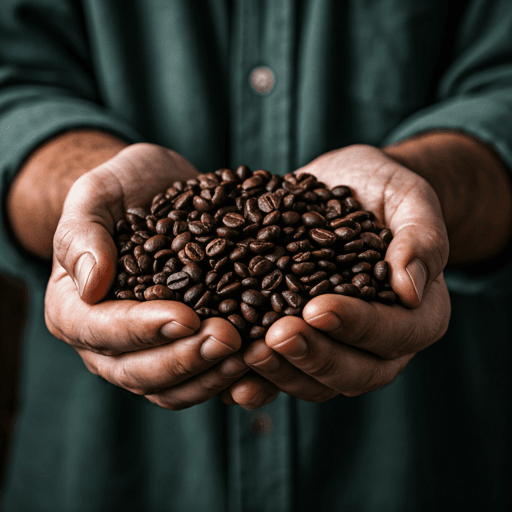
Whole bean coffee is coffee sold as roasted, un-ground beans that you grind yourself just before brewing. Grinding at the last moment keeps the cup noticeably fresher and more flavourful than pre-ground coffee, because roasted coffee begins losing its aroma within minutes of being ground. The idea is simple: buy beans, grind only what you need, and brew straight away.
If you have ever opened a fresh bag and been hit by that heady, almost sweet smell, that aroma is exactly what you are trying to keep. Every one of those scent molecules is a flavour molecule too, and whole beans hold on to them far longer than a tin of pre-ground powder ever could.
What whole bean coffee is
Whole bean coffee is nothing more than roasted coffee beans that have not yet been ground. It is the opposite of pre-ground coffee (sometimes labelled "coffee powder"), where the roaster grinds the beans for you and seals them in a bag or tin before they ever reach your kitchen.
A coffee "bean" is technically the seed of the coffee fruit, dried, processed and roasted until it turns brown and brittle. If you want the full story of what the bean actually is and how it gets from cherry to cup, see our guide to what coffee beans are. For the purposes of this article, the key point is that whole coffee beans are intact and rock hard, while ground coffee has been shattered into thousands of tiny fragments.
That single difference — whole versus broken — is the reason the two behave so differently once the bag is open.
Why whole bean coffee stays fresher
Coffee loses freshness because it reacts with air. Roasting fills the bean with hundreds of volatile aromatic compounds and a lot of trapped carbon dioxide. The moment a bean is broken open, those aromatics start to evaporate and the CO2 rushes out, taking flavour with it.
The villain is surface area. A whole bean has a small, tough outer surface exposed to the air. Grinding it turns that one small surface into thousands of jagged new ones, multiplying the exposed area many times over. More surface means faster staling, faster oxidation, and faster loss of the oils that carry aroma.
The practical result is dramatic:
- Whole coffee beans stay at their best for a good few weeks after roasting when stored sensibly.
- Ground coffee starts fading within minutes and is noticeably flat within hours to a few days of being ground.
That is why a café grinds each dose to order rather than grinding a whole day's worth at breakfast. Freshly ground coffee simply tastes brighter, sweeter and more aromatic — and grinding at home is the easiest single upgrade most people can make.
Whole bean coffee vs ground: the quick comparison
When people weigh up whole bean coffee vs ground, they are really trading a little convenience for a lot of flavour. Here is how the two stack up.
| Factor | Whole bean | Pre-ground |
|---|---|---|
| Freshness | Stays fresh for weeks; aroma sealed inside the bean | Fades fast — best flavour is gone within hours to days of opening |
| Flavour | Brighter, sweeter, more aromatic in the cup | Flatter and more one-note as it stales |
| Convenience | An extra grinding step every time you brew | Scoop and brew — no grinder needed |
| Kit needed | A grinder plus an airtight, dark container | Just the bag or tin it comes in |
This is only the headline version. For a fuller face-off — including where "coffee powder" fits alongside beans and how fresh ground compares with pre-ground — read ground coffee vs coffee beans vs powder.
What you need to brew whole beans
Switching to whole beans asks for two pieces of kit, neither of them fussy.
A grinder
You cannot brew whole beans without grinding them first, so a grinder is the one non-negotiable. There are two broad types:
- Burr grinders crush the beans between two rotating burrs, producing an even, consistent grind. This is the preferred choice because uniform particles brew more evenly and taste cleaner.
- Blade grinders chop the beans with a spinning blade, like a tiny propeller. They are cheaper and smaller, but they produce an uneven mix of dust and boulders, which makes for a muddier cup.
A burr grinder is the better long-term buy, but even a modest blade grinder beats stale pre-ground coffee on freshness alone.
An airtight container
Beans keep best out of the light and away from air. An opaque, airtight container — or the bag's own resealable valve — is all most people need. More on storage below.
Matching your grind to the brew method
The point of grinding fresh is not just freshness; it is control. Different brewers want different grind sizes, and matching the two is what turns good beans into a good cup. As a rough map:
- Coarse grind — for French press and cold brew, where the coffee steeps for a long time.
- Medium grind — for drip and filter machines and pour-over, the everyday middle ground.
- Fine grind — for espresso and moka pots, where water passes through quickly under pressure.
Grind too fine for the method and the coffee turns bitter and over-extracted; too coarse and it comes out thin and sour. Dialling this in is its own small craft — our step-by-step guide to how to grind coffee beans walks through the settings for each brewer.
How to store whole bean coffee
Whole beans are resilient, but they still have four enemies: air, light, heat and moisture. Keep them away from all four and the beans will reward you.
- Store the beans in an airtight, opaque container, or keep them in their original valve bag squeezed shut.
- Keep them somewhere cool and dark — a cupboard or pantry, not on a sunny counter or above the oven.
- Do not freeze the beans you drink every day. Repeatedly taking a jar in and out of the freezer causes condensation, and moisture is the enemy of flavour. Freezing is only worth considering for a sealed surplus you will not touch for a while.
- Buy in amounts you will finish in a few weeks rather than hoarding a giant sack.
For the full detail — including the freezer debate and how long beans really last — see how to store coffee beans.
How to read a bag when buying whole bean coffee
Buying whole bean coffee is easier once you know what the label is telling you. A few things matter more than the marketing on the front:
- Roast date over "best before". A specific roast date is a good sign of a fresh, quality-minded roaster. A far-off "best before" tells you the coffee is shelf-stable, not that it is fresh — aim to drink beans within a few weeks of roasting.
- Single-origin vs blend. Single-origin beans come from one place and tend to show a distinctive, particular character. Blends mix beans from several origins for balance and consistency. Neither is "better"; they are different jobs.
- Roast level. Light roasts lean bright and acidic and show off origin character; dark roasts lean bold, smoky and bittersweet; medium sits in between. This is a flavour choice, not a quality ranking.
You do not need to decode every word on the bag. Roast date first, then origin and roast level to match your taste, and you are most of the way there.
Is whole bean coffee worth it?
For most people who care even a little about how their coffee tastes, yes. The cost is small — a grinder and an extra minute at the counter each morning — and the payoff is a cup that is fresher, sweeter and more aromatic than anything you can get from a tin of pre-ground.
That said, it is a genuine trade-off, and it is fine to land on either side of it. If speed and simplicity matter more to you than squeezing out the last drop of flavour, good pre-ground coffee will still make a perfectly pleasant cup. If freshness is the thing you chase, whole beans are the clearest upgrade available, and the difference is easy to taste from the very first brew.
Start with beans you like, grind them fresh for whatever brewer you own, and store what is left somewhere cool and dark. Do that much and you have captured almost everything whole bean coffee has to offer.