
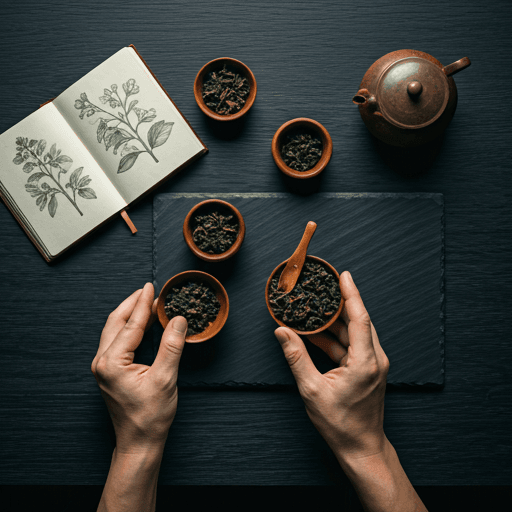
Bai Mu Dan, also known as White Peony (pinyin: baimudan), is a Chinese white tea from Fujian province made from a young leaf bud plus its first one or two leaves, then simply withered and dried. That light-touch processing gives a soft, lightly sweet, fuller-bodied cup that sits between the delicate, buds-only Silver Needle and the bolder, later-plucked Shou Mei. It is one of the most popular and approachable white teas you can drink.
If you have ever sipped a mellow, floral tea that tasted of fresh hay, ripe melon and a whisper of honey with almost none of the bitterness of green or black tea, there is a good chance it was Bai Mu Dan.
What Bai Mu Dan Is, and What the Name Means
The name Bai Mu Dan translates literally as "white peony." The "white" refers to the fine silvery-white down that coats the young leaf buds, and to the white tea category the leaf belongs to; the "peony" evokes the way the withered bud-and-leaf sets open and unfurl in the cup like a flower. You will also see the name written pai mu tan in the older Wade-Giles romanization, or run together as baimudan — all refer to the same White Peony tea, so do not be thrown by the different spellings on a label.
Bai Mu Dan is a classic of Fujian province on China’s southeast coast, and most of it comes from two areas long famous for white tea: Fuding and Zhenghe. Both grow tea cultivars whose plump, downy buds are ideally suited to the style, and the local climate and know-how are a big part of the tea’s reputation. Because white tea is such a distinctively Chinese specialty, it helps to see Bai Mu Dan as one branch of a much larger family — you can trace that lineage in our guide to Chinese tea.
How Bai Mu Dan Is Made
White tea is the least processed of all the true teas: at its simplest, the fresh leaves are withered — allowed to lose moisture, often in natural air and gentle sunlight — and then dried, with little or no rolling and no deliberate oxidation step. There is no pan-firing as in green tea and no long, managed oxidation as in black tea. That is essentially the whole story of how white tea is made, and it is why the leaf keeps so much of its natural, gentle character. We cover the category in depth in our explainer on what white tea is.
What sets Bai Mu Dan apart within that category is the pluck. Silver Needle (Bai Hao Yin Zhen) is made from unopened buds only, which is why it is the most prized and delicate white tea. Bai Mu Dan is picked as one bud plus its first one or two young leaves, so each cup carries more leaf material — and with it more color, body and flavor — than a buds-only tea. Like every true tea, it comes from the same species, Camellia sinensis; if you are curious about how a single plant becomes green, white, oolong and black tea, start with our primer on tea leaves.
What Bai Mu Dan Tastes Like
Bai Mu Dan is prized for being mellow and rounded rather than sharp. Typical tasting notes include soft florals, fresh-cut hay, melon or cucumber, a light nuttiness and a clean, subtly sweet finish. The body is light to medium — fuller than Silver Needle but still airy compared with a black tea — and astringency is low, so it rarely turns bitter even if you are a little generous with the leaf or the water temperature.
Visually, good White Peony is easy to recognize: you should see intact sets of a silvery, downy bud attached to one or two greenish-grey leaves, not a bag of broken fragments. Those fuzzy buds are a hallmark of the style and a quick sign of quality. Because the flavor is so gentle and forgiving, Bai Mu Dan makes an excellent everyday white tea and a friendly introduction for anyone stepping beyond green tea for the first time.
How to Brew Bai Mu Dan
White tea rewards cooler, gentler brewing. Water that is just off the boil — roughly 80 to 85 degrees Celsius (about 175 to 185 degrees Fahrenheit) — protects the delicate aromatics, whereas a hard rolling boil can flatten the flavor and coax out more astringency. Use a generous amount of leaf, because the fluffy buds and leaves take up a lot of volume for their weight and can look like more tea than they really are.
Bai Mu Dan is happy brewed two ways. In a Western-style mug or teapot, steep a spoonful of leaf for two to three minutes and taste. In the Chinese gongfu style, pack more leaf into a small vessel and give it several short infusions — the first steep well under a minute, then adding a few seconds each time — so the tea reveals different layers across four, five or more pours. Either way the leaf is forgiving, so treat these as starting points and adjust to taste. For the general technique, temperatures and ratios that apply across loose teas, see our guide to brewing loose-leaf tea.
Caffeine and Ageing
Like all tea from Camellia sinensis, Bai Mu Dan contains caffeine. A common myth holds that white tea is nearly caffeine-free, but that is not reliable: because Bai Mu Dan includes tender buds, which are relatively rich in caffeine, its level is best described as moderate, and it varies with the leaf, the amount you use and how long you steep. If you are sensitive to caffeine, treat it as a real, if gentle, source rather than a decaf substitute.
One of the most interesting things about white tea is that some of it is made to age. Loose Bai Mu Dan is sometimes compressed into cakes or bricks — much like pu-erh — and stored for years. With age, a fresh, hay-and-melon young tea can mellow and deepen toward honey, dried fruit, dates and warm spice. Not all Bai Mu Dan is aged; plenty is enjoyed fresh and bright. But the tradition of pressing and cellaring white tea is a big part of why collectors take it so seriously.
Bai Mu Dan vs Silver Needle vs Shou Mei
Bai Mu Dan sits in the middle of Fujian’s three best-known white teas. The difference between them comes down largely to which part of the plant is picked and when, which in turn shapes the flavor in the cup.
| Tea | Pluck | Character |
|---|---|---|
| Silver Needle (Bai Hao Yin Zhen) | Unopened buds only | Most prized and delicate; fine downy buds; subtle, sweet, hay and honey; very light body |
| Bai Mu Dan (White Peony) | One bud plus one to two young leaves | Fuller and more flavorful than Silver Needle; floral, melon, hay; gentle body, low astringency |
| Shou Mei | Larger, later leaves with some buds, picked after Bai Mu Dan | Boldest and darkest of the three; fruitier, woodier, more robust; the most everyday |
Read across the table and the logic is clear: the more mature leaf you include, the deeper and heartier the cup, while the more you lean on tender buds, the lighter and more refined it becomes. Bai Mu Dan’s balance of the two is exactly why it is such a well-loved middle ground.
The Bottom Line
Bai Mu Dan, or White Peony, is the white tea to reach for when you want more presence than Silver Needle but more finesse than a bolder leaf: floral, softly sweet and easy to brew, with a downy bud-and-leaf pluck you can see in the dry tea. Keep the water cool, be generous with the leaf, and let it steep more than once. Whether you drink it fresh or track down an aged cake, White Peony rewards a slow, curious cup.