
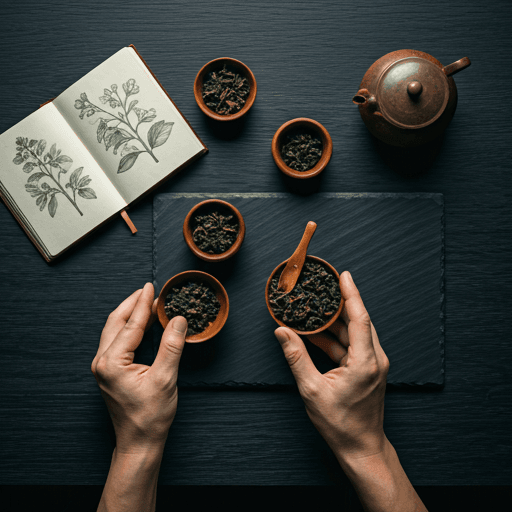
Catechins are a family of natural antioxidants — a group of plant compounds known as polyphenols, and more specifically flavonoids — that occur in unusually high amounts in tea, above all in green tea. The best known and most studied of them is EGCG. If you have heard green tea described as a "healthy" drink, its catechins are a big reason researchers keep taking a closer look at your cup.
Below is a plain-language guide to what catechins are, the main ones found in tea, why green tea holds on to more of them than black tea, what changes how many end up in your mug, and what the current research does — and does not — actually tell us.
What Are Catechins, Exactly?
Catechins are a type of polyphenol, a large class of natural compounds that plants make partly to protect themselves. Within that class they belong to a subgroup called flavan-3-ols, which sits under the broader flavonoid umbrella. Catechins turn up in several foods — cocoa, apples, berries and red wine among them — but the leaves of the tea plant, Camellia sinensis, are one of the richest everyday sources.
The reason catechins draw so much attention is that they are antioxidants. In laboratory tests, antioxidant molecules can neutralise reactive particles called free radicals. Catechins also shape the way tea tastes: they contribute much of the brisk astringency and gentle bitterness you notice in a fresh green tea. For the wider picture, see our overview of antioxidants in tea.
It helps to know what catechins are not. They are not caffeine — that is a separate compound in tea that affects alertness rather than acting as an antioxidant. Nor are they quite the same as "tannins," a loose everyday word for the astringent compounds in tea and wine; catechins are one contributor to that mouth-drying feel, but the two terms are not interchangeable.
The Main Tea Catechins
Tea contains several catechins, but four do most of the work. They are usually written as abbreviations:
- EGCG (epigallocatechin gallate) — the most abundant catechin in green tea and by far the most researched. When scientists study green tea catechins, EGCG is usually the headline act.
- EGC (epigallocatechin) — present in meaningful amounts and highly water-soluble, so it extracts readily into your cup.
- ECG (epicatechin gallate) — one of the "gallated" catechins, thought to add to a tea's astringency.
- EC (epicatechin) — the simplest of the four, and also found in cocoa.
EGCG is the one you will see named most often on packaging and in studies. Because it really deserves its own explanation, we cover it separately in our guide to EGCG, the green tea compound.
Why Green Tea Has More Catechins Than Black
All true tea — white, green, oolong, black, yellow and pu-erh — comes from the same plant. What separates them is processing, and the single biggest factor is oxidation.
Green tea is heated soon after picking (steamed or pan-fired), which halts oxidation and largely preserves the catechins in green tea. Black tea is the opposite: the leaves are deliberately and fully oxidised. During that process, enzymes convert many of the catechins into larger molecules called theaflavins and thearubigins. Those new compounds give black tea its darker colour, fuller body and malty flavour — and they are why black tea tastes less "grassy" than green. The catechins are not simply lost; they are transformed into something else.
Oolong tea sits in between, partly oxidised, so its catechin level lands between green and black. White tea is minimally processed and can be surprisingly high. Matcha is a special case: because it is finely ground whole green-tea leaf that you whisk into water and drink entirely, you take in the leaf's catechins directly rather than only what steeps out. Our guide to matcha explains that difference in more detail.
| Tea type | Relative catechin level |
|---|---|
| Matcha (whole ground green leaf) | Very high |
| Green tea | High |
| White tea | Moderate to high |
| Oolong tea | Moderate |
| Black tea | Lower — much converted to theaflavins and thearubigins |
| Herbal "tea" (tisane) | Little to none — not from the tea plant |
That last row matters: herbal infusions such as chamomile, peppermint or rooibos are not made from Camellia sinensis, so they do not contain tea catechins at all — though they do carry their own plant compounds.
What Affects How Many Catechins End Up in Your Cup
Two cups of the "same" tea can deliver quite different amounts of catechins. The main variables:
- Tea type and processing — as above, the green end of the spectrum keeps more catechins than the fully oxidised end.
- Water temperature — hotter water extracts more catechins, though water that is too hot can also pull out extra bitterness. Many people brew green tea a little below boiling to balance the two.
- Steep time — a longer steep draws out more catechins (and more astringency); a quick dip extracts fewer.
- Brewing method — hot brewing extracts catechins efficiently, while cold brew releases them more slowly and gently over several hours, often for a smoother, less astringent result.
- Leaf quality, form and freshness — whole leaf, broken leaf and dust behave differently, and catechins slowly degrade with age, so how the tea is stored matters too.
In short, a longer, hotter steep of good green tea will generally give you more catechins than a brief, cool one — but it will also taste stronger and more astringent, so brewing is always a balance of chemistry and flavour.
What you add to the cup can play a small role as well. A squeeze of lemon adds acidity and vitamin C, which some research suggests may help certain catechins stay stable through digestion. The evidence on adding milk is mixed and not settled. Neither addition is anything to worry about — both are simply part of how people around the world enjoy their tea.
What the Research Says About Tea Catechins
This is where honesty matters. Catechins, and EGCG in particular, have been studied for their antioxidant activity and for possible links to metabolism and heart health. Some laboratory and population studies have reported encouraging signals, which is why tea catechins remain an active area of research.
That said, the evidence is ongoing and not conclusive. Findings vary from study to study, effects seen in a test tube do not always carry over to the human body, and the amount of catechins in any given cup depends on all the brewing factors above. Catechins are not a medicine, and drinking tea should not be treated as a treatment for any condition. If you have a specific health concern or take medication, a qualified professional is the right person to ask.
It is also worth remembering that much catechin research uses concentrated extracts or isolated EGCG, sometimes at doses far higher than a normal cup provides. A high-dose supplement is a different matter from a mug of brewed tea, and very concentrated extracts have occasionally raised safety questions in the research literature — another reason the simple, moderate cup remains the sensible way most people enjoy tea.
For the current, measured view of what a daily cup may and may not offer, see our overview of green tea benefits.
The Bottom Line
Catechins are the antioxidant polyphenols that make tea — and green tea especially — so interesting to scientists and drinkers alike. EGCG leads the group, green processing preserves the most, and your brewing choices quietly decide how many reach your cup. Enjoy tea first for its flavour, ritual and comfort; the catechins are a fascinating bonus that researchers are still working to understand.