
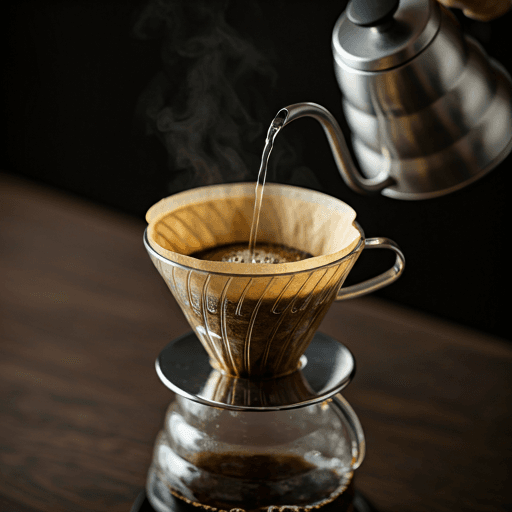
Vietnamese egg coffee, or ca phe trung, is strong hot coffee crowned with a fluffy, sweet whipped cream of egg yolk and sweetened condensed milk. Often described as a "liquid tiramisu," it was invented in 1940s Hanoi when fresh milk was scarce, and the whipped-yolk foam stood in for cream. This guide covers the story, the ingredients and gear, and a clear step-by-step method so you can make egg coffee at home.
What Vietnamese Egg Coffee Actually Is
At its heart, Vietnamese egg coffee is two layers in one small cup: a base of intense, dark, slightly bitter coffee, and a thick pale cap of egg cream on top. The cream is not raw egg poured over coffee, which puts a lot of first-timers off. Instead, egg yolks are whisked hard with sweetened condensed milk until they turn glossy, pale gold and mousse-like, closer in texture to a custard foam or the top of a tiramisu than to anything you would call "eggy."
You spoon that foam over the hot coffee and either stir it down as you drink or sip through it, so each mouthful moves from sweet, airy and vanilla-soft to bracingly bitter underneath. The contrast is the whole point. If you want the wider background on what Vietnamese coffee is as a style, we cover that separately in what Vietnamese coffee is; here we stay focused on the egg-cream version and how to build it.
The Story: Born in 1940s Hanoi
Egg coffee is usually traced to around 1946 and to Cafe Giang in Hanoi, where a bartender named Nguyen Van Giang is credited with the idea. Fresh milk was scarce and expensive at the time, so he reached for what was available, whipped egg yolk with sweetened condensed milk to mimic the richness of cream, and floated it on strong coffee. The recipe stuck, the family cafe kept serving it, and ca phe trung (literally "egg coffee") became a signature of the city.
Today it is one of the drinks visitors seek out in Hanoi's Old Quarter, often served in a small cup set inside a bowl of hot water to keep the whole thing warm. The dish is a good reminder that some of the most beloved recipes come from making do, and that "Vietnamese coffee with egg" was a clever workaround long before it became a delicacy.
Ingredients and Gear
This makes one generous cup. Everything scales up cleanly if you are making several.
- 1 to 2 egg yolks (very fresh; see the food-safety note below)
- 2 to 3 tablespoons sweetened condensed milk (this is your sweetness and richness)
- Optional: a teaspoon of sugar for a sweeter foam, and a drop of vanilla extract to round off any egg note
- Strong hot coffee — traditionally dark-roast Robusta brewed in a phin filter
- Optional: a splash of hot water if your coffee is very concentrated
Gear
- A small bowl for whisking the egg cream
- An electric milk frother, hand mixer or small whisk (a frother is the easy route; a hand whisk works with patience)
- A phin filter if you have one, or another way to brew a small, strong cup
- A small heatproof cup or glass, plus a bowl of hot water for the warm bath
On the coffee itself: the drink is built for bold, low-acid, chocolatey beans, which is why traditional Vietnamese coffee beans (mostly Robusta) suit it so well. A dark roast holds its own under all that sweetness. If you want the full brewing walkthrough, see how to make Vietnamese coffee; below we keep the brew step short and spend the detail on the egg cream.
How to Make Vietnamese Egg Coffee, Step by Step
- Separate the yolks. Put 1 to 2 egg yolks in a clean, dry bowl. Keep out any white, which makes the foam looser and more likely to smell eggy.
- Add the condensed milk. Spoon in 2 to 3 tablespoons of sweetened condensed milk, plus optional sugar and a drop of vanilla.
- Whip to a thick foam. Beat with a frother or hand mixer for about 3 to 5 minutes (longer by hand) until the mixture is pale, glossy, thick and roughly doubled. It should hold soft peaks and fall in ribbons, not run like liquid. This aeration is what tames any raw taste.
- Brew strong coffee. Meanwhile, brew a small, strong cup — a phin over your serving cup is classic. You want it hot and concentrated, closer to espresso strength than to a mug of drip.
- Assemble. Pour the hot coffee into your serving cup, filling it only about two-thirds. Gently spoon the egg cream on top so it sits as a distinct pale layer. Do not pour it in fast, or it will sink.
- Serve warm. Set the cup in a bowl of hot water to hold the heat, the way Hanoi cafes do. Sip through the foam, or stir it down for a smoother, latte-like drink.
A small dusting of cocoa powder over the top is common and looks the part. That is the whole method: whip, brew, layer, serve.
Tweaks and Variations
- Iced egg coffee (ca phe trung da): brew and chill the coffee, pour over ice, then spoon the egg cream on top. Lighter and better for hot weather, though the foam softens faster.
- Cocoa or chocolate: whisk a little cocoa into the egg cream, or dust it on top, for a mocha-leaning cup.
- Matcha or cacao "egg cream": the same whipped-yolk base works over other bases — some cafes serve egg matcha or egg cacao using the identical foam technique.
- Sweetness and strength: more condensed milk makes it dessert-like; more (or stronger) coffee pushes it bitter. Adjust to taste, then note the ratio you liked.
Troubleshooting
| Issue | Likely fix |
|---|---|
| Foam stays runny, won't thicken | Whip longer (3 to 5 minutes), use a dry bowl and yolks only, add the condensed milk gradually as you beat |
| Noticeable eggy smell or taste | Use very fresh eggs, add a drop of vanilla, and whip more air in; keep every trace of white out |
| Foam sinks into the coffee | The foam is too thin — whip it stiffer, and spoon it gently over the back of a spoon rather than pouring |
| Drink goes cold fast | Warm the cup first and serve it sitting in a bowl of hot water |
| Too sweet | Cut the condensed milk and lean on a stronger, more bitter dark roast to balance it |
| Foam looks grainy or curdled | Never whisk the yolks directly into very hot coffee — build the cream separately and spoon it on at the end |
A Food-Safety Note on the Egg Yolk
The yolk in egg coffee is only lightly cooked, warmed by the whisking and by contact with the hot coffee rather than fully heated through. Because it is essentially a lightly-cooked raw yolk, use very fresh or pasteurised eggs, and keep everything clean. Pregnant, elderly, very young or immunocompromised drinkers may prefer to use a pasteurised yolk or to skip the egg version altogether. If you are unsure, pasteurised eggs (or a carton of pasteurised yolks) give you the same texture with less risk.
Why It's Worth Making
Egg coffee rewards a little patience at the whisk with something genuinely distinctive: a dessert and a coffee in the same small cup, built from a wartime workaround that turned into a Hanoi icon. Get the foam thick and glossy, keep the coffee strong and hot, and serve it in a warm bath, and you have a faithful ca phe trung at home. From there it is all personal calibration — sweeter, bolder, iced, dusted with cocoa — until the cup tastes exactly the way you like it.