
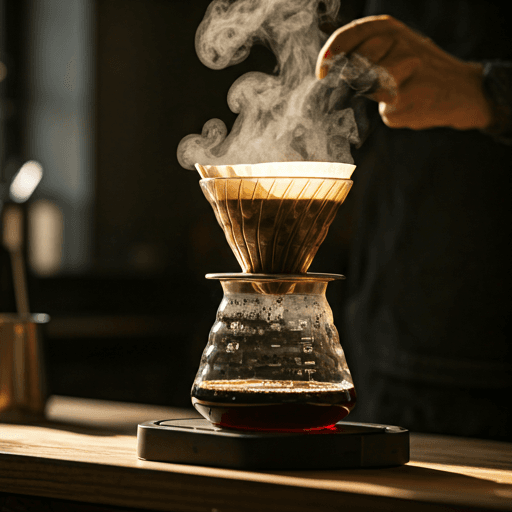
A vegan cafe serves only plant-based food and drinks — no meat, dairy, eggs or honey — while a vegetarian cafe skips meat but may still pour dairy and use eggs. Both put plant milks and plant-forward menus front and center, so the espresso bar can look almost identical at a glance. The real difference lives in the details: what fills the pastry case, what tops the latte, and whether an animal contributed anything at all.
If you are deciding where to eat or just curious what the labels actually promise, this guide walks through the genuine distinction, what shows up on the menu, how baristas handle plant milks behind the bar, why these cafes have spread worldwide, and how to tell a fully vegan spot from a merely veg-friendly one. For the broader question of what a cafe is in the first place, we defer to our explainer on what a cafe is.
What is a vegan cafe?
A vegan cafe is one where every item — food, drinks, and often the small stuff like sweeteners and syrups — is free of animal products. That means no meat or fish, but also no cow's milk, no butter, no eggs, no honey, and no gelatin. The kitchen builds flavor entirely from plants: legumes, nuts, seeds, grains, vegetables, and fruit, plus the fast-growing world of plant-based cheeses, creams, and egg replacers.
Veganism is usually about more than diet, so many vegan cafes extend the ethic past the plate. You may find that whipped toppings, "cheese," and even the marshmallows floating in a hot chocolate are plant-derived, and some go further by avoiding leather seating or animal-tested cleaning products. The unifying rule is simple: if it came from an animal, it does not belong in a vegan cafe.
Vegan vs vegetarian: the key difference
The two words are often used loosely, but they draw a firm line. A vegetarian menu excludes meat, poultry, and fish, yet welcomes dairy and eggs — think a cheese toastie, a buttery croissant, or a cappuccino made with cow's milk. A vegan menu removes those animal by-products too, including honey, which many vegetarians still happily eat.
Put another way, everything vegan is vegetarian, but not everything vegetarian is vegan. A vegetarian cafe can be a comfortable place for a vegan to visit, but only part of the menu will be suitable; a fully vegan cafe is safe from the first page to the last. Here is the quick decoder:
| Ingredient | Vegan cafe | Vegetarian cafe |
|---|---|---|
| Meat, poultry, fish | Never | Never |
| Cow's milk and dairy | Never — plant milk only | Usually served |
| Eggs | Never | Often served |
| Honey | Never | Often served |
| Butter and cheese | Plant-based versions | Dairy versions common |
| Pastries | Egg- and dairy-free bakes | May contain egg and butter |
What to expect on the menu
Walk into either kind of cafe and the first thing you notice is the milk. Plant milks are the default rather than an upcharged afterthought: oat, soy, almond, and coconut are the usual line-up, with oat especially popular for how naturally sweet and creamy it steams. In a strictly vegan cafe there is no cow's milk on the premises at all, so you never have to ask.
The pastry case tells the rest of the story. Expect egg-free and dairy-free bakes — muffins, cookies, banana bread, and croissants laminated with plant butter — alongside savory plates like tofu scrambles, jackfruit "pulled" fillings, mushroom dishes, and sandwiches built on plant-based cheese and deli slices. Vegetarian cafes widen this with dairy and egg cooking: shakshuka, halloumi, quiche, and classic cheese bakes. On the drinks side, both lean into plant "mylk" lattes, cold foams, and blended options, and many carry vegan hot chocolate with vegan marshmallows. We keep the deep dive on the milks themselves to our non-dairy coffee guide.
The coffee side: steaming and foaming plant milks
Good plant-milk coffee is a genuine craft, and baristas have become very good at it. The key thing to understand is that not every plant milk behaves like dairy under steam. Protein and fat give milk its structure, so "barista edition" oat and soy — formulated with a little more fat and added stabilizers — foam into the glossy microfoam that latte art needs. Standard supermarket cartons often foam thinly, or barely at all.
Heat and acidity are the other variables. Push a plant milk too hot and it can scald or separate; pair a very acidic, light-roast espresso with almond or soy and the milk may curdle or "split" into unappetizing flecks. Baristas manage this by steaming to a slightly lower target temperature, choosing barista-edition milks, and sometimes pulling a less acidic shot. Done right, oat milk in particular pours beautiful hearts and rosettas that hold their shape. If you want the full breakdown of which milks steam best and why some split, our guide to dairy-free and non-dairy creamers covers it in depth.
Why vegan and vegetarian cafes have grown worldwide
A generation ago a plant-based cafe was a niche, health-store curiosity. Today they are a global fixture, from Berlin and Melbourne to Bangkok, Los Angeles, and São Paulo. Several forces pushed the trend from the margins into the mainstream.
- Health and curiosity: more people are eating plant-forward for wellbeing, and "flexitarians" who eat mostly plants make up a huge share of customers — you do not have to be a strict vegan to want a really good oat latte.
- Ethics: concern for animal welfare leads many to seek out cafes whose kitchens align with their values.
- Sustainability: plant-based menus generally carry a lighter environmental footprint, which appeals to climate-conscious diners.
- Allergies and intolerance: lactose intolerance is common across much of the world, so plant milks are a practical need rather than just a preference.
Add far better products — plant milks that actually foam, convincing vegan cheeses, and egg replacers that bake well — and it became easy for almost any cafe to go plant-based without sacrificing quality. The result is that ordering a dairy-free drink is now unremarkable nearly everywhere.
How to spot a genuinely vegan cafe
Because "plant-based" has become a selling point, it pays to read past the sign on the door. A genuinely vegan cafe is one hundred percent free of animal products across its entire menu; a veg-friendly or vegetarian cafe simply offers some plant-based choices among others. A few quick checks tell them apart.
- Look for a clear, whole-menu claim. Fully vegan cafes tend to say so plainly — "100% vegan" or "entirely plant-based" — rather than the softer "vegan options available."
- Scan for dairy and eggs. If the menu lists cow's-milk cappuccinos, buttered toast, or a cheese board, it is vegetarian or omnivore-friendly, not vegan.
- Ask about the hidden ingredients. Honey in the tea, whey in a pastry, gelatin in a dessert, or fish sauce in a savory dish are easy to miss — a truly vegan kitchen has already ruled all of them out.
- Check what the default pour is. When plant milk is the standard with no surcharge and no dairy kept on hand, you are almost certainly in a fully vegan house.
None of this makes a vegetarian cafe lesser — many are wonderful, and for a vegan they are perfectly navigable with a question or two. For help ordering the lighter, better-for-you drinks at either kind of cafe, see our guide to the healthiest cafe coffee drinks.
The bottom line
The distinction comes down to one clean rule: a vegan cafe contains zero animal products, while a vegetarian cafe drops the meat but may keep the dairy, eggs, and honey. Both have helped make plant milks and plant-forward cooking a normal, genuinely delicious part of cafe culture rather than an exception. Whether you are vegan, vegetarian, flexitarian, or simply chasing a great oat-milk latte, knowing which label you are walking into means you order with confidence — and never have to interrogate your own coffee.