
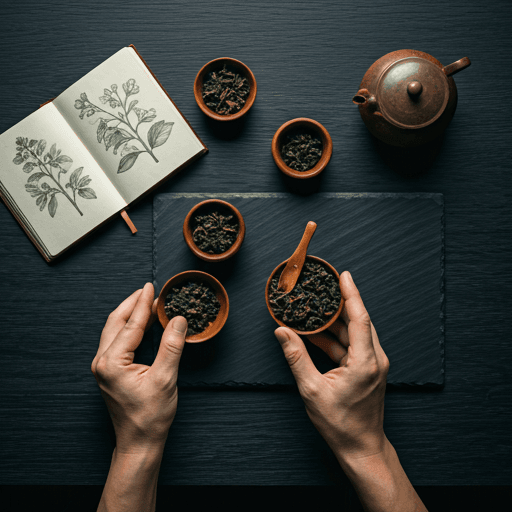
Tea leaves and tea powder come from the very same plant and very often the very same tea garden, so the real difference is the size of the particle in your tin, not the quality of the cup. Whole or broken tea leaves stay intact and unfurl slowly to give a layered, aromatic brew, while tea powder is a far finer grade that releases strong colour and body in seconds. Pick the one that matches how you actually drink tea, and you will spend less and pour a better cup.
This guide walks you from the tea garden to the cup: what the grades mean, how leaves and powder differ on flavour and cost, what Indian brands sell, and exactly which one to buy for a home, an office, or a cafe.
Tea leaves vs tea powder: the one-line answer
If you want a quick, strong, no-fuss cup, especially boiled masala chai with milk and sugar, tea powder or fine CTC granules win on speed, strength, and cost per cup. If you want aroma, nuance, and a lighter, water-led brew, such as Darjeeling, green tea, or a single-origin from one estate, whole-leaf tea leaves are the better choice. Neither is better in absolute terms; they simply suit different cups.
Grade describes leaf size and how fast the tea extracts. It is not a measure of how good or how healthy the tea is. A premium dust and a premium whole leaf can both come from the same first-flush picking at the same estate.
From the tea garden: how one leaf becomes leaves or powder
Every grade starts in the same place. On a tea garden, fresh shoots are plucked, withered to remove moisture, and then processed in one of two broad styles. That processing decides whether you end up with elegant tea leaves or fine tea powder.
- Orthodox processing rolls the leaf gently to keep it whole or in larger broken pieces. This is the route to aromatic Darjeeling, oolong, green, and most single-estate teas, where the unbroken leaf protects delicate flavour and aroma.
- CTC (Crush, Tear, Curl) runs the leaf through toothed rollers that crush it into small, uniform granules. CTC is built for strength, colour, and fast infusion, which is exactly what a rolling-boil Indian chai needs. The bulk of Assam and South Indian estate output is CTC.
After either process, the tea is sieved into sizes. Largest to smallest, the common buckets are whole leaf, broken leaf, fannings, and dust. The smaller the particle, the faster and stronger it brews, and the more "powder-like" it looks.
Reading the grade letters on the pack
Indian estate and wholesale packs are stamped with letter codes. You do not need to memorise them, but a few are worth knowing.
- FTGFOP / TGFOP — tippy whole-leaf orthodox grades, common in Darjeeling and Assam; aromatic and premium.
- BOP (Broken Orange Pekoe) — medium granules, full-bodied; a workhorse broken grade across Assam, the Nilgiris, and Sri Lanka.
- Fannings — small broken bits that brew quickly; widely used in teabags.
- Dust / PD (Pekoe Dust) — the finest particles, what most people call "tea powder"; strong, dark, fast, and the backbone of high-volume Indian chai.
Tea leaves vs tea powder: a side-by-side comparison
| Factor | Tea leaves (whole / broken) | Tea powder (dust / fine CTC) |
|---|---|---|
| Brew speed | Slower; 3–5 minute steep | Very fast; strong in under a minute |
| Strength & colour | Gentler, gradual | Bold, dark, full-bodied |
| Flavour | Complex, aromatic, nuanced | Strong but flatter; less aroma |
| Best for | Darjeeling, green, oolong, single-origin, light black | Masala chai, milk tea, cutting chai, canteens |
| Bitterness risk | Lower; forgiving | Higher if over-boiled |
| Tea per cup | More leaf needed | Less needed; extracts efficiently |
| Typical retail price/kg | ~₹600 to a few thousand for premium loose leaf | ~₹200–₹450 for everyday CTC/dust |
| Cost per cup | Higher for premium grades | Often the lowest |
Price ranges are indicative retail framing and move with harvest, estate, and origin, but the pattern holds: per kilogram, premium loose leaf costs more, while fine grades give you the lowest cost per cup because a little goes a long way.
The India context: what brands and habits tell you
India runs on chai, and chai runs largely on fine grades. That is why the biggest selling Indian tea brands lead with strong CTC and dust. Tata Tea Gold, Premium, and Red Label, Wagh Bakri, Society, Brooke Bond Taj Mahal, and AVT all build their everyday blends around fast-extracting grades that stand up to milk, sugar, and a hard boil. If your daily cup is masala chai, you are almost certainly already drinking tea "powder" by another name. For a deeper look at the household names, our guides to the best Indian tea brands and the Tata Tea range break down who makes what.
Loose tea leaves have their own strong following, just for different occasions. A first-flush Darjeeling, a clean estate green tea, or a single-origin black is meant to be tasted, not buried under milk. If that is your interest, our Darjeeling tea guide, the Assam and black tea guide, and the complete green tea guide are good next reads.
Which should you buy? Choose by where you brew
For the home
Most Indian homes are best served by keeping two tins. Stock a strong CTC or dust for daily masala chai and milk tea, and keep a smaller pack of whole-leaf Darjeeling, green, or a single-origin black for slow weekend cups and guests who like a lighter brew. This split gives you everyday value plus an occasional treat without overspending on a single "do-everything" tea, which does not really exist.
For the office
In an office, consistency and speed beat connoisseurship. A hundred people want a reliable, identical cup with zero skill and minimal cleanup. Fine grades or a quality tea premix loaded into a vending or tea machine deliver exactly that, cup after cup, without anyone managing a strainer or a boiling pot. The cost per cup stays low and predictable, which is what facilities and admin teams actually care about.
For the cafe or institution
A cafe usually wants a menu, not a single tea. The smart build is a dependable CTC base for masala chai and milk teas, plus two or three loose-leaf or green options for guests who want something lighter and more aromatic. Behind the counter, the machine matters as much as the leaf, because consistent dosing and the right water temperature are what make each cup repeatable across a busy shift.
How much tea per cup, and the right water
Getting the dose and water right matters more than most people think, and it is where leaves and powder diverge. As a rough Indian-kitchen guide, fine CTC or dust needs only about half a teaspoon to a level teaspoon for a strong cup of milk chai, because the tiny particles give up their colour and tannin almost instantly. Whole or broken tea leaves usually want a slightly heaper teaspoon per cup, since the unbroken leaf extracts more slowly and you are brewing a lighter, water-led cup rather than a boiled one.
Water temperature is the other lever. Black teas and CTC are happy with water at or near a full boil. Green and delicate oolong-style tea leaves taste smoother with water pulled off the heat for a minute first, around 75–85°C, because scalding water strips green tea of sweetness and pushes it bitter. In high-volume offices and cafes this is exactly why a machine helps: it doses the same amount and holds the same temperature on every cup, so the hundredth chai of the day tastes like the first.
Brewing notes so neither grade lets you down
- Powder and fine CTC: do not over-boil. Strong grades turn bitter quickly because they release tannins fast. Add the tea, let it bloom, then pull it off the heat. For chai, balance the boil with milk and sugar rather than longer cooking.
- Whole tea leaves: give them room and time. Use slightly more leaf, hotter or cooler water depending on type (cooler for green, near-boiling for black), and a 3–5 minute steep so the leaf can unfurl and express its aroma.
- Storage, for both: keep tea airtight, away from light, heat, moisture, and strong smells. Freshness and storage affect your cup far more than the grade letters on the pack.
The bottom line
Tea leaves and tea powder are two honest answers to two different questions. Want aroma and nuance? Reach for whole-leaf tea leaves. Want a strong, fast, low-cost cup, especially Indian chai at scale? Fine CTC or dust is the practical winner. Match the grade to the occasion and you get the best of both without overpaying for either.