
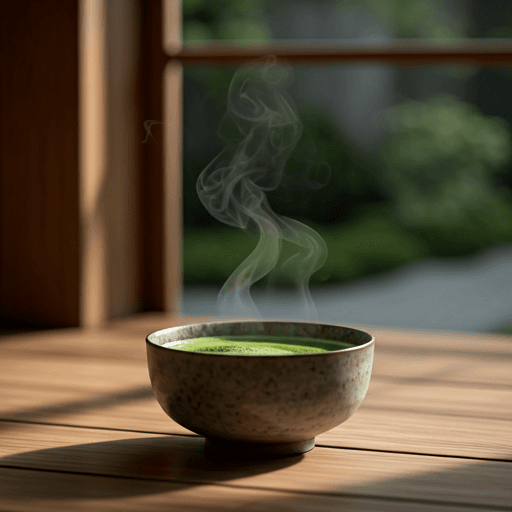
Silver needle white tea — known in Chinese as Baihao Yinzhen (白毫银针) — is the most prized grade of white tea, made only from plump, downy, unopened leaf buds that are simply withered and dried. That minimal handling gives a pale, delicate, subtly sweet cup with notes of hay, melon and honey, and the silvery down on the buds is exactly what gives the tea its name. Here is what sets Silver Needle apart, how it compares to White Peony and Shou Mei, and how to brew it well.
What Silver Needle White Tea Actually Is
Silver Needle is one of the six classic Chinese tea types, and it sits right at the top of the white tea family. It is made from a single part of the tea plant (Camellia sinensis): the plump, unopened terminal bud, or "tip," of a new spring shoot. Those buds are wrapped in a dense coat of fine white hairs — the trichomes, or "down" — and it is this silvery fuzz that gives the tea both its English name, silver needle white tea, and its Chinese one, Baihao Yinzhen, which translates roughly as "white-hair silver needle." You will also see it sold as silver tip white tea.
The classic growing regions are Fuding and Zhenghe in Fujian province, on China's southeast coast, where large-leaf cultivars such as Da Bai ("Big White") produce especially fat, downy buds. Plucking happens over a short window in early spring, and only the buds are taken — no leaves at all — which is one reason the tea is so scarce and labour-intensive.
Silver Needle is no modern novelty, either. White tea in this style is generally traced to Fujian in the Qing dynasty, with Fuding and Zhenghe developing their bud-only production across the eighteenth and nineteenth centuries, and the tea has been an export prize ever since. Today it remains a benchmark against which other white teas are judged.
Processing is deliberately minimal. Unlike green tea, the buds are never pan-fired or steamed to halt oxidation; unlike black tea, they are never rolled or fully oxidised. Instead they are simply withered — traditionally spread out to lose moisture in a mix of gentle sun and shade — and then dried. That is essentially it. Because so little is done to the leaf, Silver Needle is often called the most "natural" style of tea, and its flavour comes almost entirely from the raw bud rather than from processing. For the wider category and how white tea is made, see our white tea guide.
Silver Needle vs White Peony vs Shou Mei
White tea is graded largely by which part of the shoot is picked, and that single decision drives flavour, body and price. Silver Needle is bud-only. White Peony (Bai Mu Dan) adds one or two young leaves to the bud, and Shou Mei is made from later, larger leaves with far fewer buds. As you move down that ladder, the tea generally gets darker, bolder and more affordable.
| White tea | What it is | Character |
|---|---|---|
| Silver Needle (Baihao Yinzhen) | Unopened buds only, picked in early spring | Palest and most delicate; soft, sweet and downy; the most prized grade |
| White Peony (Bai Mu Dan) | One bud plus one or two young leaves | Fuller and more floral-fruity, with more colour and body |
| Shou Mei | Later, larger leaves with few buds | Boldest and darkest; brisker, more robust, everyday value |
| Gong Mei | Leaf-forward, a step up from Shou Mei | Similar to Shou Mei but a touch finer |
Because Silver Needle uses only buds — and it takes a great many hand-plucked tips to make a small amount of finished tea — it is the rarest and most treasured of the four, while Shou Mei is the everyday workhorse. If you are choosing between the top two grades, the short version is this: Silver Needle is lighter, sweeter and more subtle, while White Peony trades a little of that delicacy for a rounder, fruitier cup. Our dedicated White Peony (Bai Mu Dan) guide covers that leafy sibling in depth, and you can see where white tea sits among the six types of tea.
How Silver Needle Tastes
The signature of a good Silver Needle is delicacy. The liquor brews pale — think faint straw-gold rather than amber — and the flavour is gentle, clean and lightly sweet. Common tasting notes include fresh hay or meadow, melon and cucumber, honey, and soft floral tones, sometimes with a whisper of almond or fresh corn silk. There is very little astringency and no smokiness at all.
Just as memorable is the texture. All those downy hairs give a well-made Silver Needle a slightly thick, velvety, almost "fuzzy" mouthfeel, and the finish is long and quietly sweet — a lingering sweetness tea drinkers sometimes call hui gan. Because the flavours are so soft, Silver Needle rewards attention: it is a tea to sip slowly rather than gulp, and it is easily overwhelmed by strong food or a harsh, over-hot brew.
Caffeine in Silver Needle
White tea has a reputation for being low in caffeine, but Silver Needle complicates that picture. The tea plant concentrates caffeine in its youngest growth, and Silver Needle is made entirely of those young buds — so, gram for gram, it can actually hold a fair amount of caffeine, sometimes more than you would guess from such a pale, gentle cup. In practice, how much ends up in your mug depends on the leaf, how much you use, the water temperature and the steeping time, so it is wise to treat any single figure with caution. Research on tea caffeine varies, and individual responses vary too; this is general information, not medical or dietary advice. If caffeine is a concern, a cooler and shorter steep will pull less of it, and it never hurts to ask how a specific tea was made.
How to Brew Silver Needle
Silver Needle is forgiving in one way and fussy in another: it is hard to make bitter, but easy to under-extract if you rush it. A few pointers:
- Use cooler water. Around 80°C (about 175°F) is a good target — off the boil, not fully boiling — which protects the delicate sweetness. Some drinkers go as low as 75°C.
- Be generous and patient. The buds are dense and slow to sink, so they release their flavour gradually. Use a little more leaf than you would for a leafy tea, and give the first steep a longer, gentle rest — several minutes rather than seconds.
- Re-steep. Good Silver Needle yields several infusions from the same buds, each one a little different; many drinkers find the second or third steep the sweetest.
- Watch it work. Brewing in glass lets you see the buds slowly stand up and sink again, which is half the pleasure.
Those are the tea-specific tweaks; for the fundamentals of measuring, timing and re-steeping any whole-leaf tea, see our guide to brewing loose-leaf tea.
How to Store Silver Needle
Like all whole-leaf tea, Silver Needle keeps best away from its four enemies: air, light, heat and moisture — plus strong odours, which the porous buds readily absorb. Keep it in an opaque, airtight tin or pouch, somewhere cool and dark, and well away from spices, coffee or anything fragrant.
One nuance worth knowing: while most Silver Needle is drunk fresh, to capture its bright spring character, white tea is also famous for ageing. Stored carefully over years, some white teas mellow and deepen into darker, honeyed "aged white tea," which collectors prize. That is a deliberate project, though — for everyday drinking, fresher is brighter, so it is worth keeping only what you will get through in a reasonable time.
Is Silver Needle Worth It?
Silver Needle asks a little more than a robust black tea or a bagged brew — cooler water, a slower steep, a quiet moment — and gives back something a lot of teas cannot: purity. It is about as close as you can get to tasting the tea bud itself, barely touched between the garden and your cup. If you have only ever met white tea as a faint background flavour, a carefully brewed Baihao Yinzhen is the one that shows why silver needle tea has been treasured for so long.