
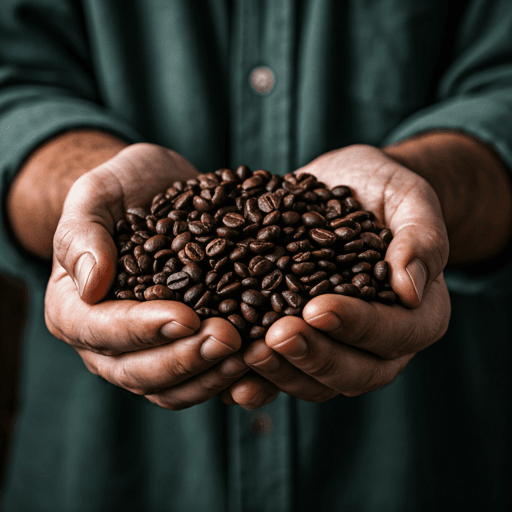
Ask most people to picture Colombian coffee and they will describe something bright, clean, and almost juicy — the crisp acidity and floral lift that made the country's high southern departments famous. Santander offers a different, older answer. Tucked into the northeastern corner of Colombia, along the eastern flank of the Andes, this is one of the nation's original coffee lands, where cultivation was already well established in the 19th century. Grown at gentler altitudes, under a dense canopy of shade trees, and often farmed organically by tradition rather than trend, Santander coffee pours out full-bodied, soft in acidity, and thick with chocolate and roasted nuts. It is the classic "old Colombian" cup — mellow, comforting, and quietly distinct from the vivid profiles that dominate specialty menus today.
Where Santander Sits on Colombia's Coffee Map
Santander is a department in the northeast of Colombia, spread across the eastern range of the Andes and centered on its capital, Bucaramanga. It belongs to what growers often call the country's northern coffee zone — a cluster of departments that also includes Norte de Santander and reaches toward the Caribbean-facing highlands. This is a different world from the celebrated south. Where departments like Nariño push coffee onto extreme, cool slopes, Santander's terrain is generally lower and warmer, with many farms sitting somewhere around 1,300 to 1,800 meters above sea level rather than climbing toward 2,000 and beyond.
That geography matters enormously. Higher, cooler altitudes slow the cherry's maturation and concentrate the crisp, acidic sugars prized in bright coffees. Santander's warmer elevations ripen fruit a little faster and lean the cup toward body, sweetness, and roundness instead of sparkle. Understanding this positioning is the fastest way to grasp why a Santander coffee tastes the way it does, and why it reads so differently from its southern cousins within the broader story of Colombian coffee.
One of Colombia's Oldest Coffee Frontiers
Long before the country's now-iconic coffee axis in the central and southern highlands rose to prominence, Santander was already a serious producer. Coffee cultivation here dates to the 1800s, and the region helped build the early export infrastructure and trade routes that first carried Colombian beans to buyers abroad. During coffee's earliest decades in Colombia, Santander — together with neighboring Cundinamarca — accounted for a large share of the young country's output, and its estates played an outsized role in shaping Colombia's initial reputation as an origin.
That prominence later ebbed as economic turmoil and shifting international markets reshaped the industry, and the center of gravity migrated toward other regions. But the deep roots never disappeared. What survives in Santander today is a farming culture defined by continuity — heirloom practices, established shade systems, and a heritage-first mindset that favors consistency over experimentation. When you drink a Santander coffee, you are tasting one of the longest unbroken coffee traditions in the Americas.
Shade and Agroforestry: A Different Way to Grow
If one word defines Santander, it is shade. The overwhelming majority of the region's coffee is grown the traditional way, beneath a canopy of native and planted trees rather than in the full-sun monocultures that dominate high-yield modern farms. This agroforestry approach is more than picturesque. The tree cover buffers temperature, protects developing cherries from harsh direct sun, shelters soil from erosion, and supports the birds and biodiversity that a bare coffee field cannot.
Shade also shapes flavor. Under a canopy, cherries tend to ripen more slowly and evenly, which many producers and roasters associate with a rounder body and a softer, more restrained acidity in the cup — precisely the Santander signature. Because these shaded, lower-input systems align naturally with chemical-free farming, a meaningful share of Santander's coffee is grown organically, and organic certification is common among the region's estates and cooperatives. Colombia's national coffee institutions have historically encouraged these environmental practices in the north, turning what began as tradition into a genuine commercial identity.
Lower, Warmer, Rounder: The Santander Cup
So what is actually in the glass? Santander is the archetype of the mellow, full-bodied Colombian profile. Expect a medium to full body, an acidity that is present but gentle and unaggressive, and a flavor core built on chocolate, roasted nuts, and brown-sugar sweetness. Softer notes of gentle citrus or mild fruit often round things out, but they support the cup rather than lead it. It is an easygoing, low-drama coffee — the kind that suits an unfussy morning brew and takes milk gracefully.
The table below sketches how Santander's key characteristics tend to sit relative to a typical bright, high-grown southern Colombian coffee. Treat these as broad tendencies rather than strict rules; individual farms and lots always vary.
| Attribute | Santander (northern, shaded) | Bright southern origins |
|---|---|---|
| Typical altitude | Lower and warmer (~1,300–1,800 m) | Higher and cooler (often 1,700–2,000+ m) |
| Body | Medium to full, rounded | Lighter to medium, silky |
| Acidity | Soft, restrained, mellow | Bright, crisp, lively |
| Dominant flavors | Chocolate, roasted nuts, brown sugar | Citrus, red fruit, florals |
| Growing style | Heavily shade-grown, often organic | Frequently sun or partial shade |
| Best-suited use | Everyday drip, espresso, milk drinks | Pour-over, filter, showcasing clarity |
Varieties in the Santander Canopy
The genetic makeup of Santander's coffee reflects both its heritage and Colombia's ongoing modernization. Among the most widely planted varieties today is Castillo, the disease-resistant cultivar developed to withstand coffee leaf rust while maintaining solid cup quality — a practical choice for farmers protecting long-term harvests. Alongside it you will find the closely related "Colombia" variety and plenty of Caturra, the compact, productive workhorse that shaped so much of the country's twentieth-century output.
Because Santander's farms are old, they also preserve pockets of heirloom genetics — older Typica and Bourbon lineage trees that predate the rust-resistant era. These traditional varieties are less productive but valued for their classic sweetness and depth, and they contribute to the region's heritage character. The mix of resilient modern cultivars and surviving heirlooms is part of what keeps Santander's cup both dependable and rooted in the past.
Processing and Harvest
Like most of Colombia, Santander is fundamentally washed-coffee country. The fully washed process — depulping the cherry, fermenting the beans to break down the sticky mucilage, then washing and drying — is the regional default, and it is a big reason Colombian coffee reads as clean and structured. On Santander's shaded, organic-leaning farms, careful washed processing lets the origin's inherent chocolate-and-nut sweetness come through without muddiness.
Harvest timing follows the north's climate rather than the twice-a-year rhythm of some central regions. The northern zone generally sees a single main harvest, with picking often running from around October through December. Some parts of the department may catch a smaller secondary crop — a "mitaca" or fly crop — in the months that follow, but the principal season is the autumn-into-winter window. That single, concentrated harvest reinforces the region's reputation for a consistent, repeatable house style.
How Santander Differs from the Bright South
The clearest way to appreciate Santander is by contrast. Colombia's celebrated southern departments deliver acidity and aromatics that leap out of the cup; that is their charm. A washed lot from Huila or the high slopes of the far south tends to sparkle with citrus and red fruit, rewarding a filter brew that showcases clarity. Santander goes the other direction, trading brightness for comfort, weight, and cocoa-driven sweetness.
Even within the northern-leaning, chocolatey camp, Santander has company and character. Coffees from Tolima, for instance, can bridge the gap with balanced body and moderate acidity, but Santander typically sits at the mellow, full-bodied, low-acid end of the Colombian spectrum. If you have only ever tasted the country's zippy modern lots, a good Santander can be a revelation — proof that "Colombian coffee" was never a single flavor, and that some of its oldest ground still makes some of its most soothing cups.
Brewing Santander at Home
Santander's forgiving nature makes it a joy to brew. Its low acidity and full body shine in immersion and pressure methods: a French press flatters the heavy chocolate-nut character, and it makes a smooth, sweet espresso base that stands up beautifully to milk in a cappuccino or latte. A moka pot is another natural match, amplifying the cocoa depth. For everyday drip and batch brewing, Santander is dependable and crowd-pleasing precisely because it lacks sharp edges.
Roast level is worth a thought. A medium roast tends to keep Santander's brown-sugar sweetness and nutty core in balance, while a medium-dark push leans further into chocolate and body at the expense of the subtler citrus hints. If you enjoy exploring origins side by side, brew a Santander next to a bright southern lot on the same day; the contrast in acidity and weight teaches you more about Colombian terroir than any tasting note ever could.