
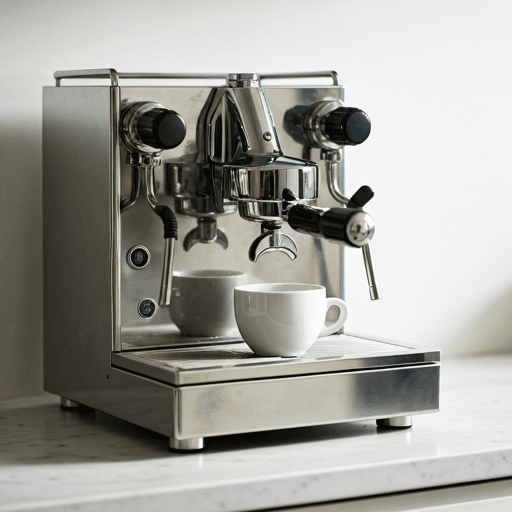
A pour-over coffee maker is an automatic drip machine engineered to brew like a hand pour-over: an even shower head that saturates the grounds, water held at the right temperature, and often a bloom or pulse cycle before the main pour. In plain terms, a good pour over coffee machine gives you clean, pour-over-style coffee at the push of a button, without standing over a gooseneck kettle counting seconds. This guide explains what separates a genuine automatic brewer from an ordinary drip pot, the features worth paying for, and the well-known machines you will see named as examples.
What Is a Pour-Over Coffee Maker?
A pour-over coffee maker is a countertop electric brewer designed to reproduce the technique a barista uses by hand. Manual pour-over means pouring hot water in slow, controlled circles over ground coffee in a cone or flat-bottom dripper, and it is that unhurried, even wetting that gives the cup its clarity and sweetness. An automatic version handles the same sequence for you: it heats water to the correct range, releases it through a shower head so every ground is wetted evenly, pauses to let the coffee "bloom," then meters the rest of the water over the right span of time.
That sequence is what separates this category from a basic drip pot. Budget drip machines often trickle lukewarm water from a single hole in the center of the bed, leaving the outer grounds under-extracted and the middle over-extracted, which is why they can taste flat or sour. A true pour over drip coffee maker is built around even saturation and temperature control, so the result tastes far closer to something you brewed by hand with a manual pour-over method. If you are weighing this against a conventional machine, our drip coffee maker guide covers the everyday-drip side of the fence.
What Makes a Good Pour Over Coffee Machine
Four fundamentals separate a serious pour over coffee machine from a lookalike. Get these right and the badge on the front matters far less.
SCA "Golden Cup" certification
The Specialty Coffee Association (SCA) certifies home brewers that meet its Golden Cup standard: the machine keeps water in the correct brewing band, finishes the brew inside the right contact time, and extracts coffee to the target strength. Certification is the single most useful shortcut on the box because an independent body has confirmed the brewer extracts properly rather than just dribbling hot water through a basket. Not every excellent machine carries the badge, but where it appears it is a strong, verifiable signal.
An even shower head (rain-maker)
The shower head, sometimes called a rain-maker, is the disc that distributes water over the coffee bed. A wide, multi-hole shower head wets the whole surface at once, the way a careful hand pour would; a single central spout does not. Even saturation is the difference between a balanced cup and one that is muddy in the middle and weak at the edges, so this is arguably the most important piece of hardware in any automatic pour over coffee maker.
A bloom (pre-infusion) phase
Fresh coffee releases trapped carbon dioxide when it first meets hot water. A bloom, or pre-infusion, cycle wets the grounds with a small dose of water, pauses for roughly 30 to 45 seconds to let that gas escape, then continues. Skipping the bloom leaves gas pockets that repel water and cause uneven extraction, so a dedicated bloom setting is a hallmark of a machine built to brew like a pour-over rather than a plain drip pot.
Water temperature control
Extraction depends on heat. Too cool and the cup is sour and thin; too hot and it turns bitter. The sweet spot sits around 92 to 96 C (about 197 to 205 F), and a good machine holds water in that window for the whole brew instead of letting it sag as the tank drains. Precise, stable temperature is a big part of what earns Golden Cup certification in the first place.
Features to Weigh Up
Beyond the four fundamentals, a few practical choices shape which pour over machine suits your kitchen. None of these has a single "right" answer, so match them to how you actually drink coffee.
| Feature | Why it matters | What it tends to cost |
|---|---|---|
| SCA Golden Cup certification | Independent proof of correct temperature, time and strength | Usually mid to premium |
| Even shower head / rain-maker | Wets every ground for balanced, clean extraction | Adds cost over basic drip |
| Bloom / pre-infusion cycle | Lets fresh coffee de-gas so water absorbs evenly | Common from mid-range up |
| Water temperature control | Holds the 92-96 C band for full flavour | Mid to premium |
| Thermal carafe | Keeps coffee hot for an hour or more with no scorching hotplate | Adds cost versus a glass jug |
| Single-cup vs full-carafe | Right batch size for one person or a household | A choice, not a price tier |
| Burr-grinder pairing | A consistent grind is what lets any of the above work | A separate purchase |
Thermal vs glass carafe
A glass carafe usually sits on a heated plate, which keeps coffee warm but slowly cooks it, turning it bitter and stewed within half an hour. An insulated thermal carafe holds heat by itself, so the flavour you brewed is the flavour you pour 45 minutes later. If you drink your coffee over a leisurely morning rather than all at once, a thermal carafe is one of the most noticeable upgrades.
Single-cup vs full-carafe
Some machines brew a single mug on demand; others fill a multi-cup carafe in one go. A full-carafe brewer is more forgiving because a larger coffee bed holds heat and extracts evenly, whereas single-cup brewing is convenient but harder to get right on a tiny dose. Match the batch size to your household so you are not brewing a full carafe for one, or one cup at a time for four.
How it pairs with a burr grinder
No automatic pour-over machine can rescue badly ground coffee. The shower head, bloom and temperature control all assume a consistent, medium-fine grind, which only a burr grinder delivers; a blade grinder produces uneven chunks and dust that extract at different rates. Treat a decent grinder as part of the system rather than an optional extra, and the machine you already own will taste better for it.
Well-Known Automatic Pour-Over Machines
These names come up whenever people discuss automatic pour-over brewing. They are listed as factual examples of the category, not ranked picks, and line-ups vary by market and model year.
- Technivorm Moccamaster — a Dutch, hand-built classic known for its copper heating element and even shower arm; see our Moccamaster explainer for the detail.
- Ratio Six and Ratio Eight — design-led brewers that automate the bloom and pour with a minimalist front panel.
- Breville Precision Brewer — a highly adjustable machine with custom and pour-over modes plus temperature settings.
- OXO Brew 8-Cup and 9-Cup — value-focused certified brewers with a rain-maker shower head and a microprocessor-controlled bloom.
- Bonavita — straightforward, no-fuss certified brewers built around a flat-bottom basket and pre-infusion.
- Wilfa — Scandinavian brewers developed with baristas, with several certified models.
- Fellow Aiden — an app-driven brewer that lets you program bloom, temperature and pour profiles in fine detail.
For a broader look at everyday electric brewers, including simpler models that are not built to pour-over spec, our roundup of the best drip coffee makers is a useful companion.
Automatic vs Manual Pour-Over: Which Suits You?
An automatic pour-over coffee maker trades a little control for a lot of consistency. Brewing by hand gives you complete command over pour speed, water flow and timing, and it costs far less to start, but it demands attention every single morning and a steady hand. A machine bakes those variables in so you get a repeatable cup while you do something else, at the price of a bigger up-front purchase and a larger countertop footprint.
A fair way to decide is to ask what you enjoy. If the ritual of the slow pour is part of the pleasure, the manual route and its gear are the place to start. If you want pour-over quality on autopilot, especially for more than one cup at a time, an automatic pour over drip coffee maker earns its keep. Either way, the same principles decide the cup: grind consistency, water temperature and even saturation. Nail those and the coffee will taste like coffee that was brewed with care, which is the whole point of the category.