
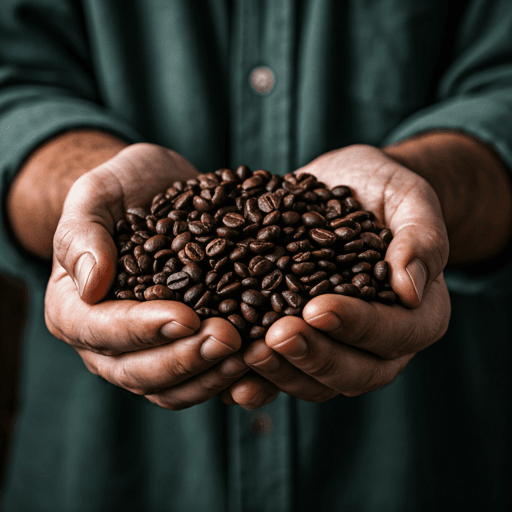
Oro Azteca is a Mexican Arabica cultivar developed by the National Institute of Forestry, Agriculture and Livestock Research (INIFAP) and released around the 1990s, bred specifically for resistance to coffee leaf rust. Genetically it is a Catimor — a compact, productive line descended from the cross of Caturra and the Timor Hybrid — and it became the most widely planted rust-resistant variety in Mexico, central to smallholder replanting after damaging rust epidemics.
What is Oro Azteca?
Oro Azteca (Spanish for "Aztec Gold") is a pure-line Arabica selection made and distributed by Mexican public research. The work is credited to INIFAP, the institution that carried national coffee breeding forward as the former INMECAFE — the Mexican Coffee Institute that led research and extension for decades — was wound down in the late twentieth century. The variety was selected from Catimor material and handed to growers as a domestic answer to the yield and disease pressures facing traditional cultivars such as Typica, Bourbon, Mundo Novo and Garnica.
Like all Catimors, Oro Azteca carries genes introgressed from the Timor Hybrid — a naturally occurring cross between Arabica and Robusta found on the island of Timor. That Robusta ancestry is the source of its durable resistance to coffee leaf rust, the fungal disease (Hemileia vastatrix) that has repeatedly ravaged plantings across Latin America and pushed growers toward hardier hybrids.
The Catimor lineage
To understand Oro Azteca you have to understand Catimor. The Catimor group originated from a cross of the Timor Hybrid (accession CIFC 832/1) with Caturra (CIFC 19/1), breeding work begun in Portugal and then advanced by research programs across coffee-growing countries. Caturra contributed a naturally dwarf, high-yielding, compact plant; the Timor Hybrid contributed rust resistance. National institutes then selected their own local Catimor lines suited to their climates and altitudes.
Oro Azteca is precisely that kind of local selection: a Mexican Catimor stabilized over successive generations for the growing conditions of Chiapas, Oaxaca, Veracruz and Puebla. This places it in the same broad family as other regional rust-resistant releases — Guatemala's Anacafé 14, Colombia's Castillo, and the various Costa Rican and Honduran Catimor and Sarchimor selections — each a national answer to the same threat.
Plant characteristics
Oro Azteca inherits the classic Catimor architecture: a compact, relatively short plant with short internodes, dense lateral branching and vigorous growth. The cherries ripen red and the plant tends to hold a heavy, concentrated crop, a consequence of the precocity and productivity it draws from its Caturra parentage. That compactness is agronomically valuable because it allows denser planting, easier harvesting by hand, and strong production per hectare.
Managing Oro Azteca well is largely about sustaining the yields it is capable of. Like most heavy-bearing Catimors, it responds strongly to inputs: adequate nitrogen, potassium and micronutrients, sound soil management and, where practiced, judicious shade all help the plant carry its crop without exhausting itself. Growers typically renovate plantings on a cycle, using stumping or selective pruning to rejuvenate older trees whose productivity has begun to decline. Because the variety is precocious, it can begin returning a harvest relatively quickly after planting, which is a meaningful advantage for smallholders rebuilding a farm after a rust outbreak. Attention to spacing, weed control and shade balance keeps the dense canopy healthy and reduces the humidity pockets in which fungal problems thrive.
- Stature: compact and dwarf-leaning, suited to high-density planting.
- Yield: high and precocious, with plants bearing heavily from a young age.
- Rust resistance: strong resistance to Hemileia vastatrix, its defining trait.
- Altitude range: best adapted from roughly 600 to 1,300 meters above sea level.
- Climate: reported to perform well in moderate temperatures around 18–24°C across Mexico's principal coffee states.
Because the plant is productive and precocious, it demands attentive nutrition. Heavy-bearing Catimors can exhaust themselves if soil fertility and fertilization are not maintained, so replanting programs typically pair Oro Azteca with agronomic support to sustain the yields the variety is capable of.
Rust resistance and why it mattered
Coffee leaf rust is the single most consequential disease in Arabica cultivation. Outbreaks defoliate trees, cut yields and can kill weakened plants outright. Mexico, like much of Central America, has faced severe rust pressure, and the epidemics of the 2010s in particular accelerated the search for resistant material.
Oro Azteca offered a ready, locally proven option. Research comparing cultivars has recorded markedly lower fungal establishment on Oro Azteca than on susceptible traditional varieties, consistent with the introgressed resistance genes it carries from its Timor Hybrid ancestry. For smallholders who cannot easily absorb the cost of fungicide spraying or the loss of a harvest, planting a resistant variety is often the most practical form of protection — and Oro Azteca became the most planted rust-resistant cultivar in the country.
It is worth noting the usual caveat for rust-resistant varieties: resistance is not permanent or absolute. Rust is a variable pathogen with many physiological races, and resistance conferred by the Timor Hybrid has broken down in some varieties elsewhere over time. Good agronomy, monitoring and diversification remain important even where resistant plants are grown.
The cup: the Catimor trade-off
Here Oro Azteca meets the well-known Catimor trade-off. Varieties that draw rust resistance from the Timor Hybrid also inherit some of its Robusta genetics, and these lines are commonly described as producing a solid, clean, but not elite cup — reliable and pleasant rather than distinctive or complex. Oro Azteca is generally characterized this way: dependable commercial quality rather than the layered acidity and aromatics prized in top Bourbon, Typica or Geisha lots.
That is not a dismissal. For a smallholder whose priority is a harvest that survives rust and pays its way, a productive, resistant plant with an acceptable cup is a sound choice. And processing, altitude, ripeness at picking and careful preparation can all lift a Catimor's cup meaningfully above its baseline. The variety's role is best understood as workhorse: it secures production and livelihoods, while growers chasing premium scores may reserve part of their land for more delicate, susceptible varieties.
Oro Azteca in Mexican coffee
Mexico's coffee sector is overwhelmingly smallholder, with hundreds of thousands of small producers, many farming under shade at modest scale in the southern states. For this landscape, a variety that is compact, productive, rust-resistant and distributed through public research and extension is a natural fit. Oro Azteca was adopted widely precisely because it addressed the constraints those farmers actually face.
Its concentration in Chiapas, Oaxaca, Veracruz and Puebla mirrors the geography of Mexican coffee itself, and its high reported yields relative to older red Caturra plantings gave replanting programs a concrete productivity argument. Distribution through public nurseries and extension services meant the variety could reach dispersed, resource-limited producers who would struggle to source seed on their own, which helped it spread quickly through the rust-affected south. In that sense Oro Azteca is not just a variety but a policy instrument — a piece of the national response to rust and to declining productivity in aging coffee groves.
Frequently asked questions
What kind of coffee variety is Oro Azteca?
Oro Azteca is an Arabica cultivar of the Catimor group, meaning it descends from a cross between Caturra and the Timor Hybrid. It was developed and released by Mexican public research (INIFAP) around the 1990s. Its defining traits are a compact, dwarf-leaning plant, high and early yields, and strong resistance to coffee leaf rust, which made it a mainstay of smallholder replanting.
Who developed Oro Azteca?
It is credited to INIFAP, Mexico's National Institute of Forestry, Agriculture and Livestock Research, which carried national coffee breeding forward as the former INMECAFE (the Mexican Coffee Institute) was phased out. The variety was selected and stabilized from Catimor material specifically for Mexican growing conditions in states such as Chiapas, Oaxaca, Veracruz and Puebla.
Why is Oro Azteca resistant to coffee leaf rust?
Its resistance comes from the Timor Hybrid in its ancestry, a natural Arabica–Robusta cross that carries genes conferring resistance to Hemileia vastatrix. Catimor varieties like Oro Azteca inherit that protection. Resistance is strong but not guaranteed forever, since rust has many races and Timor Hybrid resistance has eroded in some varieties over time, so good agronomy still matters.
How does Oro Azteca taste in the cup?
Oro Azteca is generally described as producing a solid, clean but unremarkable cup — the typical Catimor trade-off. It rarely reaches the aromatic complexity of elite Bourbon, Typica or Geisha lots, but careful harvesting, altitude and processing can improve it. Its strength is reliability and productivity rather than competition-level distinction, which suits its role as a smallholder workhorse.
How does Oro Azteca compare to other rust-resistant varieties?
It belongs to the same rust-resistant hybrid family as Guatemala's Anacafé 14, Colombia's Castillo, and various Costa Rican and Honduran Catimor and Sarchimor selections. Each was bred nationally to fight leaf rust while boosting yield. Oro Azteca is Mexico's counterpart — a locally adapted Catimor that trades some cup refinement for durability, productivity and disease resistance.