
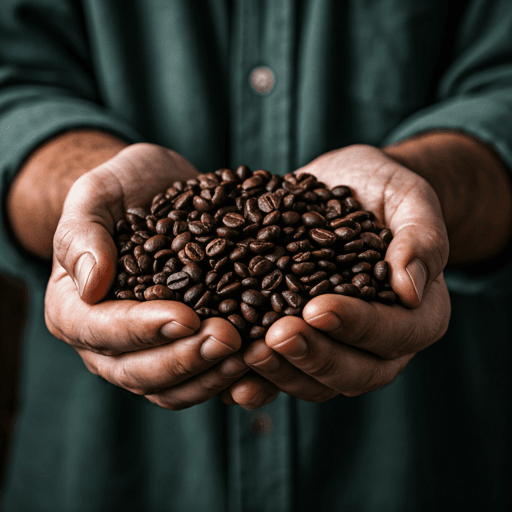
Ngozi coffee comes from a densely planted, densely stationed belt of hills in north-central Burundi, just south of the Rwandan border. It is one of the country's two great washed-Bourbon provinces, and it supplies a large share of Burundi's fully washed export crop — historically as anonymous bulk, increasingly as traceable station-level and hill-level lots.
Ngozi's distinguishing feature is not a famous estate or a rare variety. It is concentration. An unusually high number of washing stations sit packed into a small, crowded, steep landscape, each drawing cherry from hundreds or thousands of tiny plots on the surrounding hills. That density is why the province has long been a volume engine, and it is also the thing making it interesting now: a mill that sits close to its farmers can keep their coffee apart instead of blending it away.
Where Ngozi sits
Ngozi occupies north-central Burundi. It meets Rwanda along its northern edge and is ringed by Kayanza to the west, Kirundo to the northeast, Muyinga to the east, and Karuzi and Gitega to the south. Nine communes made up the province — Busiga, Gashikanwa, Kiremba, Marangara, Mwumba, Ngozi, Nyamurenza, Ruhororo and Tangara — and coffee is grown across essentially all of them.
Most of Ngozi falls inside the Buyenzi natural region, the high northern plateau that Burundi's coffee sector treats as its heartland; the province's eastern fringe tips over into the lower, drier Bweru region. Buyenzi is shared with Kayanza, which is why the two provinces are so often named in the same breath.
Ngozi is also extremely crowded. The 2008 census recorded roughly 660,000 people across about 1,474 square kilometers, on the order of 450 people per square kilometer. Coffee here is not planted on plantations carved out of forest. It goes in between houses, along footpaths and around banana stands, on plots measured in hundreds of trees rather than hectares. Understanding that single fact explains most of what follows: why there are so many washing stations, why cherry arrives in small daily deliveries, and why traceability in Ngozi has to be built upward from the hill rather than downward from an estate.
A note on the map
Burundi restructured its administrative map, cutting eighteen provinces to five, with the change taking effect around the 2025 elections. Ngozi, Kayanza and Kirundo were folded into a single larger province named Butanyerera, whose seat is the town of Ngozi. The coffee trade, however, still labels lots Ngozi, because the name identifies a growing area, a set of washing stations and a cup character rather than an office. Treat Ngozi as a coffee region first and an administrative unit second.
Why the land matters
Ngozi's coffee hills sit broadly between about 1,400 and 1,900 meters. The Buyenzi plateau itself is usually described in the 1,500 to 1,900 meter band, with the eastern communes sliding lower as the land falls toward Bweru. Published elevations for individual washing stations in the province run from the mid-1,400s to the high 1,800s, so treat any single number you see on a bag as that station's own figure, not the region's.
The rest of the growing environment is characteristic of Buyenzi:
- Rainfall: commonly reported around 1,200 to 1,300 mm a year, arriving in a long wet season broken by a short dry spell, with the heaviest months in the early part of the year.
- Temperature: mild and stable, with annual means usually cited in the high teens Celsius. Altitude, not latitude, does the cooling here.
- Soils: ferralsols and related deeply weathered tropical soils dominate the plateau. They are deep and free-draining but naturally low in available nutrients, which is why mulching, organic matter and nutrition management do more for yields in Ngozi than almost anything else.
- Aspect: steep, short slopes with every orientation represented. Two neighboring hills can ripen a week or more apart, which is precisely what makes day-lot and hill-lot separation worth the trouble.
The practical upshot: Ngozi has real altitude and a genuinely good climate, but no land to spare. Density of people and density of trees are the same story, and the ceiling on quality here is far more often agronomic — old trees, tired soil, thin nutrition — than climatic.
How production is organized
There are effectively no estates. Coffee in Ngozi is grown by smallholders, and household tree counts are commonly cited in the range of roughly fifty to a few hundred trees. Nobody at that scale can process their own coffee, so the entire quality chain runs through central wet mills.
Those wet mills are the province's defining institution. What a coffee washing station does mechanically — receive cherry, float it, pulp it, ferment it, wash and grade it, then dry it on raised beds — is broadly the same across East Africa. What is distinctive in Ngozi is how many of them there are and how close together they stand. The province is generally described as having one of the highest concentrations of washing stations in Burundi. Precise counts move around as sites are built, sold, mothballed and restarted, so treat any specific figure with caution. What is not in doubt is that the province is thickly served, that competition for cherry between neighboring stations is real, and that most farmers have a genuine choice of where to deliver.
That competition cuts both ways. It gives farmers leverage and shortens the walk to a mill, which matters enormously when cherry has to be pulped the day it is picked. It also means stations can be tempted to buy volume rather than ripeness, and it makes the disciplined ones — those that reject underripe cherry at the receiving table and pay for the difference — stand out sharply in the cup.
Ownership is mixed. The state-era management structure that once ran the province's mills, SOGESTAL Ngozi, has been progressively displaced by private operators and farmer-owned stations since the privatization program that began at the end of the 2000s; the national arc of that reform, and the arguments about it, belong to the Burundi coffee country guide.
Alongside the mills sit farmer organizations. Coffee cooperatives in Ngozi aggregate cherry, run collection points on individual hills, negotiate with exporters and in some cases own the wet mill outright. The gap between a group that merely delivers cherry and one that controls processing is the single biggest variable in how much of a lot's value stays in the province.
One piece of hard history belongs here, stated plainly: the civil war years between 1993 and 2005 interrupted washing-station investment and replanting across the north, and a large share of the province's trees date from earlier planting waves. Aging tree stock, not climate, is the main brake on Ngozi's output today.
What is actually planted
Ngozi is overwhelmingly Bourbon country — Red Bourbon above all, plus the Bourbon-derived selections that circulated through the region's colonial-era research stations, commonly listed as Jackson and Mibirizi. In practice these are frequently intermixed on the same plot and rarely separated at the washing station, so a lot sold as Red Bourbon from Ngozi is best read as Bourbon-dominant rather than genetically pure. That is the honest framing, and careful exporters will say so.
Robusta is negligible here. The variety picture is simply less complicated than in Latin America: no hybrid alphabet soup, very little of the modern rust-resistant material planted elsewhere, and a tree stock whose main problem is age rather than genetics. It also means the variety line on an Ngozi offer sheet carries less information than the station name and the hill name do — which is exactly why the province's move toward finer lot separation matters more than any varietal story.
Processing: washed by default, and getting more ambitious
The default is fully washed, and the harvest runs roughly from late March through early July, with the peak in the middle of that window and export shipments generally moving in the second half of the year.
Two things separate the good stations here from the merely functional. The first is lot separation. Burundi has an unusually well-developed culture of daily lots, and the best Ngozi mills go further, keeping coffee from individual collines — hills — apart, so a buyer can taste the difference between one ridge and the next. In a province where a single station may serve several hills with different aspects and elevations, that separation is the difference between a competent commercial washed coffee and a lot worth naming.
The second is drying discipline. The potato defect, a well-known hazard across the Burundi and Rwanda belt and covered in the country guide linked above, is mitigated here as it is throughout the region — by relentless repeated hand-sorting on the beds and again at the dry mill — rather than eliminated.
Naturals and honey lots have spread through the province over the past decade, and a handful of stations run anaerobic and extended-fermentation experiments. They remain a minority of volume and should be judged individually, but they are no longer a curiosity: Gatukuza, a station in Ngozi, took first place in the 2019 Burundi Cup of Excellence with a natural-processed Bourbon, reported as the first natural-process coffee ever to win that competition. Washed Bourbon remains the region's real signature, but the ceiling has visibly moved.
What Ngozi coffee tastes like
At its best, a washed Ngozi Bourbon is juicy and structured rather than delicate. Expect:
- Acidity: crisp and citric to malic — orange and red apple, sometimes a sharper blackcurrant or grapefruit edge on higher lots.
- Sweetness: brown sugar, honey and red plum; ripe rather than candied.
- Body: often fuller and more syrupy than a comparable washed coffee from across the border, which is where Ngozi tends to distinguish itself.
- Finish: cocoa and black tea, with a faintly savory, almost clove-like spice on lower-grown lots; florals and stone fruit on the highest.
Lower-slope Ngozi lots skew balanced, chocolatey and nutty, which makes them a dependable backbone for commercial washed grades. Top hill-level lots go somewhere else entirely. The gap between those two ends of the province is wide, and it is almost entirely a function of which hill and which station, not which country is printed on the bag.
Ngozi at a glance
| Attribute | Ngozi |
|---|---|
| Location | North-central Burundi, bordering Rwanda; merged into Butanyerera province in the 2025 administrative reform |
| Natural region | Buyenzi, with the eastern communes in Bweru |
| Altitude | Broadly around 1,400 to 1,900 m; the Buyenzi plateau usually described as 1,500 to 1,900 m |
| Rainfall and temperature | Commonly cited around 1,200 to 1,300 mm a year; annual means in the high teens Celsius |
| Soils | Ferralsols and related weathered tropical soils — deep, free-draining, low in natural fertility |
| Varieties | Red Bourbon dominant; Jackson and Mibirizi selections, usually intermixed |
| Farm structure | Smallholders with tens to a few hundred trees; no meaningful estate sector |
| Processing | Fully washed by default; a growing minority of naturals, honeys and experimental ferments |
| Harvest | Roughly late March to early July |
| Distinctive trait | One of the highest concentrations of washing stations in the country; a shift from bulk to station- and hill-level lots |
| Typical cup | Orange and red apple acidity, brown sugar and plum sweetness, syrupy body, cocoa finish |
How Ngozi differs from its neighbors
The comparison that matters is with Kayanza, immediately to the west. Where Kayanza is Burundi's celebrated quality name — higher on average, courted by specialty buyers for longer, and the province most likely to be printed on a competition-winning bag — Ngozi is the workhorse belt that is now proving it can do the same thing. The land is not fundamentally worse; Kayanza simply reaches higher on average and built its reputation first. As Ngozi's stations separate day lots and hill lots more finely, that reputational gap has been narrowing.
To the northeast and east, Kirundo and Muyinga drop toward lower, warmer ground, and coffee there tends to be softer and rounder with less acidity. To the south, Karuzi and Gitega sit in the Kirimiro region — still good altitude, but a drier, more continental feel in the cup, often with more cocoa and less fruit than Ngozi at its best. Ngozi's own eastern communes, where the province slides into Bweru, behave more like their eastern neighbors than like the province's western hills. That internal split is worth remembering: Ngozi is not one terroir, and treating it as one is how good lots get averaged into ordinary ones.
The other useful comparison is across the border. Southern Rwanda grows the same Bourbon material at similar altitudes with a similar washing-station model, and the two origins can cup remarkably alike. Ngozi's tendency, when it separates itself, is toward more weight and a rounder body against Rwanda's cleaner, more linear acidity — a generalization with plenty of exceptions.
How to read an Ngozi lot
Because the province is defined by density rather than by estates, the useful information on an Ngozi offer is organizational, not agricultural. In rough order of how much it tells you:
- The station name. This is the single most predictive item. It fixes the elevation, the receiving standards and the drying discipline behind the coffee.
- The hill, or colline. Where a station names the hill, it is telling you it separated the lot rather than pooling the day's intake — the clearest available signal of intent.
- The lot or day number. A dated day lot means the coffee moved through the mill as a unit and can be traced back through the receiving book.
- The process. Fully washed is the baseline and the safest read of the region's character; naturals and honeys vary far more between stations than between hills.
- The variety line. Least informative, for the reasons above — read Bourbon as a family here, not a guarantee.
A lot that names only the country and the grade is a bulk coffee that happens to have come through Ngozi. A lot that names a station, a hill and a picking date is the thing the province has spent the last decade learning to produce.
The bottom line
Ngozi is Burundi's dense middle: crowded hills, tiny plots, and a thick network of washing stations that for decades turned all of it into anonymous bulk washed Bourbon. The interesting development is not a new variety or a new process but a change in bookkeeping — stations keeping days, hills and cooperative deliveries apart instead of pooling them. Read Ngozi by the station and, where you can, by the hill; look for a picking date on the lot; and expect a washed Bourbon with orange-bright acidity and more body than you might assume. The province has been quietly good for a long time. It is only recently that anyone has been able to prove which part of it was responsible.