
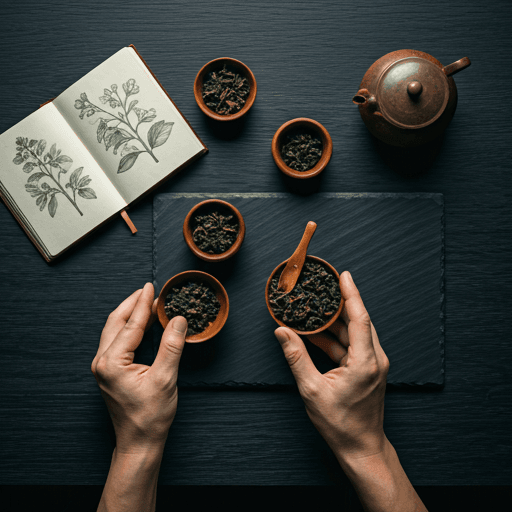
If you have ever wondered how matcha vs white tea really stacks up, the short version is this: both come from the very same plant, Camellia sinensis, yet they sit at opposite ends of how tea is made and served. Matcha is a shade-grown Japanese green tea ground into a fine powder that you whisk and drink whole, while white tea is the least-processed true tea, gently withered, dried, and steeped like ordinary loose leaves. That single split shapes almost everything else about the two cups.
Below we compare them side by side, then point you to deeper standalone guides for each one. If you want the full backstory on either drink, see our explainers on what matcha is and what white tea is.
Matcha vs white tea: the short answer
Put simply, matcha is a whisked whole-leaf green powder and white tea is a barely-processed, gently steeped leaf tea. With matcha, the leaf is stone-ground into powder and suspended in water, so you actually swallow the whole leaf. With white tea, dried buds and leaves are steeped and then discarded, so you drink only what has infused into the water.
That difference in preparation is the reason the two cups feel so unalike. Matcha tends to be vivid green, rich, creamy, and relatively high in caffeine, while white tea is usually pale, delicate, softly sweet, and on the lower side for caffeine. Everything that follows flows from those two facts: how each is processed, and how you actually drink it.
Processing: ground powder vs minimally handled leaf
Matcha starts in the shade. For a few weeks before harvest, the plants are covered to slow growth, which pushes the leaves to produce more chlorophyll and more of the savory compounds tea drinkers prize. The leaves are then steamed to halt oxidation, dried, de-stemmed and de-veined into a flaky form called tencha, and finally stone-ground into an ultra-fine, bright-green powder. It is one of the more involved journeys in the tea world.
White tea takes almost the opposite path. It is generally considered the least processed of the true teas: young buds and leaves are simply withered (allowed to lose moisture) and then dried, often with very little handling in between. There is no shading, no grinding, and typically only light, natural oxidation. Classic examples include silver needle, made mostly from downy buds, and white peony, which mixes buds with young leaves. Because processing methods and grades vary a great deal, these are general tendencies rather than strict rules.
How you drink each cup
This is the heart of the difference between matcha and white tea, and it drives the caffeine and intensity gap too. Matcha is whisked, not steeped. You sift a small amount of powder into hot (not boiling) water and whisk briskly until it froths, so the powdered leaf stays suspended and you consume it entirely. Nothing is strained out and thrown away.
White tea is steeped like most loose-leaf teas. You pour hot water over the leaves, let them infuse for a few minutes, and then separate the liquid from the leaves before drinking. Because you are only drinking what dissolves and infuses into the water, a steeped cup delivers a gentler, more diluted extraction than swallowing whole ground leaf ever could. That single mechanical contrast, whisked whole leaf versus steeped-and-strained, explains much of why matcha lands so much bolder.
Flavor: bold and creamy vs light and delicate
Matcha is known for a bold, creamy, grassy character with a distinct umami, that savory, almost broth-like depth, sometimes edged with a pleasant bitterness. Good ceremonial-style matcha whisked well can taste smooth and full-bodied, which is part of why it works so nicely in lattes and blended drinks.
White tea leans the other way: light, floral, and delicate, with a soft natural sweetness and a clean finish. Silver needle in particular is prized for its subtlety, while white peony can carry a touch more body and fruitiness. As always, flavor depends on the specific leaf, water temperature, and steeping time, so treat these as broad impressions rather than guarantees. If you steep white tea too hot or too long, even a gentle tea can turn astringent.
Caffeine: is matcha stronger than white tea?
For most people asking is matcha stronger than white tea, the answer, in caffeine terms, is usually yes. Because you drink the whole powdered leaf rather than a strained infusion, matcha typically delivers more caffeine per cup, while white tea tends to sit on the lower side. Exact numbers vary widely with the specific tea, the amount of powder or leaf used, water temperature, and steep time, so any figure you see is a rough guide, not a fixed value.
It is worth remembering that caffeine content is not the same as caffeine you extract. Matcha's whisked-whole-leaf method is efficient, whereas a light white-tea steep leaves plenty behind in the discarded leaves. For a closer look at how matcha's caffeine compares within the green-tea family, see our guide on matcha vs green tea. Responses to caffeine vary from person to person, and this is general information, not medical advice, so if you are pregnant, take medication, or are sensitive to caffeine, it is best to ask your healthcare provider about what suits you.
How each fits the wider tea family
Both matcha and white tea are true teas from Camellia sinensis, which is what makes this comparison a family affair rather than a matchup between totally unrelated plants. Matcha belongs firmly to the green-tea category (steamed to prevent oxidation), while white tea is its own lightly oxidized category built around buds and young leaves.
If you want to place each one more precisely, two neighboring comparisons help. Our explainer on white tea vs green tea shows where the barely-processed white style diverges from standard green tea, and the matcha vs green tea comparison linked above shows how whisked powder differs from steeped green leaf. Read together, they map out exactly where matcha and white tea land relative to each other.
Matcha vs white tea at a glance
| Attribute | Matcha | White tea |
|---|---|---|
| Processing | Shade-grown, steamed, dried, stone-ground into fine powder | Least processed true tea: withered and dried, minimal handling |
| Preparation | Whisked into water; you drink the whole powdered leaf | Steeped like loose leaf; leaves are strained out and discarded |
| Flavor | Bold, creamy, grassy, umami-savory (varies by grade) | Light, floral, delicate, softly sweet (varies by leaf) |
| Caffeine | Typically higher, since you consume the leaf itself | Usually on the lower side; figures vary |
Origins add another layer of contrast: matcha is closely tied to Japan, while the classic white teas such as silver needle and white peony trace back to China. Both traditions run deep, and today you can find each style produced in several tea-growing regions.
Which one should you choose?
When people weigh white tea vs matcha, the decision usually comes down to intensity and ritual. Choose matcha when you want an energizing, ceremonial-style green with a rich, creamy body, and when you like the ritual of whisking. It shines on its own, holds up in lattes, and gives you the fullest, most concentrated hit of leaf flavor and caffeine of the two.
Reach for white tea when you want something delicate, gentle, and easygoing, a light everyday cup that rewards a relaxed steep and a calmer flavor profile. It is a lovely choice if you find matcha too intense or you simply prefer a quieter, subtly sweet brew.
There is no need to pick a permanent favorite. Many tea drinkers keep both on hand: matcha for a bright, focused start, white tea for a soft, unwinding cup later on. If you would like to keep exploring how the true teas relate to one another, our wider tea guides break down the rest of the family. Whatever you choose, brew it the way you enjoy it most, taste is personal, and the best cup is the one you actually look forward to.