
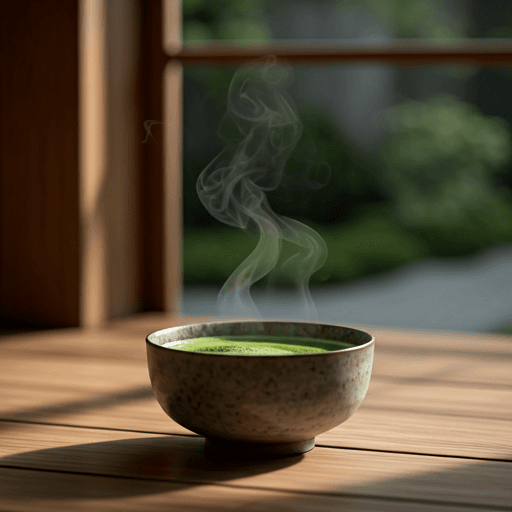
Premium matcha is not a legally defined category. It is shorthand for the smooth, drink-it-straight powder that sits at the top of an informal quality ladder, one that runs from ceremonial or premium grade down to culinary or ingredient grade. Matcha is also sorted by where it grows and how it is grown, not by any regulated stamp. Once you understand that ladder, plus a handful of origins and cultivars, picking the right tin stops being a guessing game.
This guide is the map: the grade ladder at a glance, what the words on the label actually mean, the origins worth recognizing, and how to match a type to the way you drink. For the underlying definition of the drink, see what matcha is; this page stays focused on choosing between types.
The premium matcha quality ladder at a glance
Nearly every tin lands somewhere on a two-rung ladder. At the top is ceremonial or premium matcha: fine, sweet, low in bitterness, and meant to be whisked with just hot water and sipped on its own. Below it is culinary or ingredient matcha: bolder, more astringent, and built to hold its flavor against milk, sugar, and heat in lattes and baking. Plenty of tins sit in a fuzzy middle, sometimes labeled "latte grade" or "everyday," which is fine as long as you know what you are buying it for.
The important thing to internalize is that these grade names were largely coined by importers and sellers, not by a Japanese regulatory body. There is no certification that guarantees a tin marked "ceremonial" outperforms one marked "premium." The words signal an intended use and a rough price tier, and nothing more. For the full breakdown of how each tier tastes and brews, see our ceremonial grade matcha explainer; here we treat the ladder as one axis of choice among several.
What "premium," "organic" and "pure" actually mean on a tin
The most persuasive words on a matcha tin are often the least informative. Treat them as marketing until the label gives you something concrete to verify.
- "Premium" and "ceremonial" are unregulated. They suggest a producer's best tier, but only the details underneath, harvest, origin, and cultivar, tell you whether that is true.
- Organic matcha means the leaf was grown to a certified organic standard (in Japan, the JAS seal). That is a real farming distinction and worth having if it matters to you, but organic certification speaks to how the plant was grown, not to how sweet, smooth, or vividly green the finished powder is. Excellent non-organic matcha and mediocre organic matcha both exist.
- Pure matcha should mean one thing: nothing but stone-ground green tea in the tin, with no sugar, no milk powder, and no added flavor. It is a useful word to look for when you want to avoid pre-sweetened blends, but "pure" says nothing about quality tier on its own.
Instead of trusting the adjective, look for the specifics that genuinely track quality: a single origin rather than an unnamed blend; a first-harvest (ichibancha, the spring flush) rather than a later, more astringent one; stone-ground on granite mills rather than industrially milled; and a vivid jade-green color rather than a dull olive or yellowish tone. Judging that green by eye is a skill in itself, and we cover it in the matcha color guide.
Origins and types of matcha worth knowing
Beyond grade, matcha is defined by terroir and by the tea plant it comes from. You do not need to memorize a catalog, but recognizing a few names on a label tells you far more than "premium" ever will.
Regions to recognize
- Uji (Kyoto) is the historic heartland of Japanese matcha and the reference point for the classic style: sweet, umami-rich, elegant. Uji matcha carries a prestige premium, so confirm the tin is genuinely from the region rather than merely "Uji style."
- Nishio (Aichi) is one of Japan's largest matcha-producing areas, turning out both fine drinking grades and a great deal of reliable culinary matcha.
- Kagoshima, in the warm south, harvests earlier and at scale, and is known for bright, vivid-green matcha thanks to popular cultivars grown there.
- Shizuoka is Japan's largest tea prefecture overall and produces matcha alongside its huge output of other green teas.
Single-cultivar vs blends
Matcha comes from specific tea cultivars, and this is where the flavor personality really lives. Yabukita is the workhorse cultivar behind a great deal of everyday Japanese tea, matcha included. Samidori, associated with Kyoto, is prized for a smooth, sweet, traditional umami. Okumidori (a later-registered cultivar) is valued for a vivid color and rich body, while Saemidori is loved for its bright green and clean sweetness.
A single-cultivar matcha showcases one of these personalities in a purer, sometimes more distinctive form, and is what many enthusiasts chase. A blend mixes cultivars (and sometimes harvests) to hit a consistent house flavor year after year, which is exactly what a cafe or a first-time buyer often wants. Neither is inherently better; single-cultivar rewards curiosity, while a good blend rewards reliability.
How to match a matcha type to how you drink it
The single most useful move is to buy for the cup you actually make, not for the highest tier you can afford. Shopping for premium matcha makes the most sense when you plan to drink it straight, which is where fine grade truly pays off; burying it in a sweet latte or an oven is where that quality is largely wasted.
- Drinking it straight (usucha or koicha): reach for ceremonial or premium, single origin, first-harvest, ideally a cultivar or region you enjoy. Here smoothness and low bitterness are everything.
- Milk drinks you still want to taste good: a solid "everyday" or latte grade is the sweet spot. It survives milk without the sharpness of true cooking grade, but you are not paying top-tier prices just to mask it under foam.
- Baking, smoothies, and ice cream: culinary or ingredient matcha is the right, and more sensible, tool. Its bolder, more astringent character is a feature when it has to compete with sugar and butter.
| Type / grade | Best use | What to look for |
|---|---|---|
| Ceremonial / premium | Whisked straight with water and sipped on its own | Single origin, first-harvest (ichibancha), stone-ground, vivid jade color, silky fine texture |
| Everyday / latte grade | Milk drinks where flavor still matters | Clearly labeled spring harvest, bright green, sold "for lattes" (not "for cooking") |
| Culinary / ingredient | Baking, smoothies, ice cream, cooking | Bolder, more astringent, larger tins, a shade duller in color, better value |
One practical tip: store any grade the same way, sealed, cool, and away from light, because matcha's color and aroma fade fast once opened. And when you are ready to actually shop, our guide to buying matcha powder walks through reading a label end to end.
The takeaway on choosing premium matcha
Premium is a promise, not a proof. The tins worth your money are the ones that back up the adjective with specifics: a named origin, a first-harvest spring flush, stone milling, a genuinely vivid green, and a grade that matches how you drink. Learn to read those signals and you can buy confidently across the whole ladder, springing for a fine single-cultivar to whisk on a slow morning, and keeping honest culinary matcha on hand for everything you bake. That is the real skill, and it outlasts any label.