
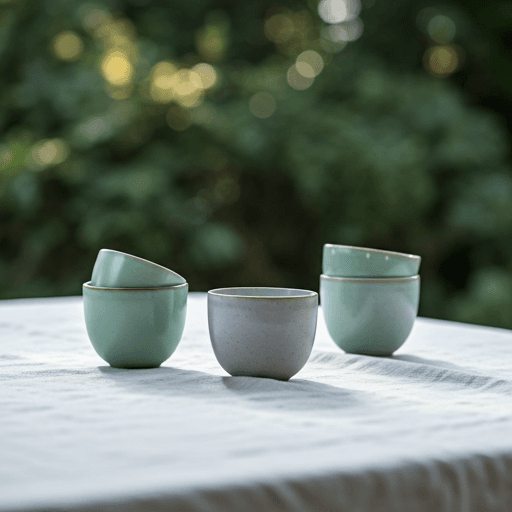
Ceremonial grade matcha is the highest, smoothest tier of matcha — the kind made from young, shade-grown, first-harvest leaves and stone-ground into a fine powder meant to be whisked with hot water and drunk on its own. The catch worth knowing up front: "ceremonial grade" is a marketing term, not a regulated standard. No authority in Japan or anywhere else defines it. So the words on the tin matter far less than what is inside.
This guide explains what ceremonial matcha is really claiming, how ceremonial vs culinary matcha actually differ, why the matcha grades you see exist at all, and how to judge quality with your own eyes, nose and palate rather than trusting the label.
What "ceremonial grade matcha" actually means
The phrase points to matcha good enough to drink straight — whisked with just hot water (a preparation called usucha or thin tea), with no milk or sugar to hide behind. It should taste smooth, sweet and savory rather than harsh. That is the real definition: matcha refined enough to stand alone.
What it does not mean is anything legally fixed. There is no central body in Japan or abroad that certifies a grading scale for matcha. The Japanese Agricultural Standard (JAS) certifies organic farming methods, but it says nothing about "ceremonial" quality. The three-bucket system most of the world now uses — ceremonial, premium, culinary — was popularized by Western importers in the early 2000s to make a complex spectrum easy to shop. It is a useful shorthand, but any producer can print "ceremonial grade" on a bag regardless of what is inside.
So treat the label as a starting hint, not a guarantee. The signals below are what genuinely separate the tiers.
How ceremonial matcha is made differently
The quality of any matcha is mostly decided long before it is packaged. A few production choices do the heavy lifting.
Shade-growing
True teas all come from the same plant, Camellia sinensis. For matcha, the bushes are covered for weeks before harvest to block sunlight. Starved of light, the plant slows photosynthesis and floods its leaves with chlorophyll (the source of that electric green) and amino acids such as L-theanine, which give matcha its smooth, savory umami and its calm-but-alert character. Longer shading generally means sweeter, greener, smoother tea. Ceremonial-style leaves are typically shaded for roughly three to four weeks. Culinary-style leaves often get far less — sometimes only a week or two — which is why they taste sharper.
Harvest timing
Ceremonial matcha leans on the first harvest of the year, known as ichibancha, picked in spring. These are the youngest, tenderest leaves and buds, carrying the most L-theanine. Later harvests produce coarser, more astringent leaves better suited to cooking. If you have read our guide to the tea plant, this is the same idea that separates a delicate first-flush tea from a robust later picking.
Stone-grinding
The finest matcha is milled on a granite stone wheel (an ishi-usu) turning slowly — only about 30 grams an hour. That glacial pace keeps the powder cool and produces a texture as fine as face powder. Mass-market culinary grade often skips the stone for faster machine milling, which can leave the powder slightly grittier. Fine texture is part of why ceremonial matcha whisks into a smooth, lump-free suspension.
Ceremonial vs culinary matcha: the differences that matter
The clearest way to understand the spectrum is to compare the two ends side by side. (Many brands also sell a middle "premium" or "latte" grade — first-harvest enough to drink, but priced for everyday use in milk.)
| Feature | Ceremonial grade | Culinary grade |
|---|---|---|
| Leaves | Youngest, first harvest (ichibancha) | Later harvests, coarser leaves |
| Shading | Roughly 3-4 weeks | Often only 1-2 weeks |
| Color | Vivid, bright jade or emerald green | Olive, khaki or yellow-green |
| Texture | Silky, fine as face powder | Often slightly coarser |
| Taste | Smooth, sweet, umami, little bitterness | Bold, grassy, more astringent |
| Best for | Drinking straight with hot water | Lattes, baking, smoothies, cooking |
| Relative cost | Higher (slow stone-milling, prime leaves) | Lower, more everyday |
The headline is simple: ceremonial grade is built to be tasted, culinary grade is built to be blended. Neither is "better" in the abstract — they are tools for different jobs. Whisking expensive ceremonial matcha into a milky, syrupy drink largely wastes its delicacy, while trying to sip bitter culinary grade straight is an unpleasant experience.
When to use which grade
Match the matcha to the drink:
- Drinking it plain (usucha): Use ceremonial grade. Its job is to taste good with nothing added, and harshness has nowhere to hide.
- Matcha lattes: A premium or good culinary grade is usually the smart pick. Milk and a touch of sweetness round off any astringency, and you avoid burying a delicate ceremonial tea. See how to make a matcha latte for the method.
- Baking, smoothies and cooking: Culinary grade. It is more affordable, and a bolder, greener flavor survives competing ingredients like sugar, flour and fruit better than a subtle one would.
If you only buy one tin and mostly make lattes, you do not need top ceremonial grade. If you want to learn to appreciate matcha as a tea, ceremonial grade is where to start.
How to spot genuine quality
Because the label is unregulated, your senses are the real test. A few reliable signals:
- Color. The strongest tell. Quality ceremonial matcha is a vivid, almost electric jade green. Dull, yellowish, brownish or olive tones suggest later leaves, oxidation or lower quality — no matter what the bag says.
- Texture. Rub a pinch between your fingers. It should feel as fine and smooth as face powder, not gritty.
- Aroma. Fresh, vegetal, a little sweet or marine — like cut grass or sea air. Never fishy, stale, musty or hay-like.
- Taste. Whisked with water that is hot but not boiling (around 70-80 C / 160-175 F), good ceremonial matcha leads with umami and a lingering sweetness, with little to no bitterness. Sharp astringency points to a lower grade.
- Foam. Properly whisked, fine matcha builds a thick, creamy froth that lingers for a while rather than collapsing instantly.
- Origin and date. Better producers name a region (such as Uji or Nishio in Japan) and often a harvest date. Matcha is perishable and fades fast once opened, so freshness counts.
On price: ceremonial grade costs more for real reasons — prime first-harvest leaves and painfully slow stone-milling. Exact figures vary widely by country, brand and the recent surge in global matcha demand, so there is no single "right" price. As a rough guide, a tin priced like a commodity is almost certainly culinary or industrial grade dressed up. Pay for color, texture, aroma and a named source rather than for the word "ceremonial" alone.
A note on caffeine and health
Because matcha is whole, shade-grown leaf rather than an infusion you discard, a serving can deliver a meaningful dose of caffeine alongside L-theanine — the combination many drinkers describe as a steadier, calmer lift than coffee. The exact amount varies by grade, dose and how you prepare it. If you are sensitive to caffeine, pregnant, or managing sleep or anxiety, treat matcha as you would any caffeinated drink and keep an eye on your overall intake. For how caffeine actually works and sensible limits, see our caffeine explainer.
The bottom line
Ceremonial grade matcha describes the drink-it-straight tier — young first-harvest, well-shaded, stone-ground leaf that tastes smooth and sweet on its own. Just remember the term is unregulated, so judge by the bright green color, fine texture, fresh aroma and umami flavor rather than the label. Save it for tea you actually sip, and reach for culinary grade when matcha is an ingredient.
To go deeper, start with what matcha is for the full background, then read up on buying matcha powder and how matcha differs from regular green tea. Keep exploring our tea hub from there.