
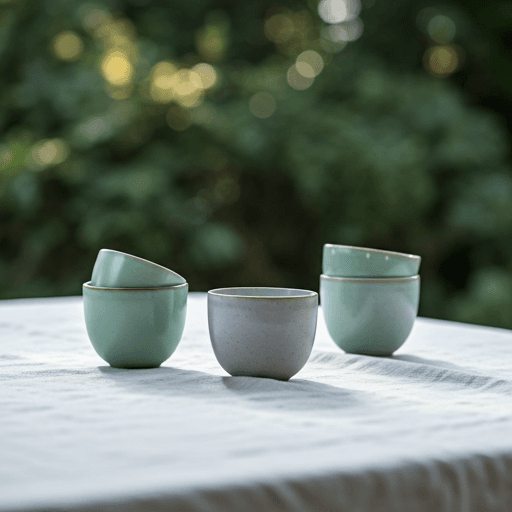
Matcha color is one of the fastest quality clues you have: a vivid, jade or emerald green usually signals fresh, shade-grown, higher-grade matcha, while a dull, yellowish or brownish green points to a lower grade, more stem and mature leaf, or a powder that has simply gone stale. You can read a lot from the shade in the tin before you ever whisk a bowl. This guide explains what the green — and the not-so-green — is really telling you.
If you want the fuller picture of what matcha actually is and how it is made, our guide to what matcha is covers the ground-leaf basics. Here we stay tightly focused on one thing: what the color reveals.
Why matcha is green in the first place
The matcha green color comes from chlorophyll, the pigment that plants use to turn sunlight into energy. What makes matcha unusual is how growers deliberately push that pigment higher. In the weeks before harvest — roughly three to four, depending on the farm — the tea bushes are covered with reed screens or cloth to block most of the sunlight, often up to about 90 percent of it. Starved of light, the plant responds by producing extra chlorophyll to capture whatever it can, and it also builds up more of the amino acid L-theanine that gives good matcha its sweet, savory depth.
That shading is the single biggest reason a bowl of matcha is so much more intensely green than a cup of ordinary steeped green tea. It also explains why the deepest, most saturated greens tend to come from young, first-harvest leaves picked in spring, when shading and leaf tenderness peak. The same process that concentrates the color also concentrates the plant compounds people prize — we cover that side of the story in our look at matcha and antioxidants.
It also helps to know what a good matcha is not. Regular loose-leaf green tea is grown in full sun and brews to a pale yellow-green liquor; that lighter tone is perfectly normal for a steeped leaf but would be a warning sign in a matcha powder, where you are drinking the whole ground leaf rather than an infusion. When you judge matcha color, you are judging the powder itself, not a brewed cup — which is exactly why the shade in the tin carries so much information.
How to read matcha color
Once you know the green comes from chlorophyll, the color becomes a rough legend for quality and freshness. As a first pass, think of it on a scale that runs from vivid jade at the top to brown at the bottom.
Bright jade or emerald green
A saturated, almost neon jade green is the classic sign of well-shaded, young, carefully processed leaf with high chlorophyll. This is the look you expect from ceremonial or premium grades meant to be whisked and drunk straight — typically first-harvest leaf picked in late spring. For the full breakdown of what "ceremonial" really means, see our ceremonial-grade matcha explainer — color is only one of the signals that grade is built on.
Olive, khaki or yellow-green
A flatter olive or yellowish green usually means less shading, a later harvest, or more stem and mature leaf in the blend. That is the typical color of culinary-grade matcha, which is not a bad thing at all: it is made for lattes, smoothies and baking, where milk, sugar or heat would flatten the nuance of a top ceremonial powder anyway.
Dull, grey-green or brown
When the green tips toward khaki, grey or genuine brown, the chlorophyll has usually started to break down. That happens with age, exposure to light, heat and oxygen, or scorching during a rushed, hot grind. Brownish matcha tends to taste flat, dusty or hay-like, and no amount of whisking brings the color or the flavor back.
Color-to-meaning cheat sheet
| Color | What it usually means | Typical grade or use |
|---|---|---|
| Vivid jade / emerald green | Fresh, well-shaded, young first-harvest leaf; high chlorophyll | Ceremonial / premium — best whisked straight |
| Bright but slightly softer green | Good quality; perhaps a later spring pick or a blend | Everyday drinking / premium culinary |
| Olive or yellow-green | Less shading, later harvest, more stem and mature leaf | Culinary grade — great for lattes and baking |
| Dull khaki / grey-green | Aging, oxidation, or heat damage in grinding or storage | Lower grade or past its best |
| Brown / brownish-green | Oxidised, stale, old, or scorched | Past its prime — flat, hay-like taste |
Other things that change the color
Color is a strong clue, but a few factors can shift it in ways that have nothing to do with grade, so it helps to read them together.
- Grind fineness. Matcha is stone-ground to an extremely fine powder — often finer than flour. A finer, more even grind scatters light differently and can look smoother and brighter, while a coarse, gritty powder can appear duller even when the leaf itself is good.
- Freshness and harvest year. Matcha is at its most vivid soon after grinding. Even a well-made powder slowly fades over months, so a paler tin is not always low grade — it may just be last season's.
- Storage. Light, heat, air and moisture all degrade chlorophyll. Matcha keeps its green best in an opaque, airtight tin, away from the stove and out of the fridge door (condensation is the enemy). Some premium powders ship nitrogen-flushed for exactly this reason.
- Dry versus whisked. The dry powder always looks deeper than the prepared drink. Whisked into hot water it lightens; whisked into milk for a latte it turns a soft sage — that dilution is normal and says nothing about quality.
"Blue matcha" and other trendy colors
Cafe menus now list matcha in shades that never came from a tea bush, and it is worth knowing which are real. So-called blue matcha is not matcha at all — it is powdered butterfly-pea flower, caffeine-free and earthy, prized purely for its striking blue. Pink, purple or fruit "matcha" drinks are almost always a green matcha base tinted and flavored with strawberry, beetroot, ube or similar, or a marketing name pinned to something with no true matcha in it.
None of that is a scandal — it is just flavor and color play. The one thing to keep straight is that true matcha, by definition, is green, because it is whole green-tea leaf. If a "matcha" is naturally blue or pink with no added coloring, it is another plant wearing the name.
Using color as a buying clue — with one caveat
For most people, color is the single most useful thing you can judge through a jar or a photo: reach for the vivid, living green and be wary of anything gray, yellowed or brown. But treat it as a first filter, not a verdict. A gorgeous green can still taste thin if the leaf was ordinary, and a slightly softer green from a trusted maker can drink beautifully. Very rarely, a suspiciously uniform, poster-paint green can even hint at additives, so pair the color test with aroma (fresh, grassy, sweet), texture (fine, not sandy) and a maker you trust. Color tells you where to start looking, not where to stop.
A simple habit sharpens the eye fast: whenever you open a new tin, tip a little onto a white plate or a sheet of paper in daylight and note the tone before you whisk. Daylight is honest in a way that warm kitchen bulbs are not, and a plain white background stops nearby colors from fooling you. Over a few tins you build a personal reference for what fresh, shaded jade looks like — and a yellowed or dull sample then jumps out immediately.
Learn to read the green and you will rarely be badly surprised by a bowl of matcha. Once you have compared a few tins side by side, the difference between a fresh, shaded jade and a tired, yellowed powder becomes obvious in a glance — and that quick visual read is one of the most reliable, no-tasting-required checks in the whole world of tea.