
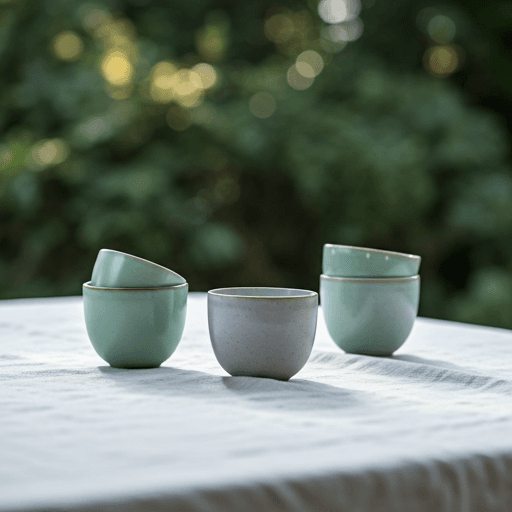
A matcha bar is a cafe built around matcha the way a coffee bar is built around espresso: instead of pulling shots, the counter whisks bright-green, ceremonial-grade matcha to order and turns it into hot and iced lattes, straight tea, soft serve and more. Once a quiet fixture of tea shops in Japan, the matcha bar has become a global format, from Tokyo and Kyoto to New York, London and Melbourne, drawing lines of people for that jade-green cup.
If you want the fundamentals of the powder itself, our guide to what matcha is covers grades, shade-growing and stone-milling. This piece is about the places: what a matcha bar actually is, the menu you will meet, why the format exploded, and the small ceremony that happens every time your drink is made.
What is a matcha bar?
A matcha bar is a cafe whose entire identity is organized around matcha rather than around coffee. The best way to picture it is by analogy: a good espresso bar treats espresso as a base and builds a menu outward (cappuccino, flat white, americano, affogato); a matcha bar treats whisked matcha the same way. Usucha, the thin whisked tea, is the "shot" that everything else is built from.
That reframing changes the whole counter. Where a coffee bar has a grinder and an espresso machine, a matcha bar has tins of stone-milled green powder, sifters, measuring scoops (a chashaku), bamboo whisks (chasen), bowls and, increasingly, electric whisks or frothers to keep up with demand. Milk, ice, syrups and fruit sit alongside, because most of what sells is a matcha drink, not a bowl of straight tea.
How it differs from a regular cafe
A regular cafe pours matcha as one line on a coffee-first menu, often from a pre-mixed sweetened powder. A dedicated matcha bar flips that hierarchy. You are far more likely to be asked which grade or origin you want, whether you would like it as usucha or a latte, and how sweet, in the same way a specialty coffee bar asks about the origin and roast. Coffee, if it appears at all, is the supporting act. The result reads less like a coffee shop with a green option and more like a tea room reimagined for a fast, to-go, photogenic era.
The menu you will see at a matcha bar
Menus vary by city and season, but a few items show up almost everywhere. The hot and iced latte remains the anchor; if you want to make that version yourself, see our matcha latte guide. Beyond it, the format has grown its own little universe of drinks and desserts.
| Menu item | What it is |
|---|---|
| Hot matcha latte | Whisked matcha (usucha) combined with steamed milk; the everyday order, sometimes lightly sweetened. |
| Iced matcha latte | The same matcha base poured over cold milk and ice; the most-photographed drink in the room, with its green-over-white layers. |
| Usucha (straight matcha) | Thin matcha whisked with just hot water, no milk. The purest tasting, closest to the traditional bowl. |
| Matcha soft serve or gelato | Matcha folded into frozen dairy; grassy and slightly bitter against the sweet cream, often dusted with extra powder. |
| Matcha "affogato" | A scoop of matcha soft serve or vanilla ice cream with a shot of hot matcha poured over it to melt and marble. |
| Fruit & flavoured matcha | Matcha lemonade, strawberry matcha, yuzu or peach matcha; fruit and citrus play off matcha's vegetal edge. |
| Matcha desserts | Cookies, cakes, croissants, tiramisu, mochi and cheesecake, using culinary-grade powder in the bake. |
Two things to notice. First, the straight usucha is usually the simplest thing on the board, yet it is where a good matcha bar shows its hand, because there is nowhere for a dull, stale or over-bitter powder to hide. Second, the flavoured and fruit drinks are where seasonal "drops" happen, the limited-run specials that give regulars a reason to keep coming back.
Why matcha bars boomed
The rise of the matcha bar is really three stories braided together.
The wellness halo
Matcha arrived with a ready-made health narrative: because you drink the whole whisked leaf, a cup may deliver more of the antioxidants and the amino acid L-theanine than a cup of steeped green tea. Paired with caffeine that is generally gentler than a strong coffee, that produced the now-familiar "calm energy" or "no-jitters" story. It is worth keeping perspective here, much of the research is early or limited, but as a reason to try the drink it has been enormously effective, especially with younger, wellness-minded customers.
The colour and the camera
No trend of the last decade has been more photogenic. Matcha's vivid jade green, layered over pale milk in a clear glass, is almost engineered for a phone camera, and social feeds rewarded it. Hashtags racked up huge view counts, the "matcha bae" and #MatchaTok aesthetic turned a cup into an accessory, and a striking green drink held next to a good backdrop became a small piece of self-expression. For a generation drifting away from plain black coffee, the matcha bar offered something creative, colourful and share-worthy.
The espresso-bar playbook, applied to tea
Finally, the format simply works commercially. Matcha behaves like espresso: a concentrated base that customizes endlessly into lattes, iced drinks, tonics and desserts, which lets a small counter run a big, seasonal menu. That flexibility, plus rising travel to Japan and a wave of specialty importers, let matcha bars spread through the same worldwide cafe scene we cover in coffee culture around the world. It has grown fast enough to strain supply, with premium ceremonial matcha from prized farms periodically running short.
The ritual and theatre of whisking to order
The signature of a real matcha bar is that your drink is whisked in front of you, and that small ceremony is a large part of the appeal. The barista sifts the powder to break up clumps, scoops a measured dose into a bowl, adds water at a cooler temperature than coffee (roughly 70 to 80 degrees Celsius, about 158 to 176 Fahrenheit, so the tea does not scorch), then whisks briskly in a W or M motion with the bamboo chasen until a fine, jade-green foam rises.
Compared with the push-button hiss of an espresso machine, it is slow, tactile and quiet, more like a mini performance than a transaction. That visible craft does two useful things at once: it reassures you the matcha is fresh and made properly, and it gives the moment the deliberate, unhurried feeling that drew many people to matcha in the first place. Some bars lean into the theatre with open counters, hand-thrown bowls and a single origin chalked on the board; others speed things up with electric whisks to survive a morning rush. Either way, the whisk is the logo.
A trend, or a fixture?
Whether today's frenzy cools or not, the matcha cafe has already earned a place at the table. What began as a corner of the Japanese tea tradition has been reworked into a fast, global, endlessly photographed format, and the best matcha bars now do for whisked green tea roughly what a great espresso bar does for coffee: turn a simple base into a daily ritual worth queuing for. If the boom is teaching drinkers to notice grade, origin and freshness in their cup, then even after the hashtags move on, that greener, more curious way of drinking is likely to stay.