
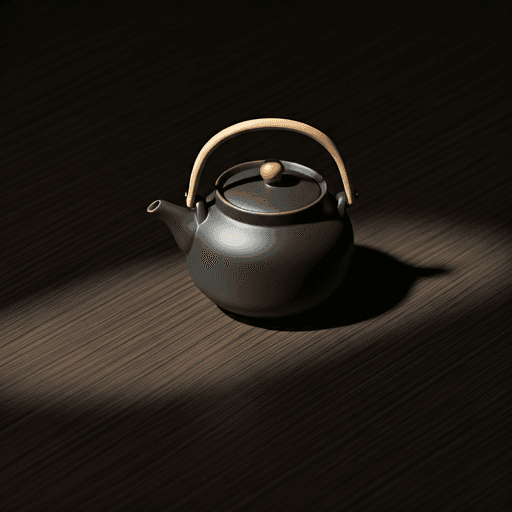
Lapsang souchong tea is a distinctive Chinese black tea from the Wuyi Mountains of Fujian province, traditionally dried and smoked over smouldering pinewood fires. That process gives it a bold, campfire-like aroma and a smoky, resinous flavour unlike almost any other tea in the world. If you have ever caught a whiff of woodsmoke and thought of a cup of tea, lapsang souchong is very likely the reason.
It is one of the oldest fully oxidised black teas on record, and for many drinkers it is love at first sip or a firm "not for me" — there is rarely much middle ground. Below we walk through where it comes from, how the smoke gets in, what it actually tastes like and how to brew it well. For the wider family it belongs to, see our guides to what black tea is and Chinese tea.
What is lapsang souchong tea?
Lapsang souchong is a black (fully oxidised) tea made from the leaves of Camellia sinensis, the same plant behind green, oolong and white teas. What sets it apart is not the leaf but the finishing: the tea is dried over pinewood smoke, which perfumes it with that signature campfire character.
Its home is the Wuyi Mountains (Wuyishan) in northern Fujian, a rugged, misty region long famous for prized teas. The most authentic style comes from the Tongmu area within the Wuyi range. The traditional name for the classic tea is Zheng Shan Xiao Zhong (正山小種), often translated as "proper mountain small varietal" or "original mountain small-leaf." That "small varietal" is where the word souchong comes from — it refers to the larger, lower leaves on the tea bush rather than the tender top buds. The "lapsang" part is usually traced to a Fuzhou-dialect reading in which the syllables point to "pine" and "wood," which is fitting given how it is made.
Lapsang souchong also holds a notable place in history: it was among the very first Chinese black teas to reach Europe, arriving in England and the Netherlands centuries ago. Its robust flavour and durability made it hardy cargo for long sea voyages, and it helped shape the Western taste for strong black tea. There is a popular origin legend — that passing soldiers once forced tea makers to rush-dry a batch over pine fires — but like many tea stories it is more folklore than documented fact, so treat it as a charming tale rather than gospel.
How the pinewood smoking creates the flavour
The smoke is the whole point. After the leaves are withered, rolled and oxidised like other black teas, traditional lapsang souchong is dried in a special smoke-house — often a multi-storey building with slotted floors — where smouldering pine, commonly local Masson pine, sends resinous smoke up through the tea. The leaves absorb those aromatic compounds, locking in the woody, tarry, slightly sweet notes that define the style. Different makers use different woods, smoke intensities and durations, so no two lapsangs smell exactly alike.
It helps to know that "souchong" and "smoked" are not automatically the same thing. Unsmoked versions of Zheng Shan Xiao Zhong absolutely exist and are prized in China, where the smoke-free style is often considered the more refined, higher-grade expression — think honey, longan fruit and cocoa rather than bonfire. Some of the most celebrated Wuyi black teas, such as the delicate Jin Jun Mei, come from the same area and tradition without the heavy smoking.
On the other end, plenty of the boldly smoky lapsang sold internationally is made specifically for export tastes and can be smoked quite aggressively. In recent years many producers have also leaned toward lighter, more restrained smoking so the underlying tea shows through — a gentler introduction if a full campfire feels like too much. If you are new to it, it is worth trying leaf from more than one source, because the range from "faint whisper of smoke" to "smoked over a bonfire" is enormous.
What does lapsang souchong taste like?
Expect smoke first and foremost — woodsmoke, pine resin and something close to smoked paprika or a peaty single malt. Underneath that, a good lapsang tea reveals a natural sweetness and notes people describe as dried longan or other dark dried fruit, toasted grain, cocoa and sometimes a faintly savoury, almost meaty edge. The body is typically full and warming, and unlike many black teas it can be surprisingly smooth rather than tannic when brewed with care.
Because it is so assertive, a little goes a long way. Many enthusiasts treat lapsang as the "whisky" of the tea world — a sipping tea to slow down with rather than a mug to gulp. It also earns its keep at the table. The savoury smoke pairs beautifully with strong cheeses, smoked or cured meats, dark chocolate and rich, umami-heavy food, and cooks sometimes use a spoonful of the dry leaf as a smoky seasoning in marinades, broths and even baking. If you enjoy it, exploring other bold leaves through our overview of the main types of tea is a natural next step.
How to brew lapsang souchong well
Lapsang souchong is forgiving in some ways and unforgiving in others: it wants hot water but a fairly short steep, or the smoke can turn ashy and the tannins harsh. As a general starting point, use roughly one teaspoon of loose leaf per cup (about 6 ounces / 175 ml of water), pour water at or near a rolling boil, and steep for around three to four minutes, tasting as you go. Because it is a true black tea it stands up to near-boiling temperatures well.
A few pointers that make a real difference:
- Give the leaves room. A teapot, basket infuser or generous strainer lets the leaf expand and brew evenly. Our guide to brewing loose-leaf tea covers the basics if you are new to whole-leaf tea.
- Don't oversteep. Smoky teas tip into bitterness faster than you expect. If in doubt, pull the leaves a touch early and steep a second time — quality lapsang often gives several good infusions.
- Usually skip the milk. Most drinkers take lapsang plain to appreciate the smoke, though a splash of milk can tame a very heavily smoked cup (some people enjoy it that way with hearty breakfasts). A little honey can also round off the edges.
- Start weaker than you think. If your first cup feels overpowering, use less leaf or a shorter steep next time rather than writing the tea off entirely.
Lapsang souchong at a glance
| Aspect | Detail |
|---|---|
| Tea type | Fully oxidised black tea (Camellia sinensis) |
| Origin | Wuyi Mountains, Fujian, China |
| Traditional name | Zheng Shan Xiao Zhong ("proper mountain small varietal") |
| Signature step | Dried and smoked over pinewood fires |
| Flavour | Woodsmoke, pine resin, dried fruit, cocoa, a savoury edge |
| Caffeine | Contains caffeine — roughly a typical black-tea level; varies by leaf and steep |
| Water | At or near boiling (about 95-100°C) |
| Steep time | About 3-4 minutes; avoid oversteeping |
| Milk? | Usually served plain; milk optional on heavily smoked styles |
| Best with | Strong cheese, smoked meats, dark chocolate, rich savoury food |
Is lapsang souchong caffeinated?
Yes. Lapsang is a genuine black tea, not a herbal infusion, so it naturally contains caffeine. The exact amount in any cup varies quite a bit with the leaf, how much you use and how long you steep, but it broadly sits in the same range as other black teas — meaningfully less than a cup of brewed coffee, and enough to give a gentle lift. If you are sensitive to caffeine, keep an eye on steep time and quantity, and be aware that "decaf" lapsang is uncommon, so a caffeine-free herbal blend is a better choice late in the evening.
The bottom line
Lapsang souchong is one of tea's great originals: a Wuyi Mountain black tea that carries centuries of history and a scent that transports you straight to a wood fire. It rewards a little curiosity — try both a boldly smoked export style and a gentler or unsmoked Zheng Shan Xiao Zhong, brew it hot but not too long, and pair it with something rich. Whether it becomes a regular in your cupboard or an occasional treat, it is a tea worth meeting at least once. From here you might branch out into the broader world of Chinese tea and the other black-tea styles that share its roots.