
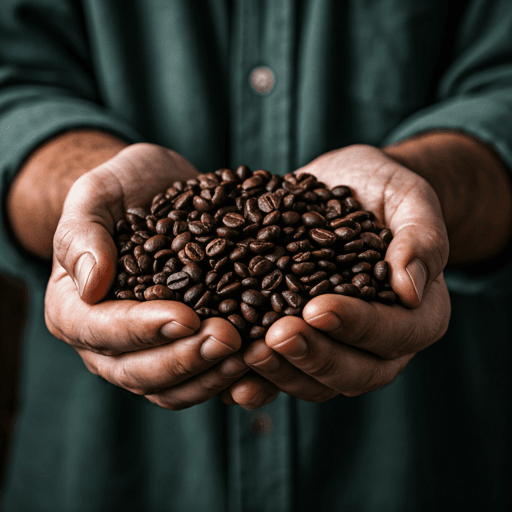
The kp423 coffee variety is a tall, high-yielding arabica selection taken from the Kent line, recorded as released in Tanzania in the 1940s and planted for decades afterward across East African arabica zones as a rust-tolerant workhorse. Its tolerance was never immunity, and — as with Kent itself — it has been steadily eroded as new races of coffee leaf rust spread. That erosion is the real story.
KP423 is not a fashionable variety. It has no competition pedigree, no cult following, and no marketing story. What it has is a long service record on working plantations and smallholder plots, and a lineage that illustrates one of the most important recurring patterns in coffee breeding: select a plant for its resistance to a disease, plant it everywhere, and wait for the pathogen to catch up.
What the KP423 coffee variety is — and what KP 423 is not
KP 423 is a single selection made out of the Kent population, not a new cross bred from scratch. Kent was itself an early-twentieth-century estate selection from the Mysore hills, propagated because it held up against leaf rust in plantings where neighboring arabica was being flattened by it. That history belongs to Kent's own guide, linked further down, and is not repeated here.
Kent material reached East Africa in the first half of the twentieth century, where breeders worked through the population looking for individual trees worth propagating. World Coffee Research's variety catalog records KP423 as a selection of Kent developed at the Lyamungu Research Station in Tanzania, released there in the 1940s, and subsequently established in Uganda, where it is described as an important variety in the arabica-growing regions. That is the firmest part of the record; almost everything else about the selection is thinner.
Three things KP423 is not, and all three matter:
- It is not currently rust-resistant. The best available profiles describe intermediate, partial or historic tolerance — not resistance. Treat any listing that calls it rust-resistant as shorthand for a claim that expired decades ago.
- It is not K7. K7 is a separate Kenyan estate selection drawn from French Mission (Bourbon) material and released in the 1930s — a different program, a different founding population, and a similar-looking name. Sources confuse the two constantly.
- It is not an S-series variety. S288, S795 and their relatives came out of a different breeding effort with different objectives and, in the case of S795, a deliberate second parent. KP423 shares Kent as a common thread with S795, and little else.
Lineage: what is documented, what is claimed, what conflicts
The public record on KP423 is limited, and honest reporting means separating it into tiers rather than flattening it into a confident paragraph.
Documented. KP423 traces to the Kent population; it was worked up at Lyamungu in Tanzania; it was released in the 1940s; it moved to Uganda and became a mainstay there. The variety catalog describes it as tall in stature with a light bronze leaf tip, average bean size, high yield potential, first production in year three, a medium nutrition requirement, and a medium optimal altitude.
Reasonably inferred. Kent sits inside the narrow founder pool that gave rise to nearly all cultivated arabica outside Ethiopia, and KP423 is catalogued with a likely Bourbon-like genetic background in the Bourbon–Typica group. Kent is described loosely as Typica-related in some accounts and Bourbon-related in others — a reflection of how blurred the early record is rather than a settled fact. If you want the underlying pedigree problem, the Typica variety guide covers how a handful of founder plants seeded the entire commercial arabica family and why later attributions are so often guesswork.
Claimed but not corroborated. A number of secondary sources describe KP423 as a Kent × Ethiopia cross. That conflicts with the primary variety databases, which describe it as a selection from Kent — a materially different thing. A selection is a promising individual pulled out of an existing population; a cross is a deliberate hybridization with a second parent. No primary breeding record naming an Ethiopian parent is publicly accessible, so that claim is not repeated here. If a listing states it as fact, look for the source behind it.
Not documented at all. What the letters "KP" stand for is not clearly recorded in accessible sources. Neither is the selection's ripening period, which the catalog simply lists as unknown. Nobody should be filling those gaps by guessing, and this page does not.
The arms race: why a rust-tolerant selection stops being rust-tolerant
This is the point of the page. Coffee leaf rust is caused by the fungus Hemileia vastatrix, and its relationship with the coffee plant follows a gene-for-gene logic. The plant carries major resistance genes — the literature designates nine of them, SH1 through SH9 — and the pathogen exists as a population of races, each defined by which of those genes it can defeat. Which specific gene or genes underlie Kent-line tolerance is not consistently reported; older accounts describe it as a single dominant factor without settling the question, and that vagueness is itself part of the record. What is not vague is the consequence. When a race carrying the matching virulence arrives, a single-gene defense stops working entirely. There is no partial credit.
The cycle runs the same way nearly every time:
- Rust devastates a producing region. Growers are desperate for anything that survives.
- A single surviving line is identified — Kent, in this case — and propagated hard, because it works.
- That one resistance source is now planted across enormous contiguous areas. Every hectare of it is the same lock.
- The pathogen population, which reproduces at scale and disperses on wind, hands and vehicles, throws up a race that fits the lock. That race meets almost no competition.
- Within a few seasons the resistance is functionally gone, and the variety is left standing on its other merits — yield, vigor, drought tolerance — with no rust protection at all.
KP423 is a clean case study because both ends of the cycle sit in its own file. It came out of the first serious wave of rust-motivated selection, and today the variety catalog rates its leaf rust response as only intermediate, while secondary profiles describe that resistance as diminishing over successive generations of exposure. Nothing about the plant changed. The pathogen did. The mechanics of the disease itself — how it infects, how it spreads, what defoliation does to next season's crop — are covered in the coffee leaf rust guide, and are worth understanding before judging any variety's resistance claim.
The eventual answer to the single-gene problem was not another single gene. It was the Timor Hybrid, a natural arabica–robusta cross found on Timor, which carried a group of resistance factors rather than one, and which sits behind the Catimor and Sarchimor families now planted across the tropics. Stacked resistance is harder for the pathogen to defeat all at once. It is not permanent either — Timor-derived resistance has been overcome in several producing regions — but it has held far longer than any single-source selection ever did. That is the lesson KP423 teaches at the grower's expense.
How KP423 behaves in the field
Set the rust story aside and KP423 is a plainly practical plant, which is why it stayed in the ground long after its headline trait faded.
Stature and management. Tall, in the traditional unimproved architecture — closer to old Bourbon and Typica plantings than to the compact modern cultivars. Recommended planting densities sit around 1,000 to 2,000 plants per hectare under single-stem pruning, which is low-density by contemporary standards and reflects a plant that needs room. Practically, that means fewer trees carrying more wood each, taller ladders or bent-stem management at harvest, and a canopy that takes longer to close over the row.
Yield. Rated high, with first production in year three. Productivity, not the cup, is what kept this selection planted, and it is the trait most consistently reported across sources.
Disease and pest profile. This is where honesty matters most:
- Coffee leaf rust: rated intermediate. Historically better than its neighbors; not something to rely on now.
- Coffee berry disease: highly susceptible. In East African highlands where CBD is endemic, this is a serious and well-documented weakness, and it is the trait that most often decides against the variety on a wet, high site.
- Nematodes: susceptible.
- White stemborer: some tolerance is documented. Published Ugandan work on the African coffee stemborer (Monochamus leuconotus) reported KP423 as less susceptible than the comparison varieties KP162 and SL28, and framed the finding cautiously — the study's own title says the variety may be resistant. No stronger figure should be hung on it than that.
- Drought: tolerant, which matters on medium-altitude sites with unreliable rain.
Altitude and quality ceiling. KP423 is classified as a medium-altitude variety, and — importantly — its quality potential at high altitude is rated low. That is unusual and worth dwelling on. Most arabicas reward being pushed up the hill, where slower cherry maturation builds sugars and acidity. KP423 does not reward it much. It was selected to produce reliably, not to peak, and planting it high mostly buys the disadvantages of altitude without the cup gains.
KP423 at a glance
| Attribute | KP423 | Confidence |
|---|---|---|
| Type | Selection from the Kent population | Documented |
| Genetic background | Likely Bourbon-like; Bourbon–Typica group | Catalogued as likely |
| Named second parent | None supported by primary sources | Claimed elsewhere, unverified |
| Selection site | Lyamungu Research Station, Tanzania | Documented |
| Release | Tanzania, 1940s | Documented |
| Stature | Tall | Documented |
| Leaf tip color | Light bronze | Documented |
| Bean size | Average | Documented |
| Yield potential | High | Documented |
| First production | Year 3 | Documented |
| Optimal altitude | Medium | Documented |
| Quality potential at high altitude | Low | Documented |
| Coffee leaf rust | Intermediate; historic tolerance widely described as eroded | Rating documented, erosion reported |
| Coffee berry disease | Highly susceptible | Documented |
| Nematodes | Susceptible | Documented |
| White stemborer | Some tolerance | Trial evidence, hedged by the authors |
| Drought | Tolerant | Documented |
| Planting density | About 1,000 to 2,000 plants per hectare, single stem | Documented |
| Nutrition requirement | Medium | Documented |
| Ripening period | Not recorded | Unknown |
| Meaning of "KP" | Not clearly recorded | Unknown |
What KP423 tastes like, honestly
Expect a clean, mild, medium-bodied cup with moderate acidity — competent rather than expressive. Lots grown at medium altitude tend toward soft citrus and cocoa with a straightforward sweetness; the aromatic intensity that draws people to Bourbon-line or Ethiopian-landrace lots is generally not there, and the catalog's low rating for quality potential at high altitude reflects exactly that ceiling.
Two caveats keep this fair. First, most KP423 is grown as commodity-grade coffee, harvested and processed under conditions that would flatten any variety, so a good deal of its reputation is a processing artifact rather than a genetic one. Carefully picked, well-fermented, well-dried KP423 from a good Mount Elgon or northern Tanzanian site can be genuinely enjoyable. Second — and this applies to every variety guide you will ever read — a variety name is not a quality grade. It tells you about a plant's potential and its agronomic risks. It tells you nothing about whether the cherry was picked ripe.
Where it is actually planted
The verifiable footprint of KP423 is East African. It is a long-established variety in Tanzania, where it was released, and it is one of the standard older arabicas of the Ugandan arabica zones — most prominently on the slopes of Mount Elgon, where it is commonly listed alongside KP162, SL14, SL28 and Nyasaland material. It also turns up described as a component of washed Ugandan and Tanzanian arabica lots.
The broader Kent line traveled much further, through South and Southeast Asian plantations and into breeding programs on several continents. Claims that KP423 specifically is planted across South Asia should be read carefully: much of what is described that way is Kent itself, or a Kent-derived selection carrying a different code. The distinction matters if you are identifying planting material or tracing a lot back to a farm.
How KP423 compares to its relatives
Against Kent. KP423 is a child of the Kent population, so the two share stature, vigor and the same expired rust credential. Kent is the more historically significant plant — the one that proved a selected arabica could survive an epidemic, and a breeding parent many times over. KP423 is the narrower, later, more regionally specific descendant. Kent's own selection history and its long career as a parent are told in the Kent variety guide; there is no point retelling them here.
Against S795. S795 is the other well-known Kent descendant and the more consequential one commercially. It came from a different breeding effort — a cross of S288 with Kent, where S288 traces back to arabica–liberica hybrid material — and it combined useful rust behavior with high yield and a better cup than most of its contemporaries. S795 is a cross with a deliberate second parent; KP423 is a straight selection. Both belong to the same generation of thinking, but S795 borrowed resistance from outside C. arabica, which is precisely the strategy that later proved more durable. The S795 guide covers it properly.
| Comparison | KP423 | Kent | S795 | K7 |
|---|---|---|---|---|
| How it was made | Selection from Kent | Selection from estate plantings | Cross: S288 × Kent | Selection from French Mission (Bourbon) |
| Where | Lyamungu, Tanzania | Estate selection, Mysore hills | S-series breeding program, Asia | Estate selection, Kenya |
| Rust status today | Rated intermediate; historic tolerance eroded | Overcome | Partial, variable by region | Rated low resistance to susceptible |
| Stature | Tall | Tall | Tall | Tall, spreading habit |
| Cup reputation | Mild, medium ceiling | Mild, clean | Good for a workhorse | Good |
| Chief weakness | Coffee berry disease | Rust breakdown | Rust breakdown in places | Rust susceptibility, though rated CBD-tolerant |
Reading a KP423 lot without being misled
A few practical rules if the name turns up in front of you:
- If a description says "rust-resistant KP423", mentally downgrade it to "was selected for rust tolerance, decades ago", and ask what the actual rust pressure and management on that farm look like now.
- If a description says "KP423 (Kent × Ethiopia)", note that this parentage is asserted in secondary sources and not supported by the primary variety records.
- If a description pairs KP423 with a very high altitude and specialty-tier claims, be skeptical — that combination runs against what the agronomic record says about this plant's quality ceiling.
- KP423 and KP162 are different selections with different pest and disease profiles. So are KP423 and K7. Confirm which code you are actually looking at before drawing conclusions.
- Treat any confident release date, parentage or origin story that goes beyond "a Kent selection released in Tanzania in the 1940s" as unverified until someone shows you the breeding record.
The bottom line
KP423 is a tall, high-yielding, drought-tolerant Kent selection out of Tanzania that did honest work across East African arabica plantations for the better part of a century — and whose defining trait, rust tolerance, was taken away from it by the pathogen it was chosen to resist. It is highly susceptible to coffee berry disease, susceptible to nematodes, and modest in the cup, with a quality ceiling that does not rise much with altitude. Its real value now is as an argument: single-source resistance planted at scale is a loan, not a gift, and the pathogen always comes to collect. Every variety promoted today on the strength of one resistance gene is somewhere on the same clock.