
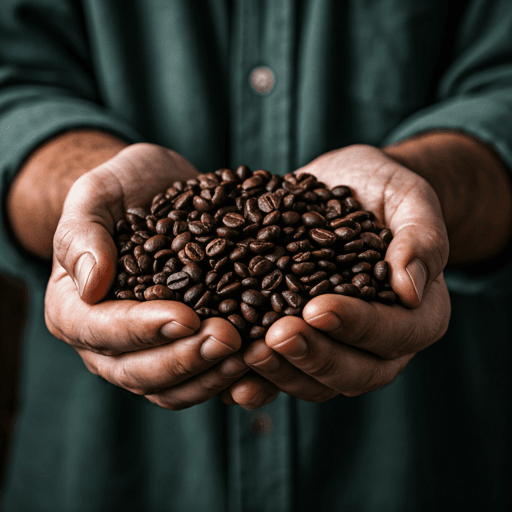
On the southern and eastern flanks of Mount Kenya, where deep red soils meet cool mountain air, sits Kirinyaga — a compact county that punches far above its weight in the world of specialty coffee. The name is no coincidence: Kirinyaga is the Kikuyu name for Mount Kenya itself, a mountain long held sacred as the dwelling place of Ngai and commonly translated as something close to "the mountain of brightness." The county that borrows the mountain's name has, over the past two decades, become one of the origins that specialty roasters chase most eagerly on the Nairobi auction floor.
Coffee here is grown almost entirely by smallholders — families tending a few hundred trees on small plots — who pool their cherry through cooperative societies. What comes out the other end, after some of the most meticulous processing in the coffee world, are cups famous for electric acidity, juicy dark-fruit sweetness and an almost glassy clarity. This guide explains where Kirinyaga sits within Kenyan coffee, why its terroir matters, which varieties grow there, how the cherry is processed, and how the beans are graded and sold.
Where Kirinyaga sits on the slopes of Mount Kenya
Kirinyaga is one of the counties of Kenya's central highlands, wrapped around the southern and south-eastern base of Mount Kenya. Mount Kenya is ringed by several counties — commonly listed as Nyeri, Kirinyaga, Embu, Meru and Tharaka-Nithi — and Kirinyaga shares its western border with Nyeri, its most famous coffee-growing neighbour. The two counties are often spoken of in the same breath by roasters, and their coffees share a family resemblance, but they are distinct origins with their own cooperatives and micro-terroirs.
The Kikuyu people, who make up most of the county's population, traditionally directed their prayers toward the mountain, and the name Kirinyaga reflects that reverence. When nineteenth-century explorers recorded the mountain's name, it was this Kikuyu word — commonly said to have passed through a Kamba rendering — that eventually gave the modern nation of Kenya its name. For coffee, what matters most about that geography is elevation and soil: the higher, cooler slopes of a great equatorial volcano are close to ideal for growing dense, complex Arabica.
Red soils and altitude: the terroir behind Kirinyaga coffee
Two natural advantages explain why Kirinyaga coffee is so celebrated. The first is altitude. Most farms sit roughly between 1,400 and 1,900 metres above sea level, high enough that cool nights slow the ripening of the cherry. Slower ripening lets sugars and acids accumulate in the bean, which is the raw material for the bright, layered cups the region is known for.
The second is soil. The slopes of Mount Kenya are blanketed in deep, weathered volcanic soils — the iron-rich red earth locally associated with the best coffee land. These soils are naturally acidic, free-draining and rich in nutrients, so roots stay healthy and oxygenated even under the region's generous, twice-yearly rains. Add a tropical-highland climate that is warm but never hot, and you have a terroir that consistently produces the concentrated, high-acidity coffee prized in specialty circles. It is the combination — equatorial sun, high elevation and red volcanic soil — rather than any single factor that gives the county its edge.
The staple varieties: SL28, SL34, Ruiru 11 and Batian
Kirinyaga grows the same four varieties that define modern Kenyan coffee, and understanding them is key to understanding the cup.
- SL28 — a selection made at Kenya's Scott Agricultural Laboratories in the 1930s. It is drought-tolerant, deep-rooted and, above all, celebrated for its intense blackcurrant-and-citrus cup. It remains the benchmark for classic Kenyan flavour, though it is susceptible to the main coffee diseases.
- SL34 — another Scott Labs selection, well suited to the higher, wetter parts of the growing zone. It is vigorous and productive, and while its cup is sometimes described as a shade less refined than SL28, top lots are excellent.
- Ruiru 11 — a compact hybrid released by Kenya's Coffee Research Station in 1985, bred for resistance to coffee berry disease and leaf rust so smallholders can spray less. Because it is a hybrid, its cup is more variable, but it lets farmers keep producing where disease pressure is high.
- Batian — a newer, tall, disease-resistant variety released in 2010 and named after the highest peak of Mount Kenya. It was bred to combine the disease resistance of Ruiru 11 with a cup closer to the classic SL profile, and it matures relatively quickly.
In practice most Kirinyaga factories receive a blend of these varieties from their members, and many of the most prized lots lean heavily on SL28 and SL34.
Cooperative factories and the Kenyan double wash
Because the county is a patchwork of small farms, processing is collective. Growers are organised into Farmer Cooperative Societies (FCS), and each society runs one or more wet mills — known in Kenya as "factories." A single society may operate several factories, each drawing cherry from the surrounding hills; the Rungeto society's Kii, Karimikui and Kiangoi factories are among the names that appear regularly on specialty menus. A washing station like these is where a member's daily harvest is weighed, pooled with neighbours' cherry and turned into green coffee.
What sets the region apart is the processing itself. Kenya is famous for a meticulous, water-intensive "double-washed" (or double-fermentation) method that prizes clean fermentation and clarity. In broad strokes it works like this:
- Ripe cherry is pulped soon after delivery to remove the skin and most of the fruit.
- The beans, still coated in sticky mucilage, are dry-fermented in tanks — often overnight, and sometimes in two stages with a wash and re-ferment in between — to break down that mucilage.
- The parchment is then scrubbed clean in channels and frequently soaked under clean water for a further stretch before drying.
- Finally it is dried slowly on raised beds, hand-sorted for defects along the way.
Exact fermentation and soaking times vary by factory and are adjusted for weather, but the goal is always the same: a spotlessly clean, transparent cup in which the fruit character can shine without any muddiness. This discipline is a large part of why the region's coffee tastes the way it does.
The cup: vibrant acidity, juicy fruit and clarity
At its best, the cup profile is unmistakable. Tasters reach for words like blackcurrant, ripe berry, tomato, red grape and citrus, wrapped around a bright, wine-like acidity and a syrupy sweetness. Above all, well-made lots have clarity — flavours arrive distinctly rather than blurred together, a direct dividend of that fastidious washed processing.
It is this combination of vibrant acidity, juicy fruit and transparency that makes Kirinyaga coffee a repeat star at Kenyan auctions, where standout lots command strong premiums. The county's coffees are frequently cited alongside neighbouring Nyeri's as the archetype of what people mean when they praise "a great Kenyan." For roasters building an origin line-up, a top Kirinyaga lot is often the piece chosen to show off the electric, fruit-forward end of the flavour spectrum.
How Kirinyaga coffee is graded: AA, AB and PB
Like all Kenyan coffee, the beans from Kirinyaga are sorted after milling by screen size and density into named grades. The most familiar are:
| Grade | What it means |
|---|---|
| AA | The largest flat beans (roughly screen 17/18 and above); often the most sought-after and highest-priced lots. |
| AB | Slightly smaller flat beans (around screen 15/16); usually the most plentiful grade and frequently outstanding in the cup. |
| PB | Peaberry — the rounded single bean that forms when only one seed develops in a cherry; graded separately. |
Other grades exist too — including E (elephant), C, and the lighter TT and T screenings — but AA, AB and PB are the ones roasters talk about most. It is worth stressing that grade describes bean size, not flavour: an AB or PB from a great factory can easily out-cup an AA from a lesser one. Size correlates loosely with price because the market rewards it, not because a bigger bean automatically tastes better.
These graded lots are then sold, for the most part, through the Nairobi Coffee Exchange auction, where each lot is traceable back to the specific factory and society that produced it. That transparency is central to Kenya's reputation and helps channel premiums toward the growers who earn them — one more reason serious buyers keep a close eye on what Kirinyaga puts on the table each harvest.
Frequently asked questions
Where is Kirinyaga coffee grown?
Kirinyaga coffee is grown in Kirinyaga County on the southern and eastern slopes of Mount Kenya, in the country's central highlands. It neighbours Nyeri County and shares the same high-altitude, red-volcanic-soil terroir that makes the Mount Kenya region one of the world's premier specialty origins.
What does the name Kirinyaga mean?
Kirinyaga is the Kikuyu name for Mount Kenya, the mountain the county sits on. It is commonly translated as something close to "the mountain of brightness," and the peak was traditionally regarded as a sacred dwelling place of God (Ngai). The modern name "Kenya" itself is generally traced back to this word.
Which coffee varieties are grown in Kirinyaga?
The county grows the four Kenyan staples: the classic SL28 and SL34 selections, prized for their bright, fruit-forward cups, plus the disease-resistant Ruiru 11 and the newer Batian. Many of the most celebrated lots lean heavily on SL28 and SL34.
How is Kirinyaga coffee processed?
Almost all of it is washed using Kenya's meticulous double-wash method. Cherry is pulped, dry-fermented (sometimes in two stages), scrubbed clean and often soaked under fresh water before slow drying on raised beds. This emphasis on clean fermentation produces the clarity the region is known for.
What do the grades AA, AB and PB mean?
They are size grades, not flavour ratings. AA is the largest flat bean, AB is slightly smaller and usually the most plentiful, and PB is peaberry — a rounded single bean. A well-made AB or PB can taste every bit as good as an AA, so grade is only a rough guide to quality.