
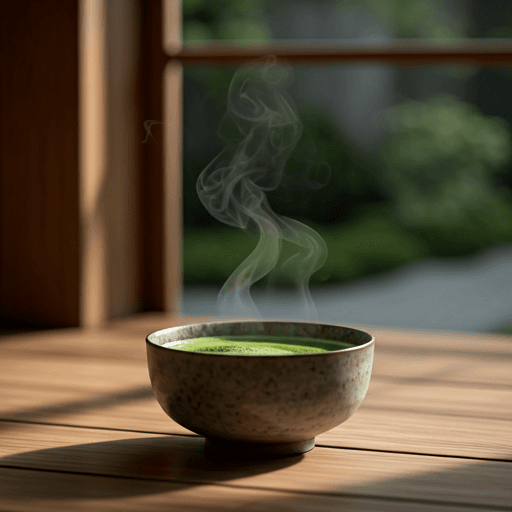
Jin Jun Mei tea — the name translates loosely as "Golden Beautiful Eyebrow" — is a premium Chinese black tea from the Wuyi Mountains of Fujian, made almost entirely from tiny golden tea buds. That bud-only pluck gives a remarkably smooth, honeyed, malty cup with notes of cocoa, dried longan and flowers, and, unlike its famous smoky cousin Lapsang Souchong, no smoke at all. It is one of the youngest teas ever to reach legendary status, invented in the mid-2000s yet already treated as a benchmark for fine Chinese black tea.
What Is Jin Jun Mei Tea?
Jin Jun Mei (金骏眉) is a fully oxidised black tea — what the Chinese call hongcha, or "red tea," for its bright reddish-amber liquor. What sets it apart from almost every other black tea is the raw material: instead of mature leaves, it is made from unopened spring buds that have been carefully rolled into slim, curled, eyebrow-shaped strands flecked with gold. The result is a tea that is delicate and sweet rather than brisk and tannic, closer in refinement to a fine white or green tea while still carrying the depth of full oxidation.
The English rendering "golden eyebrow tea" comes straight from the characters: jin means gold (for the golden bud tips), jun suggests something handsome or spirited, and mei means eyebrow, describing the curved shape of the finished leaf. You will see it sold simply as Jin Jun Mei, as golden eyebrow tea, or as Jin Jun Mei black tea. It belongs to the wider world of Chinese tea, so if you want the broader context of how China's teas are classified, our guide to Chinese tea maps out the six main types, and what is black tea covers oxidation and the black-tea family as a whole.
Origin: A Modern Legend from Tongmu Village
Jin Jun Mei was born in Tongmu (Tong Mu Guan), a small village tucked inside the protected Wuyi Mountains nature reserve in northern Fujian. This is the same valley that gave the world Lapsang Souchong — historically the original smoked black tea — so the region has centuries of black-tea craft behind it. What makes Jin Jun Mei unusual is that it is not an ancient recipe at all: it was created around 2005, when a team of Tongmu tea makers experimented with picking only the tenderest buds and processing them without the traditional pine-smoke step.
That experiment landed at the right moment. As demand for high-grade domestic black tea grew, Jin Jun Mei quickly became a status tea across China and a template that countless producers now imitate. Because genuine Tongmu-grown Jin Jun Mei is made in small quantities from a protected origin, a great deal of what is labelled "Jin Jun Mei" on the wider market is grown elsewhere or blended down — a point worth keeping in mind, though the origin story and the style itself are what define the tea.
Why the "Golden Buds" Matter
The defining feature of Jin Jun Mei is that it is a bud-only tea. Pickers take just the small, unopened terminal buds, gathered in early spring when they are at their most tender and sugar-rich. Buds are far smaller and lighter than leaves, so it takes an enormous number of them to make a finished batch. Published estimates vary widely — you will see everything from tens of thousands of buds per kilogram to well over a hundred thousand, depending on the source, garden and season — but the takeaway is the same: the picking is extraordinarily labour-intensive.
Those golden-tipped buds are what you can literally see in a good Jin Jun Mei: a mix of dark chocolate-brown strands laced with fine gold hairs (the downy tips of the bud). Because the leaf material is so young and delicate, the tea carries natural sweetness and a soft body, and it forgives a wide range of brewing styles — one reason it has become such a crowd-pleaser.
How Jin Jun Mei Tastes
Jin Jun Mei is prized for being smooth, sweet and utterly un-astringent. The dominant notes people describe are honey and malt, wrapped around a cocoa-like richness, with fruity hints of dried longan and apricot and a gentle floral top. The liquor pours a clear reddish-amber, and the finish is long and sweet — the kind of lingering after-taste that keeps you sipping. There is no bitterness to speak of when it is brewed sensibly, and crucially, no smoke.
That last point is the biggest source of confusion, so it deserves its own section.
Jin Jun Mei vs Lapsang Souchong
Jin Jun Mei and Lapsang Souchong come from the same tiny corner of the Wuyi Mountains and share a processing lineage, which is why they are so often mentioned together. But they are very different in the cup. Lapsang Souchong is made from larger, later-picked leaves and, in its classic form, is dried over smouldering pinewood, giving that unmistakable campfire, resinous, whisky-like aroma. Jin Jun Mei uses only buds and skips the smoking entirely, so nothing masks the tea's natural honey-and-malt sweetness. In a sense, Jin Jun Mei is the delicate, floral, unsmoked cousin — a refinement of the same regional tradition rather than a rival. For the smoky side of the family in full, see our Lapsang Souchong guide.
| Feature | Jin Jun Mei | Lapsang Souchong |
|---|---|---|
| Region | Tongmu, Wuyi Mountains | Tongmu, Wuyi Mountains (same area) |
| Leaf grade | Unopened buds only | Larger, later leaves |
| Smoke | None (unsmoked) | Traditionally pine-smoked (unsmoked versions exist) |
| Character | Honey, malt, cocoa, delicate | Smoky and resinous, or malty-sweet if unsmoked |
| History | Modern (created around 2005) | Centuries old — the original black tea |
Jin Jun Mei at a Glance
Here is the tea decoded into a quick reference before you brew.
| Attribute | Detail |
|---|---|
| Also called | Golden eyebrow tea; Jin Jun Mei black tea (金骏眉) |
| Type | Fully oxidised black tea (Chinese hongcha) |
| Origin | Tongmu village, Wuyi Mountains, Fujian, China |
| Created | Mid-2000s — a modern classic, not an ancient tea |
| Leaf | Unopened spring buds only, curled with golden tips |
| Smoke | None (unsmoked) |
| Flavour | Honey, malt, cocoa, longan, floral |
| Liquor | Bright reddish-amber, clear |
| Water temperature | Around 90 to 95 C (about 194 to 203 F) |
| Re-steeps | Yes — several short infusions |
How to Brew Jin Jun Mei
Because the buds are so tender, Jin Jun Mei rewards water that is hot but not at a rolling boil — around 90 to 95 C (roughly 194 to 203 F) is a good target. Water straight off a hard boil can scald the fine buds and pull out a harder edge, so let a fresh boil settle for half a minute or so first. Beyond that, the tea is forgiving and works in two main styles.
Gongfu style (short, repeated steeps)
Use a small gaiwan or teapot with a generous amount of leaf, cover with water at about 90 to 95 C, and steep for just a few seconds on the first infusion, adding a little time with each round. Good Jin Jun Mei re-steeps happily — you can often coax five or more infusions from the same buds, and the flavour evolves from bright honey toward deeper malt and cocoa as you go.
Western style (one longer steep)
For a mug or a single pot, use a smaller amount of leaf and steep for two to three minutes, tasting as you go. Its natural sweetness means it rarely turns bitter, so you have room to experiment. Drink it plain — this is not a tea to bury under milk and sugar. If you are new to leaf teas generally, our walkthrough on how to brew loose-leaf tea covers ratios, timing and gear in more detail.
On Rarity and Quality
Jin Jun Mei sits at the top end of Chinese black tea, and its reputation is built on scarcity: authentic Tongmu bud tea is made in limited amounts, and the picking is painstaking. That prestige has a downside — the name is widely borrowed, and much of what is sold under it is grown outside the original reserve or made from a coarser pluck. You do not need to chase a certificate of origin to enjoy it, but a few sensory cues help. Look for slender, tightly curled strands with visible golden tips rather than broken bits; a clean, honeyed aroma with no artificial-sweet or heavily smoky smell; and a cup that stays smooth and sweet through several steeps without turning sharp. A genuinely fine Jin Jun Mei feels almost silky, and the sweet after-taste is the tell.
The Takeaway
Jin Jun Mei is proof that a great tea does not need centuries of history to earn its place. In a single generation it has gone from a Tongmu experiment to a defining style of luxury Chinese black tea — all buds, all honey and malt, and not a wisp of smoke. Whether you brew it gongfu style in a gaiwan or simply steep a mug, treat it gently and drink it neat, and let those golden buds do the talking.