
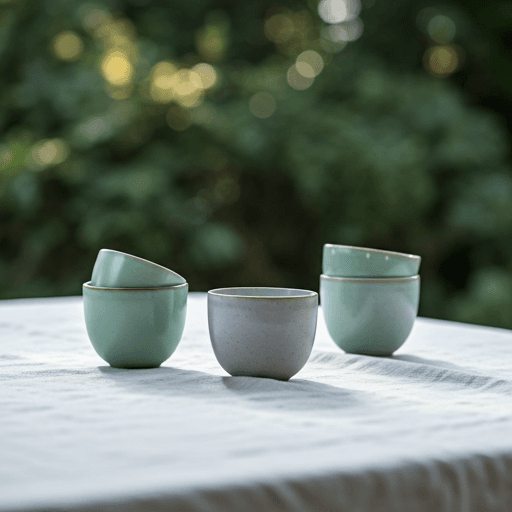
The Japanese tea ceremony — known as chanoyu (literally "hot water for tea"), and also called chado or sado, "the Way of Tea" — is the choreographed, meditative preparation and serving of powdered green matcha. It is far less about drinking than about hospitality, attention, and being fully present with the people in the room. At its heart, a host whisks a single bowl of tea and offers it to a guest with total care, turning an ordinary cup into a small, complete work of art.
This guide explains what the ceremony is, where it came from, the ideas that guide it, the room and tools it uses, and how a gathering actually flows. Think of it as a map to a rich tradition — not a recipe to follow at your kitchen counter.
What the Japanese Tea Ceremony Is
The Japanese tea ceremony is a formalized ritual of making and sharing tea, refined over centuries into an art form. You will see several names for it, and they overlap:
- Chanoyu (sometimes written cha no yu) — the most common everyday term, meaning "hot water for tea." It usually refers to a specific gathering or the act of making tea.
- Chado or sado — "the Way of Tea." The same characters can be read either way. This term frames tea as a lifelong discipline, in the same spirit as other "ways" such as calligraphy or martial arts.
The tea itself is matcha: finely stone-ground green tea whisked with hot water into a jade-green froth. If you want the drink explained on its own, see our guide to what matcha is. What sets the ceremony apart from simply drinking matcha is intention. Every movement — how the host folds a cloth, how a guest turns the bowl, how the room is swept — is deliberate. This is the core of Japanese tea culture: tea as a practice of mindfulness and respect, not just a beverage.
A Short History: Sen no Rikyu and the Way of Tea
Powdered tea and the ritual of whisking it arrived in Japan from China with Buddhist monks around the 12th century, prized by Zen practitioners as an aid to wakeful meditation. Over the following centuries it grew into an elaborate social and aesthetic pursuit among the ruling and warrior classes.
The figure who shaped the ceremony into the form recognized today was Sen no Rikyu (1522–1591), the great 16th-century tea master. Rikyu championed wabi-cha, a pared-down, rustic style that valued simplicity, humility, and imperfection over the gold-and-luxury displays of his era. He favored small, plain tea rooms, humble locally made bowls, and quiet restraint. His influence was so enduring that the three main surviving schools of tea — Urasenke, Omotesenke, and Mushakojisenke, founded by his descendants — trace their lineage back to him. When people speak of the Way of Tea, they are largely describing the sensibility Rikyu set down more than four hundred years ago.
The Four Principles: Wa, Kei, Sei, Jaku
Rikyu is credited with distilling the spirit of chanoyu into four principles. They are short words, but they carry the whole philosophy:
- Wa (harmony) — harmony between host and guests, between the gathering and the season, and between the people and the objects in the room. Everyone leaves rank and status at the door.
- Kei (respect) — respect for the guests, the host, the utensils, and the teachers behind every gesture. It is why a bowl is turned before drinking and why an old, treasured bowl is handled with the same care everywhere.
- Sei (purity) — cleanliness that is both literal and symbolic. The host ritually purifies the whisk, scoop, and bowl; guests rinse their hands and mouths before entering, as if washing off the dust of the outside world.
- Jaku (tranquillity) — the calm that arises once the other three are in place. It is the quiet, settled feeling the whole ceremony is designed to reach.
Two related ideas run alongside these principles. Wabi-sabi is the appreciation of beauty that is simple, weathered, and impermanent — a slightly uneven bowl is treasured, not rejected. Ichigo ichie, often translated "one time, one meeting," is the reminder that this exact gathering, with these people, will never be repeated, so it deserves your full presence. Together they explain why a ceremony can feel both humble and profound.
The Setting: Tea Room, Scroll, and Flowers
A formal ceremony takes place in a tea room (chashitsu) or a dedicated tea house, often set in a quiet garden reached by a stepping-stone path. The classic room is small and spare, floored with tatami mats, with a sunken hearth for heating water in the cooler months. A traditional entrance is deliberately low, so that everyone — regardless of status — must bow to enter.
The focal point is the tokonoma, an alcove that holds a hanging scroll (kakemono) chosen for its calligraphy or seasonal meaning, and a simple, understated flower arrangement (chabana). Nothing in the room is accidental. The scroll, the flowers, the utensils, and even the sweets are selected to suit the season and the occasion, so that guests read the host's intentions in the details around them.
The Key Utensils
The tools of tea are beautiful and purposeful, and each has a name worth knowing. You do not need to own them to understand the ceremony, but if you are curious about assembling your own kit for making matcha at home, our guide to the essential matcha tools covers the practical version.
- Chawan — the tea bowl. Wider bowls suit warm weather, letting tea cool and breathe; narrower, deeper bowls hold heat in winter. Bowls are often prized heirlooms.
- Chasen — the bamboo whisk, carved from a single piece of bamboo, used to froth the matcha.
- Chashaku — the slender bamboo scoop used to measure powdered tea from the caddy.
- Natsume — the lacquered caddy that holds thin tea; a ceramic chaire holds tea for the thick preparation.
How a Tea Gathering Flows
A full formal gathering (a chaji) can last hours and includes a light meal, called kaiseki, before tea is served. A shorter gathering (a chakai) centers on the tea itself. Whatever the length, the shape is broadly consistent.
Guests purify their hands and mouths, enter, and admire the scroll and flowers before being seated. Small sweets (wagashi) are served first — their sweetness balances the tea's slight bitterness. The host then cleanses each utensil in a precise, unhurried sequence, scoops the matcha, adds hot water, and whisks. There are two main preparations:
- Usucha (thin tea) — a lighter, frothier bowl, whisked to a foam. Each guest usually receives their own bowl. This is the more common, relaxed form.
- Koicha (thick tea) — a concentrated, almost paint-like preparation made with more tea and less water, traditionally shared from a single bowl passed among guests. It is the most formal and solemn part of a gathering.
When you receive a bowl, custom is to bow in thanks, rotate it a couple of turns so you do not drink from its "front," sip, wipe the rim, and turn it back before returning it. Afterward, guests may be invited to admire the bowl and utensils up close — a quiet acknowledgment of the care behind them.
The Ceremony at a Glance
| Term | Type | Role in the ceremony |
|---|---|---|
| Chanoyu / chado | Name | "Hot water for tea" / "the Way of Tea" — the practice itself |
| Wa, kei, sei, jaku | Principles | Harmony, respect, purity, tranquillity — the guiding spirit |
| Chashitsu | Setting | The tea room, with tatami, hearth, and alcove |
| Chawan | Utensil | The tea bowl the matcha is whisked and served in |
| Chasen | Utensil | Bamboo whisk used to froth the matcha |
| Chashaku | Utensil | Bamboo scoop for measuring the powdered tea |
| Natsume | Utensil | Lacquered caddy holding thin-tea matcha |
| Usucha | Preparation | Thin, frothy tea — the everyday form |
| Koicha | Preparation | Thick, concentrated tea — the formal high point |
How It Compares to Other Tea Rituals
The Japanese tea ceremony is not the only formal tea tradition, and comparing them sharpens what makes each special. The Chinese gongfu tea ceremony uses loose-leaf tea — often oolong or pu-erh — brewed in a small pot through many short infusions, with the focus on drawing out and tasting the tea's evolving flavor. Chanoyu, by contrast, uses whisked matcha and centers on hospitality, choreography, and presence over tasting notes. Both are meditative; they simply pursue calm by different roads.
It also helps to know that matcha is only one branch of a much larger family. If you would like to see where whisked green tea sits among sencha, gyokuro, hojicha, and the rest, our overview of Japanese tea types lays out the full map.
The Way of Tea Today
Chanoyu is very much a living tradition. Students still spend years learning the precise sequences of movements under a teacher, and formal gatherings continue at temples, tea schools, and cultural centers. At the same time, shortened demonstrations welcome curious visitors and newcomers everywhere, and the ideas behind the ceremony — slowing down, paying attention, treating a simple act with care — resonate far beyond any single tea room.
You do not need a tatami room or years of training to borrow a little of that spirit. Whisking a quiet bowl of matcha with full attention, choosing a cup you love, and truly being present with whoever shares it captures much of what the Way of Tea is about. That, in the end, is the quiet lesson chanoyu offers anyone, anywhere: an ordinary drink, treated with extraordinary care.