
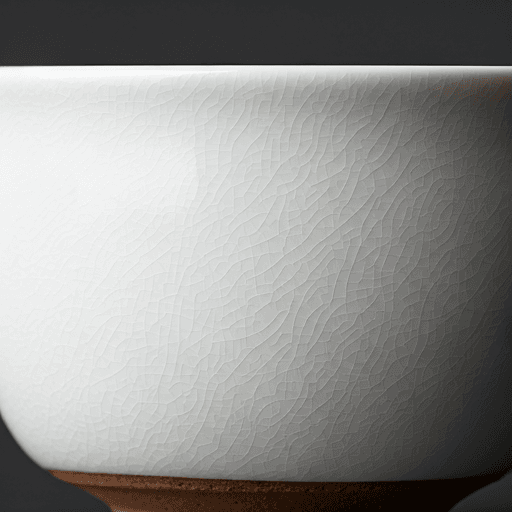
Huang Jin Gui is one of the most fragrant oolongs in China: a lightly oxidized, ball-rolled tea from Anxi County in Fujian province whose signature is an intense, high, sweet perfume often compared to osmanthus blossom. It is made from the early-budding Huang Dan cultivar, which makes it one of the earliest-picked Anxi oolongs each spring, and it sits alongside the celebrated Tieguanyin as one of the region's classic teas. If you enjoy bright, floral, largely un-roasted oolong, this golden-liquored cup is among the friendliest ways into the style.
What is huang jin gui oolong tea?
Huang jin gui oolong tea (黄金桂, sometimes romanized Huangjin Gui and known as "Golden Osmanthus" or "Golden Cassia") is a green-style oolong produced in Anxi, in southern Fujian. The name reads as huang (yellow), jin (gold) and gui (osmanthus, the sweet-scented cassia flower) — a nod to both the pale-gold color of the liquor and the flower-like fragrance the leaf gives off. It belongs to the same family of lightly oxidized, tightly rolled Anxi oolongs as Tieguanyin, and is frequently described as that famous tea's more accessible, more overtly floral cousin. For the wider category it sits within, see our overview of oolong tea.
Two things set it apart. First, it is made from a single cultivar, Huang Dan, an unusually early-sprouting tea bush. Second, the aroma is entirely natural: despite the osmanthus reference in the name, no flowers are ever added. That perfume comes from the leaf itself, coaxed out through careful withering and shaking rather than any scenting or blending. In the cup you get a clean, bright, faintly fruity oolong with very little of the astringency of green tea or the heaviness of a black tea.
The Huang Dan cultivar and an early harvest
The plant behind the tea is the Huang Dan (黄旦) cultivar, a name usually read as "yellow morning" or "yellow dawn." It is prized for two qualities: an unusually early sprouting time and a naturally high, sharp floral aroma. Because the bush buds so early in the season, Huang Jin Gui is often the first Anxi oolong picked and finished each spring — a genuine point of pride among local growers, who watch the Huang Dan bushes as an early signal that the harvest has begun.
The cultivar's aromatic reputation is well established. Huang Dan is recognized as one of China's national improved tea varieties, and it has since been used as a parent plant for a series of aromatic oolong hybrids, including Jin Guanyin and Huang Guanyin. Even so, the classic expression remains the straight, single-cultivar Huang Jin Gui, where the Huang Dan character is on full display.
A tea with two names: a note on history
The tea's origins are commonly traced to the mid-19th century in the hills of Anxi — folk accounts variously date the discovery to the 1850s or 1860s, and several stories are attached to it, including a bride carrying seedlings as part of her dowry and a farmer's chance find among the bushes. For decades it was known simply under the cultivar name, Huang Dan. The catchier "Huang Jin Gui" is usually credited to a tea merchant often named as Lin Jintai, who is said to have rebranded and popularized the tea in the early twentieth century because "golden osmanthus" made a more auspicious and evocative name than plain "yellow dawn." As with much tea history, exact dates and details are debated, so these are best treated as commonly repeated accounts rather than fixed fact.
How Huang Jin Gui is made
Huang Jin Gui follows the same broad path as other ball-rolled Anxi oolongs, and the processing is what turns fresh Huang Dan leaf into such a fragrant cup:
- Plucking and withering: Tender shoots are picked, then wilted in sun and air to soften the leaf and begin reducing moisture.
- Shaking (yao qing): The leaves are tumbled and gently bruised along their edges. This controlled damage is where the osmanthus-like aroma develops; more vigorous shaking can push the profile toward honey and stone fruit.
- Fixing (kill-green): Heat halts oxidation while the tea is still light, locking in the fresh, floral character.
- Rolling and shaping: The leaf is wrapped and rolled repeatedly into the tight, semi-ball pellets typical of modern Anxi oolong.
- Drying: A final low-temperature dry finishes the tea, traditionally with little or no roasting so the high florals stay intact.
Oxidation is kept light — enough to develop aroma without turning the tea dark — which is why the finished leaf brews a pale gold rather than the amber of a heavily oxidized or roasted oolong. This "green," minimally roasted style is central to what Huang Jin Gui is, and it is the main reason the tea reads as fresh and floral rather than toasty. Some producers do offer a more traditional roasted version, which trades a little of the top-note fragrance for deeper, warmer, nuttier tones.
Huang Jin Gui vs. its Anxi and Wuyi cousins
Anxi is best known for a small group of classic oolong cultivars — most often listed as Tieguanyin, Huang Jin Gui, Ben Shan and Mao Xie (Hairy Crab) — of which Tieguanyin and Huang Jin Gui are the most revered. Within that group, Huang Jin Gui is the fragrant early bird: less creamy and orchid-like than a top Tieguanyin, but higher and sharper in its floral top notes. It is a good idea to taste the two side by side to learn how much of Anxi's character comes from cultivar rather than region.
The contrast is even sharper when you set Huang Jin Gui against the roasted rock oolongs (yancha) of northern Fujian's Wuyi mountains. Teas such as Da Hong Pao, Rou Gui and Shui Xian are more oxidized and carry a distinct charcoal roast, giving mineral, woody, warming cups. Huang Jin Gui goes the other way entirely: fresh, light and flower-forward. The table below sketches where it sits.
| Tea | Cultivar | Origin | Oxidation / roast | Signature |
|---|---|---|---|---|
| Huang Jin Gui | Huang Dan | Anxi, S. Fujian | Light / little-to-none | High, sweet osmanthus florals |
| Tieguanyin (modern) | Tieguanyin | Anxi, S. Fujian | Light / light | Orchid, creamy, buttery |
| Rou Gui | Rou Gui | Wuyi, N. Fujian | Medium / medium-heavy | Cinnamon, mineral, warming |
| Shui Xian | Shui Xian | Wuyi, N. Fujian | Medium / medium-heavy | Woody, mineral, mellow |
Tasting notes: what to expect in the cup
The first thing most drinkers notice is the aroma, which lifts off the hot leaf immediately: high, sweet and unmistakably floral, with the sugary top note that earns the osmanthus comparison. The flavor is lighter and more delicate — clean and slightly fruity, with hints of peach, apricot or honeysuckle, a soft sweetness, and a brisk, refreshing finish. Astringency is low, and there is none of the deep roast or minerality you would find in a Wuyi rock tea.
Because so much of the pleasure is aromatic, Huang Jin Gui rewards attention to smell as much as taste. Many drinkers make a point of sniffing the warm, wet leaf and the empty cup after pouring, where the osmanthus perfume often lingers longest. Steeped well, it holds up over several short infusions, gradually shifting from its bright floral opening toward gentler fruit and honey tones.
It is a forgiving tea for newcomers, too. The light oxidation and low astringency mean it stays pleasant even if you over-steep slightly, and its aromatic clarity makes it an easy reference point when you later taste more oxidized or roasted oolongs. Served without milk or sugar, it is best appreciated on its own, where nothing competes with the fragrance.
How to brew huang jin gui oolong tea
Like other rolled oolongs, huang jin gui oolong tea suits both a quick Western pot and a series of short gongfu infusions. As a starting point:
- Water: Use hot but not fully boiling water, around 90–95°C (195–205°F), to protect the delicate florals.
- Gongfu style: Use a generous amount of leaf in a small gaiwan, give a quick rinse, then steep in short bursts — roughly 10–20 seconds to start, adding a little time with each round. Expect several good infusions.
- Western style: A smaller dose in a larger pot for about 2–3 minutes gives a clean, floral cup; re-steep once or twice.
Because the leaf is tightly balled, give it a round or two to open up — the aroma often peaks on the second and third steeps. For more detail on temperatures and vessels, see our guide to how to brew oolong tea.
Caffeine and general well-being
As a true tea from the Camellia sinensis plant, Huang Jin Gui contains caffeine. Oolong figures are frequently cited somewhere in the region of 30–50 mg per cup, but the real amount varies widely with leaf grade, dose, water temperature and steeping time, so any single number is only an approximation. In practice it tends to feel moderate and even — awake without a jolt — which many drinkers find well suited to the afternoon. For a closer look at the numbers, see our note on how much caffeine is in oolong tea.
Like other lightly oxidized oolongs, it contains naturally occurring polyphenols, and it may fit comfortably into a balanced routine as a hydrating, low-calorie drink when taken without added sugar. This is general information, not medical advice; for anything specific to your health or caffeine sensitivity, check with a qualified professional.