
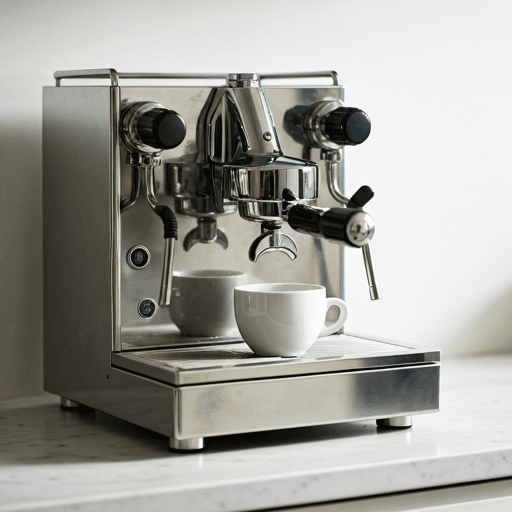
To use a Nespresso machine, you fill the water tank, switch it on to preheat, drop a capsule into the head, place a cup under the spout and press the cup-size button. The machine pierces the pod and brews automatically in under a minute. This beginner's guide to how to use a Nespresso machine covers both the OriginalLine and Vertuo systems, plus frothing milk and basic upkeep, so you can pull a good cup on day one.
Nespresso is a capsule (pod) coffee system: sealed portions of ground coffee that the machine punctures and brews under pressure. If you are still deciding which model suits you, our Nespresso machine guide compares the ranges; here we focus purely on the doing.
How to use a Nespresso machine, step by step
The routine is the same across most models. These are the core Nespresso machine instructions from cold start to first sip:
- Fill and seat the water tank. Lift out the reservoir, rinse it, fill with fresh cold water to the max line, and click it firmly back into place. Filtered water tastes better and scales the machine more slowly.
- Power on and let it preheat. Press the power button. A blinking light means it is heating; most machines are ready in about 25-30 seconds, when the light turns steady.
- Insert a capsule. Lift the lever (or open the head), drop in a single Nespresso capsule, and close the lever firmly. Closing it seats and pierces the pod. Used capsules fall into an internal container automatically.
- Position your cup and brew. Place a cup on the drip tray under the spout. On OriginalLine, press the espresso or lungo button; on Vertuo, press the single button and the machine reads the pod's barcode to brew the right size.
- Let it finish, then eject. Wait until the flow stops and the light settles. Lift the lever to drop the spent pod into the bin, and your coffee is ready.
Tip: for the first brew of the day, or the very first use of a brand-new machine, run one cycle with no capsule and an empty cup to rinse and warm the internal circuit.
| Step | Action | Note |
|---|---|---|
| 1. Water | Fill tank with fresh cold water | Filtered water improves taste and reduces scale |
| 2. Preheat | Power on, wait for steady light | Roughly 25-30 seconds from cold |
| 3. Capsule | Lift lever, insert pod, close firmly | Closing pierces the capsule; used pods drop into the bin |
| 4. Brew | Place cup, press the cup-size button | OriginalLine: espresso/lungo buttons; Vertuo: one button reads the barcode |
| 5. Eject | Lift lever after flow stops | Spent pod falls into the internal container |
OriginalLine vs Vertuo: which system do you have?
Nespresso sells two separate, non-interchangeable systems, and knowing which one you own changes how you brew and which pods you buy.
OriginalLine
The classic system uses small conical capsules and forces hot water through them under high pressure (around 19 bar) to build crema, much like a scaled-down espresso machine. You choose your drink with dedicated buttons, typically espresso (about 40 ml / 1.35 oz) and lungo (about 110 ml / 3.7 oz). Because this line has been around longest, many third-party brands make compatible pods for it.
Vertuo
Vertuo uses larger domed capsules with a barcode printed around the rim. Instead of pressure alone, it spins the capsule at high speed (Nespresso calls this Centrifusion) and reads that barcode to set the exact water volume, temperature and spin for each pod. That is why Vertuo has a single button: the capsule tells the machine how to brew, from a roughly 25 ml ristretto up to a 414 ml (14 oz) alto, with even larger carafe pods on some models. OriginalLine and Vertuo pods are not interchangeable. For the full breakdown of pod types, strengths and recycling, see Nespresso pods and capsules explained.
How to make coffee with Nespresso the way you like it
Once the basics click, how to make coffee with Nespresso is mostly about small choices. Use a pre-warmed cup so the shot does not cool on contact. Match the capsule "intensity" number to your taste: higher numbers are darker and more robust, not necessarily higher in caffeine. For a longer, milder cup on OriginalLine, brew a lungo or top an espresso with hot water to make an americano. On Vertuo, just pick a larger-format pod. If a shot tastes thin, check that the tank has water and the pod pierced cleanly; if it tastes harsh, try a lower-intensity capsule.
Frothing milk for a latte or cappuccino
Most Nespresso machines brew coffee only, so milk drinks rely on a separate frother such as the Aeroccino (a few models, like the Lattissima and Creatista ranges, build one in). To make a latte or cappuccino, brew your espresso into a cup, froth cold milk, then pour. With an Aeroccino, add cold milk to the marked line, fit the spring whisk for froth (or the plain whisk for hot milk with no foam), press the button for hot froth or hold it for cold froth, and it stops automatically. Rinse it right after use, and remember it is a frother, not a steam wand. For the full technique and settings, see our guide to using an Aeroccino milk frother.
Nespresso machine instructions for cleaning and upkeep
A little maintenance keeps flavour clean and flow strong. Follow these ongoing Nespresso machine instructions:
- Empty the pod bin and drip tray regularly; most containers hold roughly 10-14 used capsules before they need emptying.
- Refresh the water daily and do not let it sit stagnant in the tank.
- Wipe the spout and head and run an occasional water-only cycle to flush coffee residue.
- Descale about every 3 months or whenever the machine's descaling light or app prompts, and more often with hard water. Scale build-up is the most common cause of slow flow and lukewarm coffee. Our step-by-step guide to descaling a Nespresso machine walks through the cycle.
Quick troubleshooting
If nothing brews, confirm the tank is seated and the lever is fully closed. Weak or slow flow usually means the machine needs descaling, or the pod did not pierce, so re-seat a fresh capsule. Lukewarm coffee often points to a cold cup or overdue descaling. A blinking light that never goes steady can signal an empty tank, an alert, or a machine still heating; check your model's light guide.
That is the whole loop: fill, preheat, insert, brew, eject, and rinse. Once it becomes muscle memory you can focus on the fun part, matching pods and milk to the drink you actually want. From here, dig into the differences between capsules in the pods explainer, or keep your machine pouring its best by staying on top of descaling.